

Oil climbs as US-Iran attacks escalate, shaking global markets
Global markets faced significant turbulence on Monday, July 20, 2026, as military actions between the United States and Iran intensified sharply over the weekend. This dramatic escalation sent oil prices surging to their highest levels in over a month, while bond markets declined amidst renewed inflation fears.
The renewed hostilities mark the worst US-Iran confrontation since just before their April ceasefire, which ultimately collapsed last month. Investors are now grappling with heightened geopolitical risk and the very real prospect of broader economic instability.
escalating US-Iran attacks fuel market volatility
The latest flare-up in the Middle East has profoundly impacted investor sentiment, driving a wedge through what was already a delicate global economic recovery. Crude oil prices, a direct barometer of regional stability, shot up significantly.
Conversely, bond yields rose as the specter of sustained high energy costs reignited inflation concerns. Stocks, which had seen a technology-led selloff the previous week, found some stability, but gold continued its downward trend.
military actions intensify across the region
The conflict saw a series of back-and-forth strikes over the weekend, expanding beyond traditional military targets. US Central Command (CENTCOM) confirmed it launched more attacks against Iran on Sunday evening.
Iranian forces, in turn, targeted infrastructure, with Kuwait Petroleum Corp. reporting a strike on one of its oil facilities on Saturday. These actions underscore the broadening scope of the confrontation and its potential for wider disruption.
Specific locations across the region became flashpoints. In Jordan, Iranian attacks on a US base reportedly killed at least two US troops and injured many others. Air raid sirens blared across the country on Sunday, leading to evacuations at Aqaba’s airport and seaport.
The Jordanian army also confirmed intercepting three Iranian missiles, highlighting the spread of direct military engagement. US forces retaliated, hitting southern Iranian cities including Qeshm Island, Shadegan, Sirik, and Hajiabad overnight.
Drones targeting US forces were also reported at Camp Buehring and Ali Al Salem Air Base. Bahrain sounded warning sirens and intercepted a wave of Iranian aerial attacks, while Israel intercepted an Iranian drone near the Israel-Syria border.
Further afield, a third US service member was killed during the disposal of a downed Iranian attack drone in northern Iraq. These widespread incidents paint a grim picture of regional instability.
critical chokepoints face severe disruption
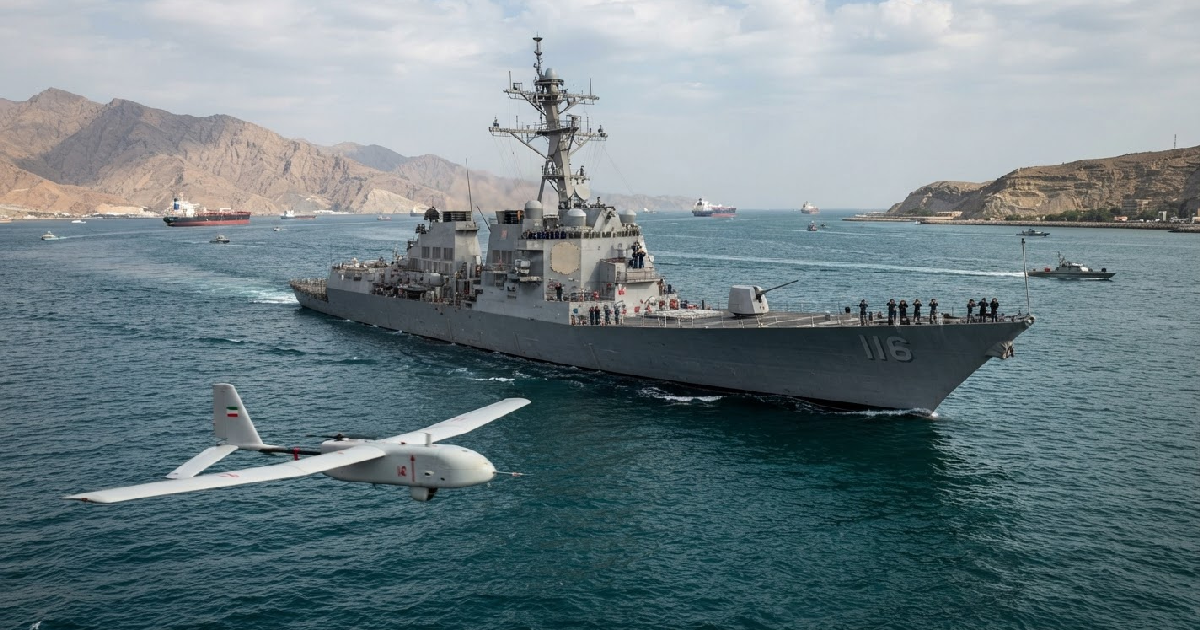
The Strait of Hormuz, a vital chokepoint for global oil transit, remains a primary concern. Shipping through Hormuz is now largely disrupted and operating at a mere fraction of its pre-war levels.
This critical bottleneck significantly impacts crude supplies from the Middle East, a region central to global energy markets. Any prolonged disruption here directly threatens the world’s energy security.
Iran has also reportedly asked Yemen’s Houthi movement to prepare to close the Red Sea oil export route. Such a move would further constrict global shipping lanes and exacerbate supply chain pressures.
These developments create a volatile environment for global trade and energy supply, prompting international concern. The deliberate targeting of infrastructure points to a strategy aimed at maximizing economic pressure.
global oil prices surge on supply fears
The immediate market response to the escalating US-Iran conflict was swift and pronounced. Wee Khoon Chong, a macro strategist at BNY in Hong Kong, noted the renewed inflation concerns driving market movements.
These concerns stemmed directly from the sharp rise in oil prices, which directly impacts transportation, manufacturing, and consumer costs globally. Market participants now interpret events as supportive of further price increases for crude.
brent crude reaches monthly high
Brent crude, the international benchmark, climbed significantly on Monday, reaching its highest level since June. The upward pressure came from deep worries about crude supplies from the Middle East.
Alex Hodes, Director of energy market strategy at brokerage StoneX, highlighted that fears of a wider war are feeding directly into oil premiums. Traders are pricing in a higher risk factor for future supplies.
The targeting of facilities like the Kuwaiti power and water desalination plant underscored the vulnerability of energy infrastructure. This incident alone injected significant uncertainty into supply forecasts, pushing prices upwards.
Ed Hayden-Briffett, an oil research analyst for The Officials, emphasized that the market views this escalation as a clear signal of reduced availability. This sentiment will likely continue to buoy oil prices in the short term.
bond markets fall amid renewed inflation concerns
The bond market reacted with a noticeable downturn as renewed inflation fears took hold. Higher oil prices tend to be inflationary, forcing central banks to consider tighter monetary policies.
Reginald Carl R. Reyes, Head of Fixed Income at Security Bank Corp., observed that bond yields rose sharply. This reflects investors demanding higher returns to compensate for the erosion of purchasing power.
Such market movements signal a widespread belief that interest rates will likely stay higher for longer. Wael Makarem, Financial markets strategist lead at Exness, echoed this sentiment, pointing to the inflationary impact of energy costs.
economic outlook under geopolitical pressure
The collapse of the interim ceasefire, signed just last month, has shattered hopes for a quick de-escalation. This instability now shapes the economic outlook for the remainder of the year.
The conflict’s expansion to include vital infrastructure like bridges and port facilities indicates a willingness to inflict economic pain. This strategy aims to leverage non-military pressure alongside kinetic actions.
Beyond immediate market reactions, the long-term implications for global trade routes and energy security are profound. Businesses face increased costs, longer shipping times, and greater supply chain risks.
calls for higher interest rates intensify
The sustained surge in oil prices due to the US-Iran conflict reinforces expectations among economists and central bankers that interest rates will remain elevated for a longer period. This is a direct response to the inflationary pressures generated by energy costs.
Higher interest rates are a blunt tool, often necessary to curb inflation, even if it means slowing economic growth. This scenario presents a difficult challenge for central banks already battling persistent price pressures.
Many investors, still reeling from a technology-led selloff in stocks the previous week, are now bracing for an extended period of tighter monetary conditions. This market sentiment could have a cascading effect on various asset classes.
The Federal Reserve and other major central banks will be closely watching commodity markets and geopolitical developments. Their decisions will significantly influence the global economy in the coming months.
un secretary-general voices deep concern
The international community has watched the escalation with growing alarm. The UN Secretary-General expressed deep concern over the renewed military actions and attacks on civilian infrastructure.
The attacks on civilian infrastructure, particularly the power and water desalination plant in Kuwait, draw specific condemnation. Such actions risk a humanitarian crisis alongside the geopolitical one.
The UN continues to call for de-escalation and a return to diplomatic solutions. However, the current trajectory suggests that these appeals are, for now, falling on deaf ears as both sides harden their positions. Without a return to dialogue, the economic fallout is likely to worsen, impacting global investors seeking stability amid inflation fears.