

Epic Games Integrates AI Voices into 36 Fortnite Characters for Creator Islands
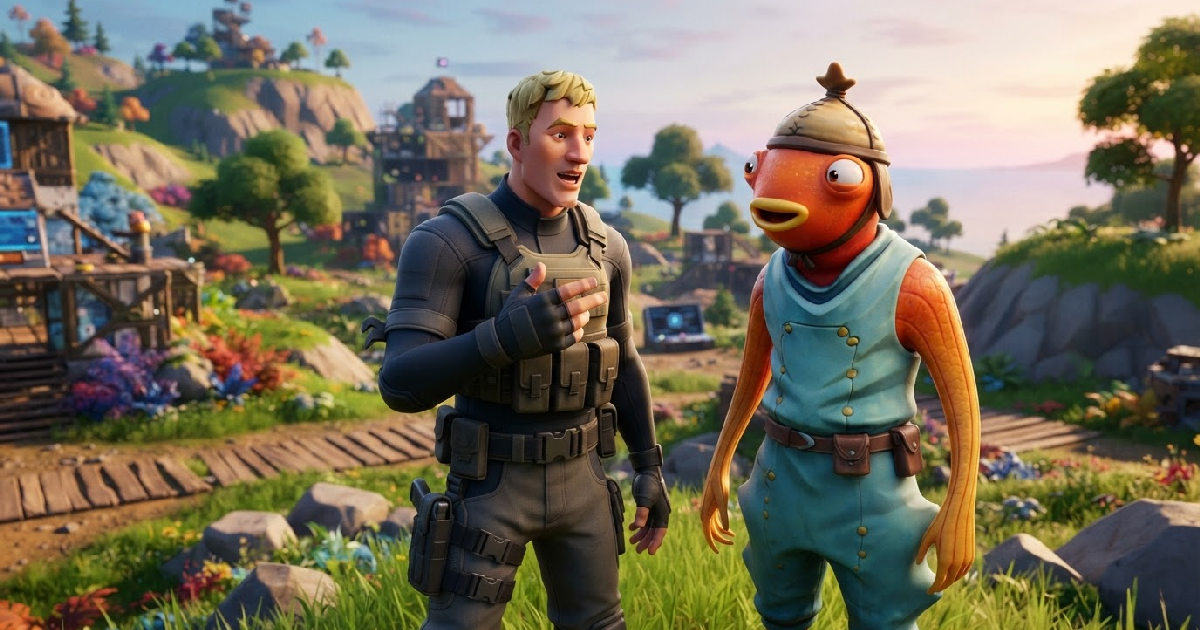
Epic Games is introducing artificial intelligence-powered voices and conversational capabilities for 36 existing Fortnite characters, including familiar faces like Agent Jones and Fishstick. This new “conversations” system is set to exit its experimental phase and become widely available for creators to publish islands in Unreal Editor for Fortnite (UEFN) on July 30, 2026.
The move aims to allow players to interact with non-player characters (NPCs) that can engage in unscripted dialogue and adapt to in-game events.
Dynamic AI conversations debut in Fortnite UEFN
This initiative represents a significant step for Epic Games in integrating advanced AI into its popular metaverse platform. It promises to deepen player immersion within UEFN-designed experiences, enabling dynamic and responsive interactions that were previously difficult to achieve without extensive pre-scripted content.
The “conversations” system empowers UEFN creators to build more immersive and interactive player experiences. It allows them to define a character’s personality, knowledge base, and behavior using straightforward prompts, giving each NPC a distinct presence within their custom islands.
These AI-powered characters can remember what happens during a game session and adapt their behavior in real-time. They’ll respond contextually to player input, communicate through voice, and even trigger specific gameplay events. This opens up new avenues for complex quests and evolving narratives on creator-made maps.
The technology powering these AI characters
Behind Epic Games’ AI voice implementation lies a robust technology stack. Google’s Gemini 3.1 Flash Lite models are crucial for processing player audio inputs and generating text responses from the AI characters. Then, ElevenLabs converts these text responses into voiced outputs.
The entire system integrates seamlessly within UEFN, leveraging Scene Graph and the Verse API. Epic states that current latency in multiplayer tests is approximately 700 milliseconds, and critically, the company will not store any player audio, addressing important privacy considerations.
Creator control and enhanced safety measures
Epic Games isn’t just deploying powerful AI tools without safeguards. The company has emphasized that creators will maintain control over the AI characters’ personalities and knowledge parameters. Safety layers are built into the AI models to ensure responses align with Fortnite Developer Rules.
These rules strictly prohibit AI Game NPCs from engaging in romantic simulation, offering medical advice, or generating hateful content. Additionally, experimental projects using conversations will display a watermark in UEFN, clearly indicating their developmental status to players and creators alike.
Voice actors and the evolving AI landscape in gaming
The expansion of AI voice technology has inevitably reignited conversations within the voice acting community. The gaming industry has been grappling with the ethical implications of generative AI, particularly concerning job displacement and fair compensation for performers.
Epic Games faced scrutiny in May 2025 when it used AI to recreate the voice of the late actor James Earl Jones for a Darth Vader NPC in Fortnite. This led to an unfair labor complaint filed by the Screen Actors Guild–American Federation of Television and Radio Artists (SAG-AFTRA) against Llama Productions, an Epic Games production company.
Navigating past controversies and union concerns
SAG-AFTRA alleged that Llama Productions had chosen to “replace the work of human performers with AI technology” without proper notice or bargaining. While James Earl Jones’ estate had granted permission for the use of his voice recordings for future Lucasfilm projects, the union argued that its approval wasn’t obtained for the AI-generated voice used in the game.
The AI-generated Darth Vader also encountered technical glitches, notably “hallucinations” where players reportedly tricked the character into uttering vulgarities. Epic Games swiftly patched these issues, but the incident highlighted the potential for unpredictable AI outputs and the challenges in content moderation. This incident shows the fine line developers walk when incorporating new technologies.
Epic’s assurances and industry divergence
Epic Games has sought to reassure stakeholders by stating that the new AI voices are “powered by performances captured from independent professional actors specifically for use in developer-made islands.” These actors, Epic explains, explicitly agreed to have their performances used to develop the voice models.
The company has also indicated its intention to “work with the relevant guilds and character voice actors who have previously worked on Fortnite Battle Royale to explore opportunities to make their original voices available across the Fortnite ecosystem.”
Epic has firmly pledged that “Original voice actors of Fortnite NPCs will not be replaced” in the main Battle Royale mode, a critical assurance for many. Still, other major publishers like Capcom have publicly confirmed they aren’t using generative AI in their development processes, signaling a diverse approach across the industry.
The broader impact of AI on game development and creativity
The widespread adoption of AI in gaming, exemplified by Epic’s latest move, marks a significant shift in how games are created and experienced. Generative AI offers immense potential for enhancing player immersion and boosting developer efficiency, particularly in vast sandbox environments.
For example, dynamic NPCs that adapt to player input can create deeply personalized narratives and unexpected gameplay moments. This innovation could lead to a renaissance in interactive storytelling, pushing game design beyond traditionally static, pre-scripted dialogue.
It’s a tool that could fundamentally change how players interact with digital worlds, much like how new features sometimes reshape an entire game, as seen with Star Fox’s upcoming online battle mode.
Opportunities for burgeoning creators
The “conversations” system, especially within UEFN, enables unprecedented levels of content creation. Independent developers and creators can now imbue their custom Fortnite islands with characters that feel alive and truly responsive, rather than merely cycling through pre-recorded lines.
This democratizes advanced game development tools, potentially fostering an explosion of innovative, player-driven experiences. The ability for unscripted dialogue to remember past interactions could transform how players engage with game worlds and their inhabitants, making every playthrough feel unique.
This aligns with broader trends in gaming, where player agency and evolving narratives are becoming increasingly central, as confirmed by the impending release of Grand Theft Auto 6.
Ethical considerations and forward path
Despite the technological advancements, the ethical landscape of AI in gaming remains complex and evolving. The dispute between SAG-AFTRA and Epic over the Darth Vader voice highlights ongoing tensions regarding intellectual property and labor rights in the age of AI.
The challenge for companies like Epic will be to balance rapid innovation with fair practices and transparency, particularly as AI tools become more sophisticated and prevalent.
This delicate balance will largely determine public perception and regulatory responses to AI integration. Clear guidelines and collaborative frameworks between developers, actors, and unions will be crucial as AI continues to influence various sectors, from creative industries to cryptocurrency markets.
The future of Fortnite’s creative community
The full rollout of AI voices on July 30 will significantly reshape the creative landscape within Fortnite, especially for community-made islands. Creators, once limited by traditional voice recording constraints, now possess the power to infuse their worlds with dynamic interaction and narrative depth. This is likely to lead to an explosion of unique experiences and character-driven quests within UEFN.
However, the potential for “hallucinations” or unintended outputs, even with sophisticated safety layers, remains a consideration. While Epic has implemented strong safeguards, the sheer volume of user-generated content means maintaining strict oversight will be an ongoing challenge.
Ultimately, this move places Fortnite at the forefront of AI integration in user-generated content, pushing the boundaries of what virtual worlds can offer in terms of dynamic interaction and personalized player experiences.