

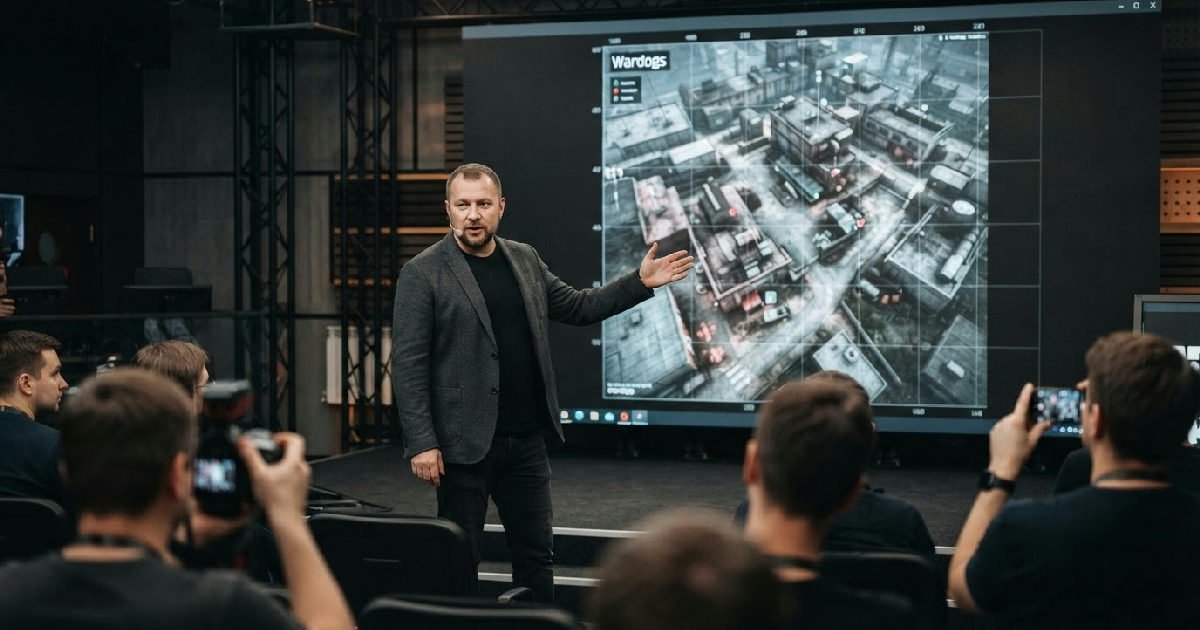
Nikita Buyanov explains hardcore shooter renaissance
The video game industry is experiencing a profound shift in 2026, marked by the unexpected rise of the hardcore shooter renaissance. Leading the charge is Bulkhead’s Wardogs, which has swiftly climbed Steam’s top seller list and secured a coveted fifth spot on Valve’s most-played chart, signaling a robust appetite for challenging gameplay.
This resurgence, which some are calling the “hardcore shooter renaissance,” comes nearly a year after Battlestate Games’ Escape from Tarkov officially launched its 1.0 version in November 2025. Nikita Buyanov, Game Director and Chief Operating Officer (COO) of Battlestate Games, contends this trend reflects an aging player base seeking more intellectually stimulating experiences.
The hardcore shooter renaissance
The success of Wardogs isn’t an isolated incident; it’s part of a broader movement within the gaming world. Titles like Ready or Not and Bodycam have also carved out significant niches, indicating a clear demand for games that prioritize realism, tactical depth, and high challenge over conventional arcade-style action.
This current “hardcore FPS era” follows previous dominant trends, such as the “deckbuilder era” sparked by games like Slay the Spire, and the recent “survival era” featuring hits like Palworld and Enshrouded. Now, players are gravitating towards experiences that demand more than just quick reflexes.
Wardogs’ Rapid Ascent
Launched into Steam Early Access on September 10, 2026, Wardogs quickly made its mark. Developed by Bulkhead and published by Team17, the game has already sold over two million copies and achieved more than 400,000 peak concurrent players within its first week. Its rapid success underscores a market readiness for complex tactical shooters.
The game immerses 100 players, split into three teams, in battles over randomized control zones. Featuring destructible battlefields, vehicles, and a persistent cash economy, Wardogs rewards strategic thinking and meticulous planning. This intricate design, without relying on microtransactions, directly appeals to players looking for sustained engagement.
An Evolving Player Base Drives Demand
Nikita Buyanov, whose Escape from Tarkov played a pivotal role in shaping this genre, offers a compelling explanation for the shift. He points to the expanding lifespan of gamers, noting that many players are now in their 50s and 60s. This aging demographic brings a different set of expectations to their gaming experiences.
As gamers mature, their “intellectual capacities and interests” evolve, Buyanov suggests. They seek out games that offer significant intellectual investment and complexity, moving beyond simple, arcade-style entertainment. Games like Tarkov, with their layered functionality and intricate systems, provide this challenge.
This pursuit of intellectual stimulation transforms gaming into a “second-life experience” for many, Buyanov explains. While not a replacement for real life, these games allow players to apply their knowledge and strategic thinking in a virtual domain, much as they would in real-world scenarios. This depth of engagement is a core draw.
Beyond Arcadey Cycles
Buyanov believes players have grown weary of “simple and arcadey games” and the endless cycles of sequels that offer little innovation. This fatigue has fueled a desire for fresh, intelligent experiences that challenge rather than merely entertain. The industry’s previous reliance on battle passes and seasonal content might be losing its grip on this demographic.
The appeal lies in complexity and a “linkage to real life,” where players are forced to think critically about weapon loadouts, map knowledge, and tactical maneuvers. This combination of an aging player base and a yearning for deeper, more meaningful gameplay has reshaped the entire gaming landscape.
This pivot in player preference comes at a crucial time for the wider industry. Many live-service titles currently face significant challenges with player retention, highlighting a need to evolve beyond predictable content cycles. This current trend suggests a strategic answer to that dilemma, rewarding developers who prioritize depth and player agency.
The Tarkov Effect and Genre Definition
Escape from Tarkov stands as a foundational title for the hardcore shooter genre, having cemented its reputation through years of development and a dedicated community. After nearly nine years in development and eight years in Early Access, the game officially released version 1.0 on November 15, 2025. This long journey speaks to the intricate nature of its design.
Battlestate Games, founded by Nikita Buyanov on October 15, 2014, in St. Petersburg, Russia, built a significant community around Tarkov well before its official launch. The game’s intricate systems, which demand meticulous planning and strategic execution, set a new benchmark for realism and challenge in first-person shooters. It was wishlisted by over 1,000,000 players on Steam within two months of its 1.0 release.
The success of games like Ready or Not, which sold over nine million units by May 2025, further validates this demand. This tactical shooter, developed by VOID Interactive, puts players in the shoes of SWAT units, emphasizing realism and coordinated teamwork. Such titles are redefining expectations for the genre.
Another notable entry, Reissad Studio’s Bodycam, released in early access on June 7, 2024, pushes visual realism with its body-camera perspective and Unreal Engine 5 integration. These games collectively illustrate how developers are innovating by leaning into granular detail and challenging mechanics, appealing to a segment of the market that values depth.
Battlestate Games’ Visionary Leadership
Nikita Buyanov’s journey in game development began in 2006, leading him to found Battlestate Games after reorganizing personnel from AbsolutSoft. His deep understanding of complex game mechanics, evident in Tarkov, has propelled his vision for more engaging and intellectually demanding games.
Beyond Battlestate Games, Buyanov is also involved with Rant Gaming Studios, which announced its new project, Fragmentary Order, on April 13, 2026. Described as a “combat simulator” with extraction mechanics, it consciously distances itself from being merely another extraction shooter, indicating a continuous evolution of his design philosophy. This proactive approach to game development strategies could influence future market trends.
Industry Implications and Future Outlook
The shift towards hardcore shooters signals a crucial pivot for the broader gaming industry. Many developers of online live-service titles are grappling with declining player retention, a clear sign that traditional models centered on repetitive content cycles might be losing their appeal. The success of Wardogs and Escape from Tarkov offers a roadmap for renewed engagement.
This trend suggests that player demands have matured significantly. Rather than passively consuming pre-packaged content, gamers are actively seeking environments where their skills, knowledge, and strategic input directly impact their experience. This desire for agency and intellectual reward is transforming market expectations.
Developers who embrace this ethos of complexity and depth stand to gain considerably. While not every game needs to be a hardcore shooter, the underlying principle — offering substantial intellectual engagement and strategic flexibility — resonates across genres. This could reshape how new titles are conceived and marketed.
The rise of hardcore shooters also mirrors broader cultural desires for authenticity and challenge, moving away from hyper-casual or overly simplified experiences. This movement implies a lasting change in gaming preferences, demanding more from both players and creators alike. It’s a significant market adjustment for gaming studios globally.
As the “army of gamers” continues to age, as Buyanov puts it, the demand for sophisticated, thought-provoking gameplay will only intensify. This isn’t just a fleeting fad; it’s a fundamental recalibration of what players value in their virtual worlds. The future of gaming could very well be defined by intelligence, strategy, and a genuine challenge.
This means that publishers and developers will need to reassess their production pipelines and marketing strategies. Games that prioritize player choice and emergent gameplay, rather than linear progression or repetitive grind, are likely to capture the attention of this evolving demographic. It reflects a growing discernment among consumers for truly immersive and rewarding digital experiences.