

U.S.-Iran Strikes Escalate Near Strait of Hormuz, Oil Prices Climb
Tit-for-tat attacks between the United States and Iran escalated over the weekend of July 12-13, 2026, dramatically impacting global markets. Renewed U.S.-Iran strikes in and around the strategically vital Strait of Hormuz sent oil prices climbing and caused U.S. stock-index futures to dip, with investors gripped by fears of a wider conflict.
This latest flare-up follows the breakdown of a 60-day ceasefire agreement, which President Donald Trump declared “over.”
Renewed U.S.-Iran strikes in the Strait of Hormuz
The core of this renewed confrontation centers on control and navigation through the Strait of Hormuz, the world’s most critical chokepoint for oil shipments. Iran’s claims of closing the waterway were swiftly refuted by the U.S. military, setting the stage for direct military engagements that have once again plunged the region into deep uncertainty.
The past weekend saw an intense exchange of military actions. Iranian forces announced their intention to close the Strait of Hormuz, a move that would severely impede global oil transit, and simultaneously launched missiles and drones toward its Gulf neighbors. This provocative declaration and subsequent attacks underscored Tehran’s resolve in the face of perceived U.S. interference in the waterway.
But U.S. Central Command (CENTCOM) quickly dismissed Iran’s claims. “Iran does not control the strait. Traffic is flowing,” a CENTCOM social media post declared on Sunday, July 12. The U.S. military then launched multiple waves of strikes against Iranian targets after a Cyprus-flagged container ship was hit by a suspected Iranian missile in the Strait of Hormuz on Saturday, July 11, 2026.
Weekend’s intense exchanges
On Sunday, July 12, U.S. Central Command forces initiated further strikes against Iran at 5 p.m. Eastern time (21:00 GMT). These operations aimed to degrade Iran’s ability to attack commercial vessels traversing the critical Strait of Hormuz. Targeted U.S. strikes hit areas near Sirik, Qeshm Island, Jask, and the area west of Bandar Abbas.
Iran, in turn, retaliated by firing at least three waves of missiles and drones. These projectiles targeted U.S. military bases across the Persian Gulf, including installations in Jordan, Qatar, Kuwait, Bahrain, and Oman early Sunday. These attacks came in retaliation for extensive U.S. bombing across southern Iran.
The U.S. military confirmed it successfully shot down an Iranian cruise missile and a one-way attack drone during these exchanges. Early Monday, July 13, the U.S. military launched additional strikes designed to curb Iran’s ability to menace commercial shipping in the Strait of Hormuz. This cycle of conflict shows no immediate signs of abating.
Markets Grapple with Escalation and Oil Supply Fears
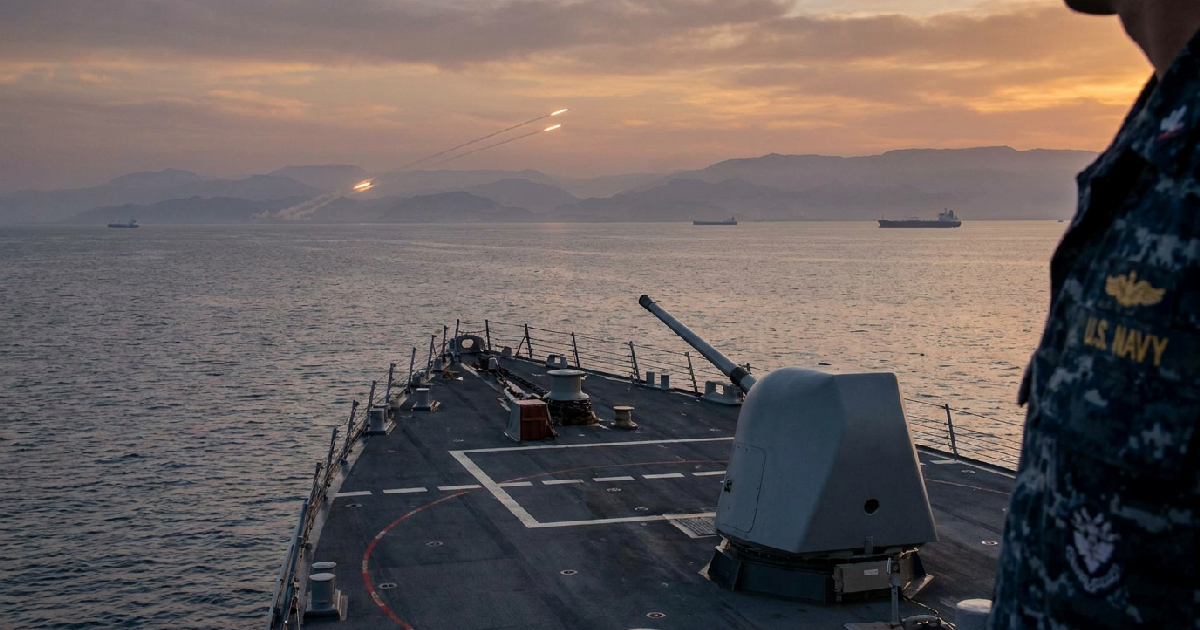
The immediate consequence of these escalating U.S.-Iran strikes was a sharp upward movement in global oil prices. Traders and analysts fear that prolonged conflict in the Persian Gulf, particularly actions impacting the Strait of Hormuz, could severely disrupt the supply of crude oil to the international market. The U.S. Navy redirects vessels when maritime security is threatened.
The Strait of Hormuz is undeniably the world’s most vital oil transit chokepoint. In the first half of 2025 (1H25), an average of 20.9 million barrels per day (b/d) of oil flowed through this narrow channel. That figure represents approximately 20% of global petroleum liquids consumption and a quarter of total global maritime traded oil. Any threat to this flow sends shivers through energy markets.
A significant portion of the oil moving through the Strait, around 89% of crude and condensate in 1H25, heads to Asian markets. China receives the largest share at 37.7%, followed by India (14.7%), South Korea (12.0%), and Japan (10.9%). While the United States imported about 0.4 million b/d through the Strait in 1H25, any global disruption inevitably impacts all consumers.
Compounding the supply fears, President Donald Trump revoked Iran’s oil export license, further tightening supply. This move limits Iran’s ability to sell its crude on the open market, creating additional upward pressure on oil prices. The situation demonstrates how geopolitical instability directly translates into economic volatility.
Collapse of the 60-day Ceasefire
This weekend’s intense clashes mark a dramatic collapse of recent diplomatic efforts. President Donald Trump explicitly declared the 60-day ceasefire agreement between the U.S. and Iran “over,” effectively ending hopes for a quick de-escalation. This statement signaled a return to a more aggressive posture from Washington, directly preceding the latest military actions.
The current escalation began on July 7, 2026, with U.S. Central Command forces launching a new round of offensive strikes. These operations hit over 80 targets in Iran, including air defense systems, command and control networks, coastal radar sites, anti-ship missile capabilities, and over 60 Islamic Revolutionary Guard Corps small boats.
Iran’s subsequent actions, including the claimed closure of the Strait of Hormuz, were in response to perceived U.S. interference in the waterway.
Strait of Hormuz: A History of Tensions
The Strait of Hormuz has a long history as a geopolitical flashpoint, a narrow maritime corridor where international commerce and regional rivalries frequently intersect. Its strategic importance lies not only in its oil transit volume but also in its role for global liquefied natural gas (LNG) trade. Approximately one-fifth of global LNG trade transited the Strait in 2022.
Both the U.S. and Iran maintain significant military presences in the region. The U.S. Fifth Fleet, headquartered in Bahrain and operating under U.S. Naval Forces Central Command (NAVCENT), is tasked with ensuring maritime security and protecting critical chokepoints like the Strait.
Conversely, Iran’s Islamic Revolutionary Guard Corps (IRGC) naval forces, with roughly 20,000 personnel, patrol its maritime borders and have a history of confrontations with U.S. vessels dating back to the 1980s.
Historical flashpoints include a January 2008 naval dispute where five Iranian patrol boats engaged in aggressive maneuvering against three U.S. Navy warships. Threatening radio transmissions accompanied these actions, highlighting the inherent volatility of the region. Such events serve as a sobering reminder of the potential for any minor incident to quickly spiral into a larger conflict.
Outlook: Continued Volatility and Global Implications
With the 60-day ceasefire now unequivocally over, the outlook for stability in the Persian Gulf remains bleak. The recent exchanges suggest a hardening of positions from both the U.S. and Iran, leaving little room for immediate de-escalation. International observers are now bracing for potential further military actions and an even greater impact on global energy markets.
The situation creates profound implications for global trade and energy security. Businesses and nations worldwide will likely face increased costs and potential delays for goods transiting the region. The ongoing tension also underscores the fragile nature of commodity prices, which remain highly susceptible to geopolitical shocks. U.S. stock-index futures have dipped as fears of wider conflict gripped investors.
The breakdown of the ceasefire also raises questions about the efficacy of future diplomatic efforts. As long as both sides remain locked in this cycle of aggression and retaliation, a sustainable resolution appears distant.
The world watches closely to see if diplomacy can find a path forward, or if the current trajectory will lead to a more entrenched conflict with far-reaching consequences for the global economy. This economic uncertainty affects valuations across various sectors.