

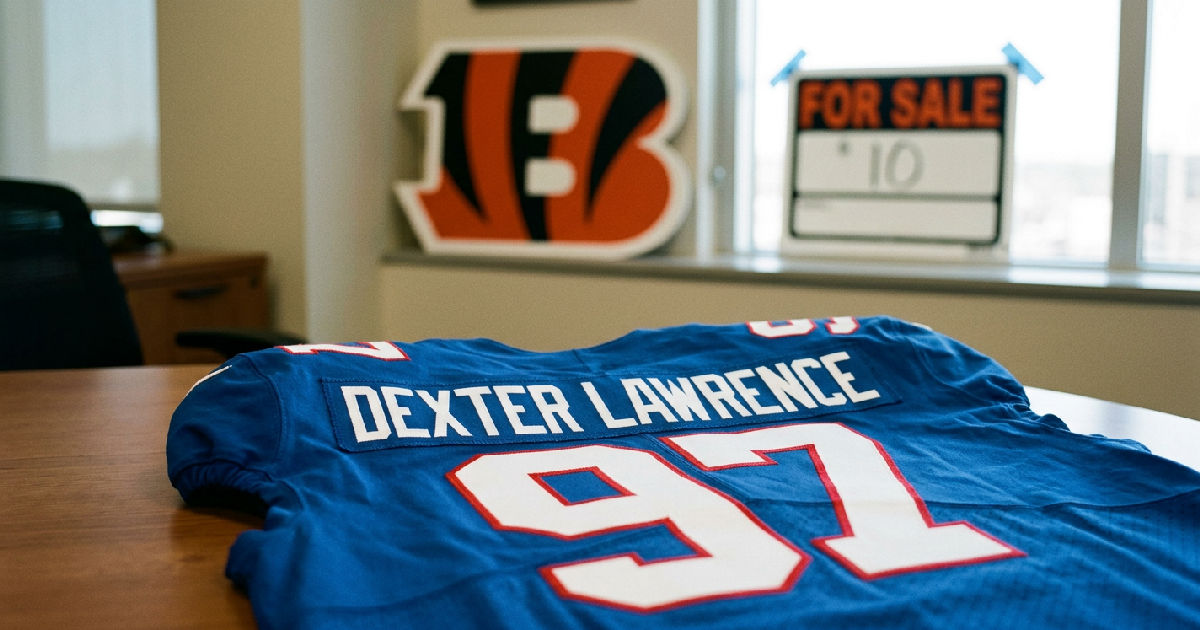
Cincinnati Bengals trade 10th pick for Dexter Lawrence to overhaul defense
The Cincinnati Bengals and Chicago Bears headline a group of NFL franchises that have prioritized depth and structural stability over splashy headlines during the 2026 offseason.
While secondary markets remain fixated on the Los Angeles Rams acquiring cornerback Jaylen Watson or the Kansas City Chiefs trading away Trent McDuffie, these teams are quietly filling critical roster gaps with overlooked veterans and tactical draft picks. These “sneaky-good” moves are often the difference between a mid-level finish and a deep postseason run.
Cincinnati Bengals overhaul defensive personnel for 2026
Cincinnati’s defensive transformation stands as the most comprehensive overhaul of the summer. After yielding 29 points per game last season, the front office traded the 10th overall pick in the 2026 NFL Draft to the New York Giants to land defensive tackle Dexter Lawrence.
Lawrence provides an immediate anchor for a unit that has struggled with interior consistency, allowing the Bengals to pivot away from the high-scoring shootouts that often plagued them in 2025.
The arrival of Dexter Lawrence is just the first step in a broader defensive reconstruction. The Bengals also strengthened their secondary and edge presence by signing safety Bryan Cook and edge rusher Boye Mafe in free agency.
Key details
These additions, combined with the draft selections of defensive linemen Cashius Howell and Landon Robinson, signal a clear intent to drop points allowed into the low-20s. Robinson and Howell are expected to provide the youth and physicality needed for a more robust defensive rotation.
Support for the moves came directly from quarterback Joe Burrow, who recently compared the current squad’s atmosphere to his 2019 national championship team at LSU. Burrow told reporters on June 17 that he is excited by the “greatness” the group can achieve.
To protect against potential injuries in the quarterback room, the team also signed veteran Joe Flacco to serve as insurance behind Burrow, ensuring the season remains on track even if the starter enters the kind of recovery period familiar to sidelined stars in other professional leagues.
Chicago Bears and Washington Commanders address target gaps
The Chicago Bears have taken significant strides to support sophomore quarterback Caleb Williams by hiring former Detroit Lions offensive coordinator Ben Johnson as head coach. Johnson’s arrival coincided with a massive investment in the interior offensive line, adding Joe Thuney, Drew Dalman, and Jonah Jackson.
To give Williams more weapons, the Bears drafted wide receiver Luther Burden III and tight end Colston Loveland, both of whom are projected to become focal points of Johnson’s shifty route-running scheme.
In Washington, the Commanders are also reshaping their offensive identity under new coordinator David Blough. The signing of tight end Chig Okonkwo is particularly notable given the team has 226 vacated targets this year. Okonkwo arrives with a career average of at least five yards after the catch per reception.
Key details
He must fill the void left by departing tight end Zach Ertz, who took 72 targets—an average of 5.5 per game—with him when he left the roster.
Defensive reinforcements in the capital
Washington’s defense is looking for similar improvement after struggling with a low pass-rush win rate in 2025. The addition of Odafe Oweh from the Los Angeles Chargers provides a younger threat on the edge.
Head coach Dan Quinn has also emphasized the development of his current roster during minicamp, focusing on the intensity and knowledge of his defensive depth to complement new additions. Much like athletes preparing for an opening day opener, the focus in Washington has been on hitting developmental marks before training camp begins.
League-wide shifts in Kansas City and Las Vegas
The Kansas City Chiefs have spent the 2026 offseason focusing on a total defensive revamp, particularly in the secondary. After trading Trent McDuffie and seeing Jaylen Watson sign with the Rams, the Chiefs used their first four draft picks on defensive talent.
This includes cornerbacks Mansoor Delane and Jadon Canady, alongside defensive tackle Peter Woods and edge rusher R Mason Thomas. The veteran presence of safety Alohi Gilman and tackle Khyiris Tonga was also added to stabilize the unit.
Meanwhile, the Las Vegas Raiders have made a move that suggests a long-term shift in strategy. By trading quarterback Geno Smith to the New York Jets, the Raiders have opened up roster flexibility and cleared the path for a transition toward a new long-term vision at the position.
This approach mirrors the calculated risks seen in high-performance sports, where leaders like Toto Wolff manage internal team dynamics to ensure long-term stability rather than chasing immediate, short-term fixes.
Structural improvements for Carolina and New England
The Carolina Panthers have turned their attention to the “trenches,” placing a major emphasis on strengthening offensive line reliability. After a season defined by protection issues, the Panthers added physicality to their front seven to increase pressure on opposing quarterbacks.
While these moves lack the flash of big-name free agent signings, they have made Carolina appear significantly more competitive across multiple position groups heading into the preseason.
New England is following a similar blueprint for quarterback Drake Maye. The Patriots used the No. 4 overall pick on left tackle Will Campbell and signed veterans Garrett Bradbury and Morgan Moses to anchor the line. To complement the protection, the team added receivers Stefon Diggs and Mack Hollins.
These targeted acquisitions across the league demonstrate that while trades for stars like Myles Garrett generate headlines, the success of the 2026 season will likely hinge on these “sneaky” structural repairs.