

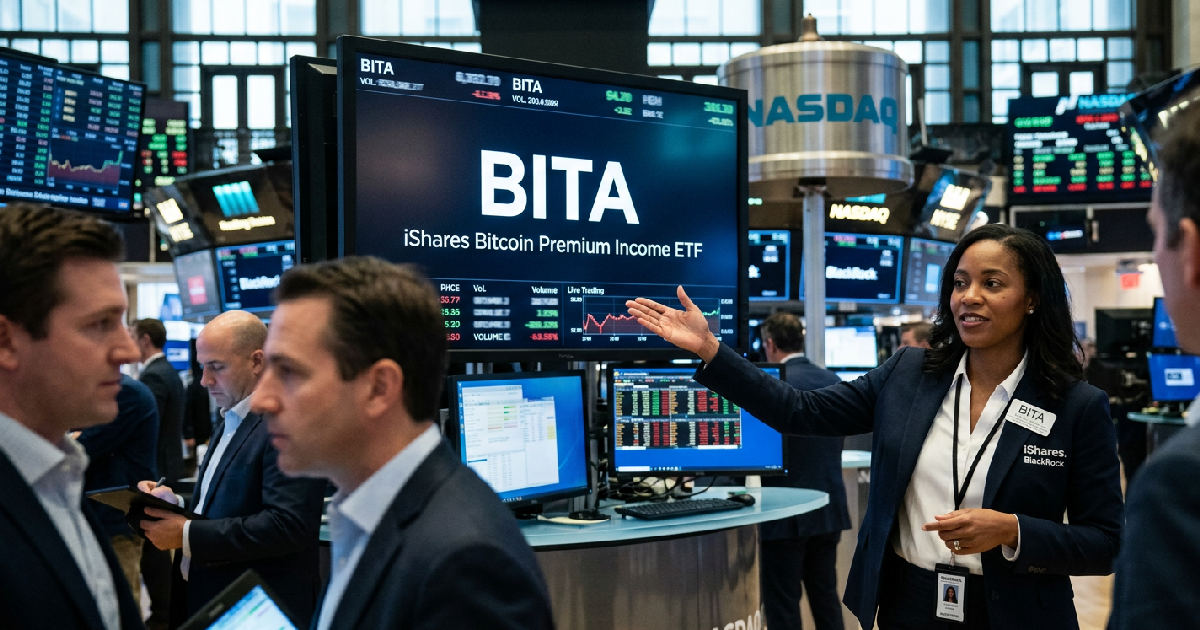
BlackRock launches iShares Bitcoin Premium Income on Nasdaq with $10 million seed capital
BlackRock officially launched the iShares Bitcoin Premium Income ETF (BITA) on Nasdaq this Tuesday, June 16, 2026, marking the firm’s first foray into income-generating cryptocurrency exchange-traded funds. The product, which operates as an actively managed covered-call fund, began trading following a regulatory process that spanned several months.
By using a “buy-write” strategy, the fund aims to provide investors with a way to monetize Bitcoin’s price volatility while maintaining exposure to the asset’s potential growth.
The fund’s arrival follows the massive success of the iShares Bitcoin Trust (IBIT), which has accumulated approximately $50 billion in assets under management since launching in January 2024. BITA enters the market with a seed capital of roughly $10 million and a competitive fee structure.
At the time of its debut, the Crypto Fear & Greed Index stood at 21, placing the market in a zone of “extreme fear” as institutional and retail participants weigh current price swings.
The introduction of BITA comes as Bitcoin price drops over 5% have recently tested investor nerves and triggered heavy liquidations in the derivatives market. By offering a yield-bearing alternative, BlackRock is targeting investors who want to stay connected to Bitcoin’s trajectory but prefer a product designed to generate premiums during periods of sideways or fluctuating price action.
Operational structure of the iShares Bitcoin Premium Income ETF
The iShares Bitcoin Premium Income ETF does not hold physical Bitcoin directly. Instead, the BITA fund primarily invests in shares of BlackRock’s own spot ETF, IBIT. To generate income, the fund sells, or “writes,” call options against these IBIT holdings. The premiums collected from these options transactions are then distributed as income to BITA shareholders, providing a steady yield component to the investment.
Under its current mandate, BITA can allocate up to 35% of its holdings to options-writing activity. This cap is designed to protect the fund’s ability to participate in market rallies. Bloomberg ETF analyst Eric Balchunas noted that the fund targets an annual yield of 15% to 25% while attempting to “capture at least 70% of bitcoin’s upside in the process.”
Custodial and cost details for BITA
BlackRock has once again partnered with Coinbase to serve as the institutional custodian for the fund’s Bitcoin exposure, mirroring the arrangement used for the flagship IBIT trust. While the fund provides a streamlined way to access Bitcoin-related income, investors should be aware of secondary costs. Beyond the management fee, shareholders indirectly bear expenses related to brokerage commissions, financing for options, and legal services.
And while yield is the primary draw, market conditions dictate outcomes. Since a covered-call strategy relies on volatility to generate premiums, a period of unusually low price movement could result in lower-than-expected distributions. Conversely, during a rapid bull run, the call options sold by the fund could limit total returns compared to holding Bitcoin or IBIT directly.
BlackRock undercuts rivals with 0.65 percent sponsor fee
BlackRock is positioning BITA as a cost-effective alternative to existing Bitcoin income products. The iShares Bitcoin Premium Income ETF carries a sponsor fee of 0.65% per year, which is significantly lower than the 0.95% to 0.99% charged by competing funds like the NEOS-Bitcoin High Income ETF (BTCI). This fee is calculated daily and scheduled for quarterly payment, undercutting market rivals by nearly 30 basis points.
This aggressive pricing comes at a time when competition in the sector is intensifying. This is evidenced by reports that Ethereum whales accumulate large positions as institutional players increasingly fight for dominance in the digital asset space. BlackRock’s scale allows it to offer lower entry costs, often a deciding factor for institutional allocators and wealth managers.
Regulatory timeline and first-mover advantage over Goldman Sachs
The path to BITA’s June 16 launch was paved by several critical regulatory filings. While the fund filed its Form 8-A to register the security on June 11, and a final product filing on June 12, the project has been in the works for over a year.
The Delaware trust behind BITA was formed in September 2025, and BlackRock submitted its initial S-1 filing in January 2026, followed by a refined amendment on April 1, 2026.
By securing SEC approval and a Nasdaq listing confirmation on June 15, BlackRock has achieved a tactical edge over other major Wall Street banks. Goldman Sachs is reportedly preparing its own version of a Bitcoin income ETF, though that product is not expected to be effective until approximately July 1, 2026.
This two-week head start allows BlackRock to capture early liquidity and establish BITA as the primary choice for income-focused crypto investors.
The broader banking sector is also feeling the pressure of this digital shift. For instance, UBS Asia President Iqbal Khan has highlighted how technological transformations are reshaping banking roles and product offerings. As firms like BlackRock integrate sophisticated derivative strategies into the crypto market, the gap between traditional finance and digital assets continues to close.