

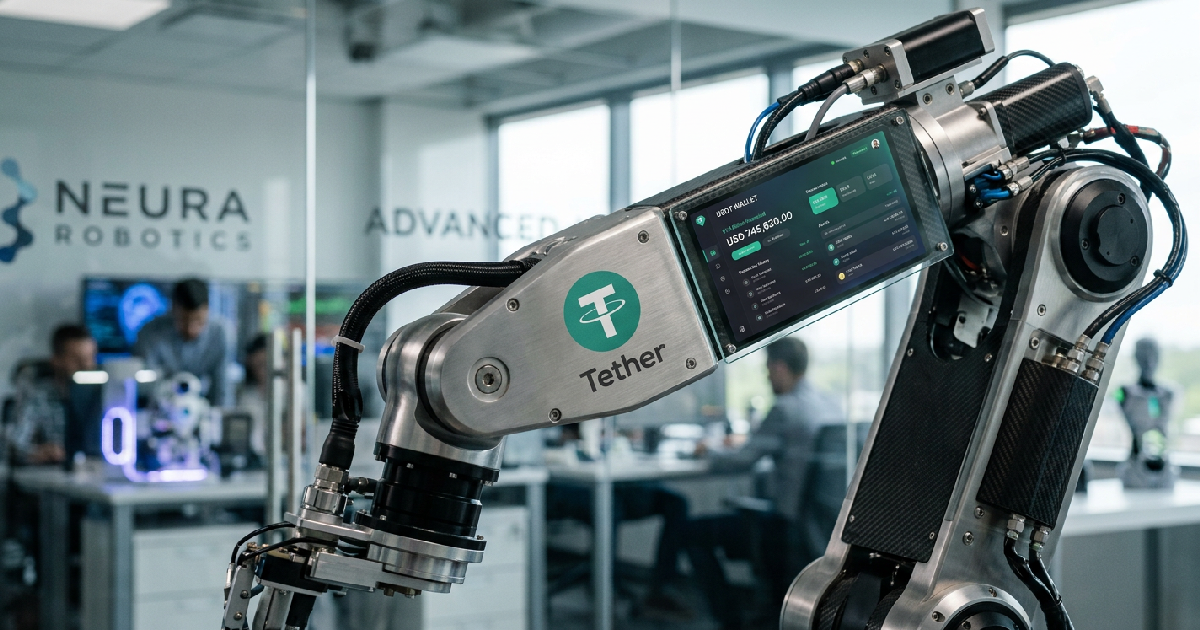
Tether reportedly leads $1.4B investment in AI firm for wallet integration
Reports emerged today, June 10, 2026, regarding a major investment led by the stablecoin issuer Tether into the robotics firm Neura. While the headline indicates Tether is leading a funding round of up to $1.4 billion for Neura, the primary source for these specific details currently returns an error page, leaving the full extent of the deal and the technical specifics unconfirmed at this time.
The reported transaction suggests a strategic shift for Tether as it seeks to integrate cryptocurrency wallet functionality directly into robotics hardware. This move comes at a time when the broader market is closely watching institutional movements, such as when Bitcoin drops following institutional outflow, signaling a potential desire by stablecoin providers to find more “tangible” utilities for their reserves.
According to the preliminary information provided in the reported headline, the $1.4 billion capital injection would be used to boost Neura’s robotics capabilities. The integration of digital asset wallets suggests a future where autonomous machines can manage their own financial transactions, effectively acting as independent economic entities within a decentralized framework.
Reported $1.4 billion funding round for Neura
The headline level data indicates Neura would utilize the investment to advance its cognitive robotics platform. If the reported $1.4 billion figure is accurate, this would represent one of the largest hardware-focused investments by a cryptocurrency-native company. Such a deal would likely aim to bridge the gap between AI-driven physical machines and blockchain-based payment layers.
However, the accessibility of these details remains limited as the primary reporting from The Block is currently showing an internal error. This technical glitch prevents a full verification of the investment terms, the specific roles of the venture partners, or the projected timeline for the hardware rollout. Users are currently met with an “Oops, there was an error” message on the landing page.
Even with the lack of detailed documentation, the news reflects a broader interest in how emerging technologies intersect with global physical systems. Some market participants see this as a way to enhance supply chain resiliency, using robots that can facilitate their own logistics payments. The reported plan for crypto wallet integration is the central pillar of this particular theory.
Challenges with current source availability
The primary hurdle for confirming the specifics of the Neura funding round is the failure of the source website to load the full content. While the title is visible, the body of the report is currently replaced by a standard privacy preference center and an error notification. This makes it impossible to cite specific executive quotes or detailed manufacturing goals.
Industry observers are waiting to see if Tether or Neura will release a formal joint statement to clarify the $1.4 billion figure. Until the source page is restored or an alternative official announcement is made, the specifics of the crypto wallet integration remain speculative. This uncertainty often occurs during high-traffic news breaks in the digital asset space.
Future of crypto wallet integration in robotics
The concept of embedding blockchain wallets into robots would imply a need for high-level hardware security. Neura would theoretically need to develop secure enclaves within their robotic processors to store private keys. This feature would allow machines to interact with smart contracts to pay for maintenance, energy, or data without human oversight.
This development mirrors other high-level shifts in the tech sector, such as how leaders like Iqbal Khan view AI impact as a massive transformation for professional roles. If robots are given the power to transact, it would fundamentally change the labor landscape and the way companies manage their automated fleets via digital ledgers.
For now, the marketplace is left with the headline of a $1.4 billion investment and a technical error page. Whether this leads to a permanent shift in Tether’s business model or remains a limited experimental project depends on the final details of the Neura agreement once they are fully disclosed to the public.