

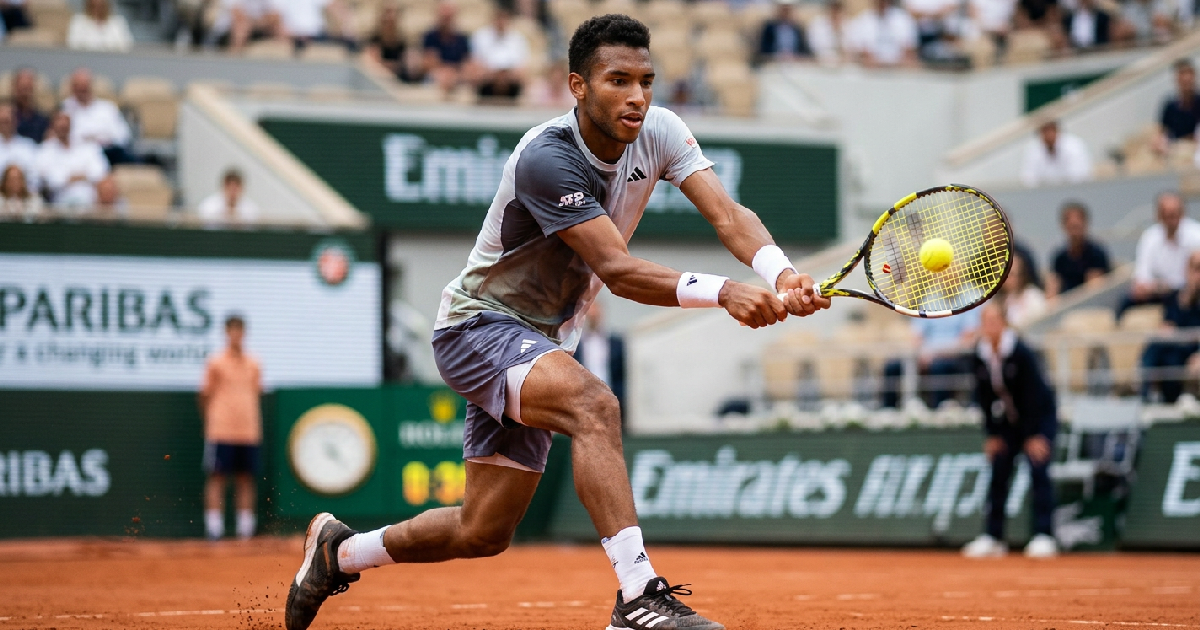
Félix Auger-Aliassime targets consistency to adapt to faster ATP Tour
Félix Auger-Aliassime is recalibrating his career as he seeks to maintain his pace within a rapidly evolving professional tennis circuit. The Canadian star, who rose to prominence as a teenage prodigy, admitted he has struggled with feeling “lost in the shuffle” as the sport undergoes a profound shift in power and playstyle. After watching his peers and newer rivals accelerate past him in the rankings, he is now focused on reclaiming his position among the world’s elite competitors.
The transition in men’s tennis has been stark, with the game becoming faster and physically more demanding. Félix Auger-Aliassime noted that the landscape changed significantly while he worked through his own professional hurdles, observing that the current generation of top players is hitting the ball harder and flatter than ever before. This shift has forced him to reassess his tactical approach to ensure he is no longer a bystander during the late stages of major tournaments.
This period of reflection comes as other athletes in various disciplines face their own setbacks. For example, in Major League Baseball, Gleyber Torres admits his injury absence has been a difficult mental challenge to overcome. Similarly, the Canadian international is working to ensure that his recent stagnation does not define the mid-point of his career as he looks toward future competitions.
Adapting to the increased velocity of the modern ATP Tour
One of the most significant changes Félix Auger-Aliassime has observed is the sheer speed of the baseline exchanges. The average pace of the game has climbed, leaving less room for the patient, high-margin tennis that once allowed players to wear down opponents. He recognized that top-tier competitors are now punishing short balls with unprecedented aggression, which has required him to sharpen his own timing and shot-making ability.
To keep up with this evolution, the Montreal native has spent training blocks focused on taking the ball earlier and improving his court positioning. The goal is to dictate play rather than reacting to the heavy hitting of his rivals. He acknowledged that the margins for error have vanished, and failing to adapt to this “new” version of tennis would mean being left behind by the sport’s young vanguard.
This pressure to adapt and perform is a constant across professional sports. In Formula 1, for instance, Toto Wolff reacts to driver contact by emphasizing precision and decision-making under stress—the same qualities Félix Auger-Aliassime is trying to instill in his game to prevent mid-match lapses.
Refining internal consistency and technical foundations
The Canadian’s primary challenge has often been maintaining his high ceiling over an entire match. While he possesses a powerful serve and a formidable forehand, consistency remains the bridge between him and a Grand Slam title. His recent efforts have centered on “short-point efficiency,” aimed at ending rallies quicker and preserving the physical energy required for grueling best-of-five-set encounters.
By shortening points, he hopes to mitigate the fatigue that can set in during long events. His team is pushing him to take more calculated risks, moving forward to the net and using his athleticism to disrupt the rhythm of baseline-heavy opponents. This strategic pivot is seen as essential for surviving the tour’s hardest-hitting era.
Psychological shifts and managing the prodigy label
Beyond the technical adjustments, Félix Auger-Aliassime is navigating the mental weight of high expectations. Having been labeled a future world number one as a teenager, the pressure of living up to that “prodigy” tag has been a constant presence. He admitted that the burden of these expectations took years to shed, but he now approaches the game with a more mature, urgent perspective.
He views his current position with a renewed sense of purpose, describing a need to be more aggressive both physically and mentally. The “loneliness of the climb” is a reality he has embraced, using his past title droughts as motivation to improve. He remains the standard-bearer for tennis in Canada, a role that carries its own set of responsibilities and pressures.
The sport continues to present new challenges every day. For fans following the latest schedules and match-ups, seeing how veterans and new stars collide remains a draw, such as when Novak Djokovic meets Giovanni Mpetshi Perricard in high-profile events. For Félix Auger-Aliassime, the mission is to ensure he is the one dictating those headlines rather than reading them from the sidelines.
Looking toward a more aggressive future on court
The next phase of his career will likely be defined by his ability to stick to this new, aggressive identity. Whether playing on clay, grass, or hard courts, the requirement for high velocity and early ball-striking remains constant. His willingness to fundamentally change parts of his game suggests he is far from finished competing for the sport’s biggest prizes.
Analysts suggest that while the very top of the rankings has become more crowded with young talent, there is still room for a player with the physical tools of Félix Auger-Aliassime to make an impact. If he can bridge the gap between his potential and his on-court execution, his period of getting “lost in the shuffle” may finally be coming to a close.