

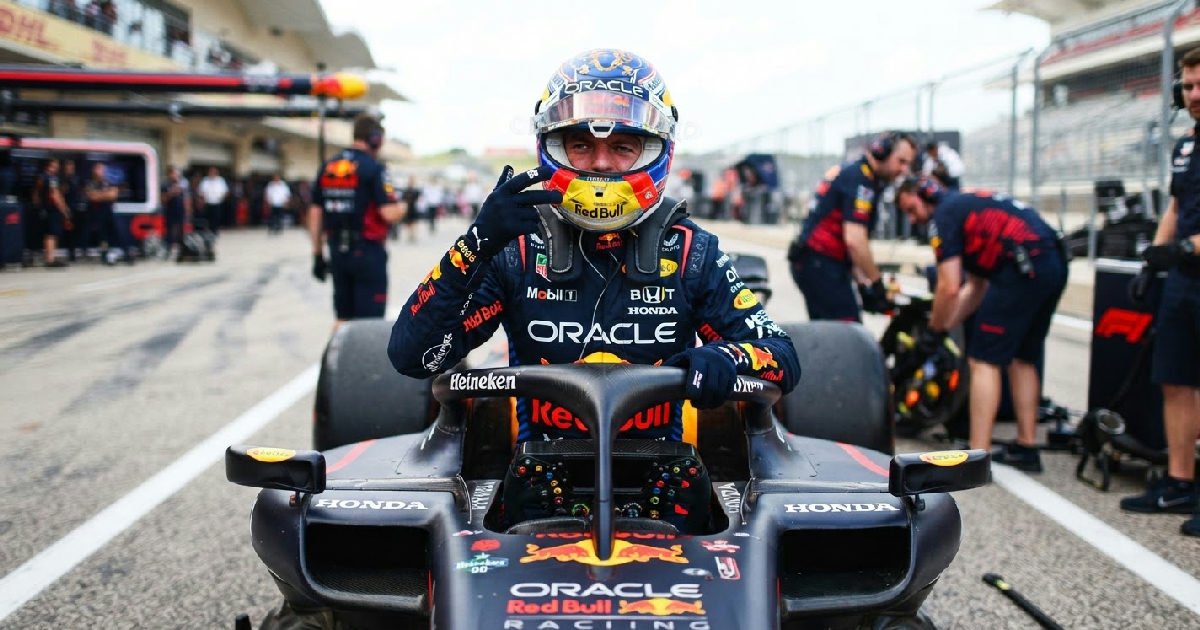
max verstappen calls red bull radio issues a disaster
Four-time Formula 1 World Champion Max Verstappen didn’t mince words after the 2026 United States Grand Prix, lambasting Red Bull Racing’s communication and performance as a "disaster." His sharp criticism followed a race in Austin where persistent radio malfunctions plagued both his car and that of teammate Isack Hadjar.
Verstappen, who ultimately finished third, joked that the team might be better off communicating via sign language.
Max Verstappen Red Bull’s Austin ordeal
The Dutchman’s frustration stemmed from a litany of issues beyond just the radio. He cited strategic missteps and the vehicle’s overall balance. This latest outburst spotlights a challenging 2026 season for Red Bull, a stark contrast to their previous dominant campaigns. The team currently sits fourth in the Constructors’ Championship.
During Sunday’s race at the Circuit of the Americas (COTA), Max Verstappen faced severe communication difficulties. He could hear his race engineer, Gianpiero Lambiase, but his own transmissions were often inaudible to the pit wall. This forced the team to resort to coded messages and pit board displays.
The situation extended beyond Verstappen, as Isack Hadjar also reported significant radio trouble. Hadjar told Sky Sports F1 he "can’t hear what’s happening in the pits" and even "left the pits with the wrong map." Such issues are highly problematic in the fast-paced world of Formula 1.
Recurring Technical Glitches
Verstappen stressed that these radio woes were far from isolated incidents, stating they’d occurred "I don’t know how many times this year." He recounted similar problems during the 2026 Singapore Grand Prix, where Red Bull couldn’t hear him for significant portions of the race. This pattern suggests a deeper systemic issue within the team’s operations.
The current communication woes echo earlier technical struggles experienced by Verstappen. Back in the 2024 Saudi Arabian Grand Prix practice sessions, he described his RB20 as a "disaster" due to downshifting problems and poor balance. Despite topping the first practice session, he finished 10th in Free Practice 2, highlighting intermittent performance issues.
Strategic Missteps and Driver Frustration
Beyond the technical glitches, Verstappen voiced strong disapproval of Red Bull’s strategic decisions during the United States Grand Prix. He believed the team’s chosen two-stop strategy, utilizing soft-soft-medium tires, was suboptimal. Harder compounds proved more effective than anticipated on race day.
The four-time champion explicitly noted that the "tire order was wrong" and the "chosen compounds were incorrect." This dissatisfaction with strategy, combined with a slow pit stop, compounded his frustration. A consistently poor start mechanism has also plagued Verstappen’s season, leading him to describe it as "consistently sh**" after the Austin race.
These recurring problems underscore the mounting pressure on Red Bull. Their once unshakeable dominance appears to be waning in the 2026 season. Drivers need absolute confidence in both their car and their team’s strategic calls to perform at peak.
Red Bull’s Shifting Personnel Landscape
The internal dynamics at Red Bull Racing are undergoing significant shifts. Max Verstappen’s long-time race engineer, Gianpiero Lambiase, is set to depart for McLaren as early as next season. Tom Hart has already been selected as Lambiase’s replacement, and he stood in for the entire Austin weekend.
This personnel change represents a considerable adjustment for Verstappen. The rapport between a driver and their race engineer is crucial for on-track performance. The timing of these communication issues, coinciding with Hart’s first full weekend in the role, is particularly unfortunate for the new pairing.
Departures and New Leadership
The team has seen a broader exodus of key figures. Laurent Mekies now serves as Team Principal and CEO, having taken over after Christian Horner’s departure in mid-2025. Legendary technical guru Adrian Newey also left in early 2025 to join Aston Martin. These high-profile changes have undeniably impacted the team’s stability and engineering prowess.
Such significant leadership and technical alterations always present challenges for an F1 team. Red Bull’s current struggles with consistency and reliability could be symptomatic of these transitional phases. The pressure is on for new leadership to consolidate and rebuild.
Echoes of Past F1 Radio Frustrations
Driver frustration over team radio is a long-standing tradition in Formula 1, and Max Verstappen’s recent comments fit within this rich history. The intense pressure of racing at the pinnacle of motorsport often leads to candid and memorable exchanges between drivers and their pit walls. These moments offer rare glimpses into the high-stakes environment.
One notable example is Yuki Tsunoda, known for his hot-headed radio outbursts during the 2021 Spanish Grand Prix. Kimi Räikkönen also delivered several iconic lines, including his famous "just leave me alone, I know what to do" message. These instances highlight how communication breakdowns can escalate quickly.
Sebastian Vettel’s fury over a drive-through penalty and communication problems in the 2012 Malaysian Grand Prix further illustrate the point. Even Lewis Hamilton sarcastically commented, "Have a tea break while you’re at it," during a team orders debate at the 2025 Miami Grand Prix. These examples show that even the calmest drivers can crack under pressure.
Fernando Alonso famously exclaimed, "GP2 engine! GP2… Argh!" during the 2015 Japanese Grand Prix due to power unit struggles. More recently, George Russell told Toto Wolff, "Just let me f***ing drive!" during the 2024 Austrian Grand Prix, then expressed frustration with Mercedes’ hesitant team orders at the 2025 Mexican Grand Prix.
These incidents are a testament to the emotional toll of competitive racing, and how critical flawless communication is.
Implications for Red Bull’s Championship Aspirations
Red Bull Racing currently finds itself in an unfamiliar position in the 2026 season. They are fourth in the Constructors’ Championship with 332 points and only two race wins after 17 rounds, trailing leader Mercedes by 246 points.
Max Verstappen, despite his individual talent, is also fourth in the Drivers’ Standings with 221 points and two victories. His teammate, Isack Hadjar, sits eighth with 97 points.
The accumulation of communication breakdowns, strategic errors, and car performance issues casts a shadow over Red Bull’s title ambitions. While Verstappen’s talent often allows him to overcome adversity, these persistent problems are undeniably impacting the team’s overall competitiveness. The seamless operation required to win championships appears compromised.
Path Forward for the Team
The road ahead for Red Bull will necessitate a thorough review of their internal processes. Addressing the underlying causes of the radio failures, optimizing race strategy, and ensuring consistent car performance are paramount. The team’s engineering and communication protocols must be robust to support their championship-winning aspirations.
With Kimi Antonelli eyeing an F1 world championship, the competition is fierce. Red Bull can’t afford to lose ground on fundamentals. Re-establishing clear communication channels and refining operational efficiency will be critical in regaining their competitive edge. The team will need to ensure a smoother transition for Tom Hart as he takes over full-time from Gianpiero Lambiase.
The Pressure Mounts on Red Bull
The challenges faced by Red Bull Racing in the 2026 season extend beyond simple technical glitches; they represent a significant test of the team’s resilience and management. The departure of key personnel, coupled with a decline in their seemingly unassailable performance, has created an environment of increased scrutiny.
Every misstep, from a slow pit stop to a radio failure, is amplified when you’re accustomed to being at the top.
Verstappen’s direct and blunt assessment of the situation highlights the urgency within the team. As a driver who demands perfection, his patience appears to be wearing thin with recurring operational shortcomings.
This kind of public criticism from a star driver can put immense pressure on a team principal and the entire organization to swiftly rectify problems. The sport demands constant evolution, and Red Bull must adapt.
Impact on Driver-Team Relationship
The relationship between a driver and their team is built on trust and efficient communication, especially during high-pressure race scenarios. When a driver like Max Verstappen, known for his precision and intensity, expresses such profound frustration, it signals potential strain. The humor in his "sign language" suggestion belies a serious underlying concern about fundamental operational effectiveness.
For a team that has enjoyed such phenomenal success, this period of struggle presents a new kind of challenge. They must ensure that the internal communication, both human and technical, is flawless. Otherwise, they risk further alienating their star driver and jeopardizing their long-term competitive standing in Formula 1.