

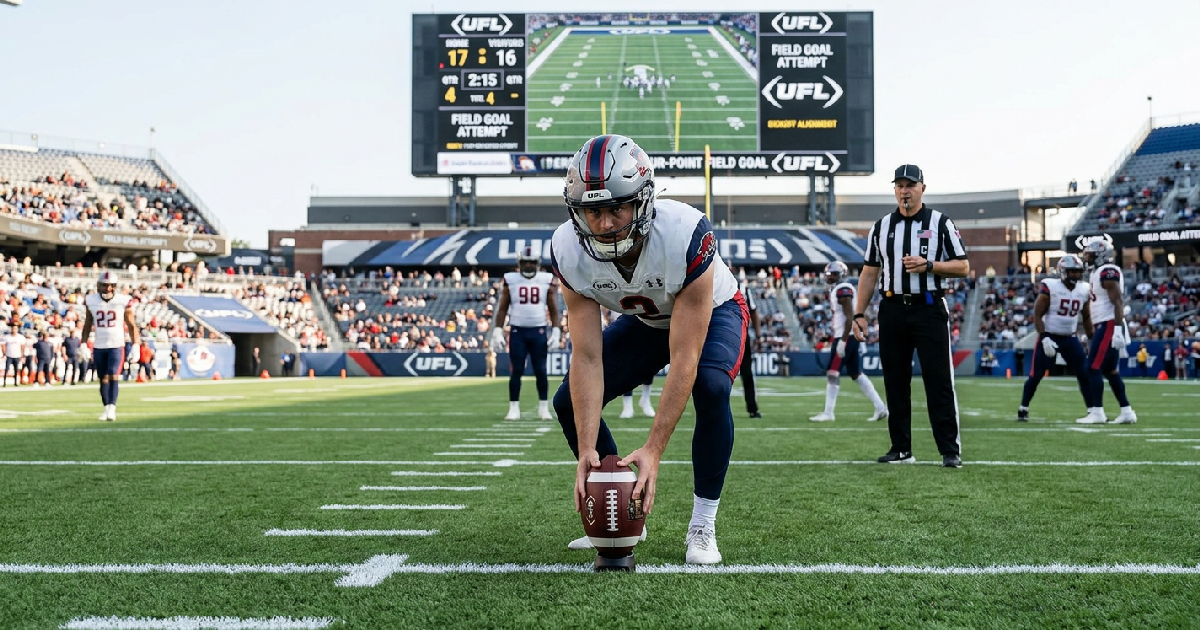
UFL Rule Changes Under Mike Repole Reshape Spring Football Tactics
UFL owner Mike Repole has moved to distinguish the league from its competitors by overseeing a series of aggressive rule changes designed to heighten scoring and offensive aggression. Central to this strategy is the introduction of a four-point field goal and significant restrictions on punting once teams enter the opponent’s territory. These modifications reflect a broader attempt to prioritize high-stakes decision-making and offensive efficiency over traditional field position battles that often define professional football.
By incentivizing long-distance kicking and removing the conservative option of the punt inside the opponent’s side of the field, the league is attempting to redefine its brand. The shift suggests a belief that spectator engagement is tied directly to scoring volatility and “big play” potential. Under this framework, the midfield line represents a major tactical threshold for coaches who are now forced to choose between aggressive fourth-down attempts or long-range kicks.
This emphasis on high-frequency, high-stakes interactions mirrors trends in the digital world. For instance, the Epic Games Store’s expansion into mobile platforms demonstrates a similar focus on capturing audience attention through accessible and engaging experiences. Just as software giants pivot to meet changing consumer habits, Repole is betting that football fans will trade the traditional strategy of a pinned-deep punt for the tension of a 60-yard field goal attempt.
The Tactical Math of the Four-Point Field Goal
The four-point field goal, awarded for successful kicks from beyond 50 yards, has reportedly forced a total reassessment of scoring math for offensive coordinators. Teams are now more likely to attempt a long-range kick rather than settling for a standard three-point attempt from closer range or punting for field position. This change introduces a risk-reward element that significantly increases the value of elite kicking talent.
From a broadcast perspective, the four-point play is expected to create highlights that resonate with modern viewers and fantasy sports enthusiasts. It also fundamentally changes late-game logic. A team trailing by a multi-score margin is no longer facing a standard comeback path; several long-range field goals can close gaps rapidly, altering how defensive units must protect their territory in the final minutes of each half.
Coaching staffs have reportedly prioritized scouting kickers with high-velocity leg strength over those who offer mere accuracy at shorter distances. This drive for specialized talent is similar to how investors target specific AI-driven assets to find leverage in complex, fast-moving markets. The specialist’s role has arguably never been more pivotal to a team’s weekly success.
Impact of Restricted Punting in Opponent Territory
Reports indicate that the league has effectively discouraged or restricted punting once a team crosses the opponent’s 40-yard line. This rule aims to eliminate the “coffin corner” punt, which league officials view as a defensive stalling tactic that slows down the pace of play. By forcing teams to either attempt a field goal or “go for it” on fourth down, the UFL is seeing an increase in midfield aggression.
This policy has reportedly led to more high-intensity fourth-down conversions, which serve as the emotional peaks of a game. Defenders are forced to stay on the field longer, and offensive play-calling must be more creative to account for the lack of a traditional “safety net.” The removal of the punt essentially treats every drive that reaches the opponent’s side of the field as a scoring opportunity, leaving little room for conservative management.
Coaches who previously relied on field position to win games find themselves at a disadvantage in this new environment. This high-stakes atmosphere requires participants to remain composed under pressure, much like how market participants must navigate negative cycles and volatile conditions while maintaining their core strategy.
The UFL as a Laboratory for Football Innovation
Mike Repole has positioned the UFL as a testing ground for the future of the sport. By tweaking the scoring and removing traditional special teams plays, he is exploring the limits of what domestic football fans are willing to accept. If these changes result in improved viewership and higher engagement, it is likely that other developmental or secondary leagues will consider similar adjustments.
But the long-term success of these rules depends on the execution. While the four-point field goal adds an element of excitement, a surge in missed long-range kicks could potentially disrupt game flow and frustrate fans. Similarly, the punt restrictions could lead to more lopsided results if a defense cannot handle the pressure of starting drives deep in their own territory after a failed fourth-down try. For now, the league remains a bold experiment in modernizing a traditional game.