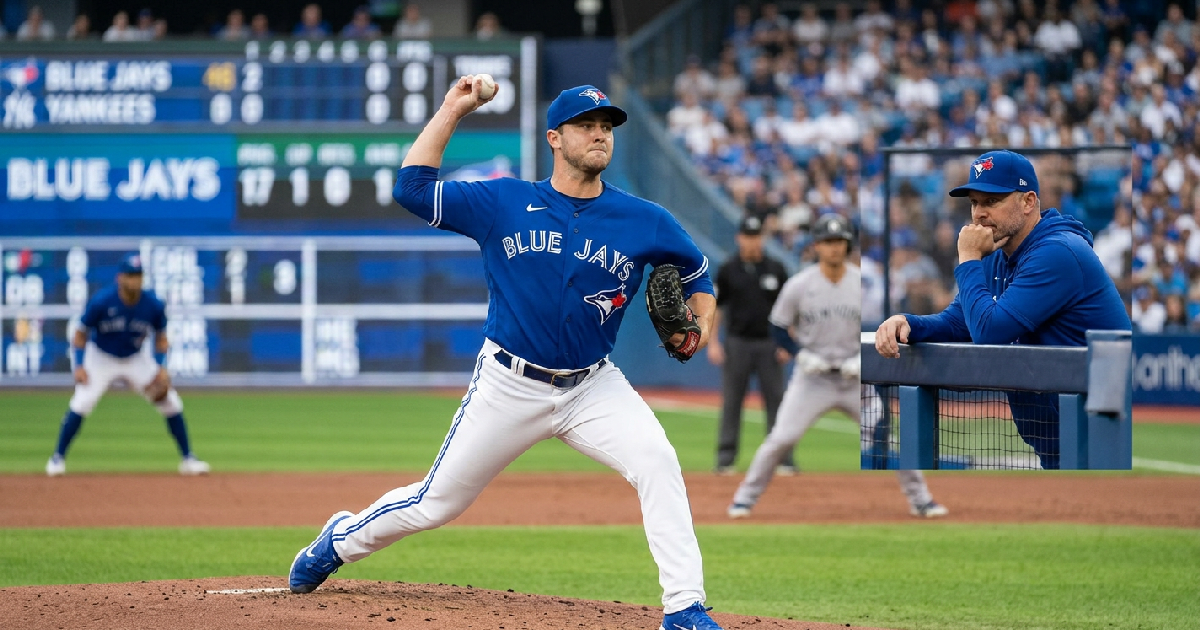
Toronto Blue Jays manager John Schneider has offered a positive assessment of Trey Yesavage following the pitcher’s return from a shoulder injury, indicating the right-hander has quickly found his rhythm on the mound. As the club navigates a challenging start to the 2026 campaign characterized by inconsistent results, the return of Yesavage provides a much-needed boost to a starting rotation that has dealt with both health concerns and performance volatility in recent weeks.
The organization is reportedly working through the aftermath of a difficult previous postseason, and the early months of the current schedule have tested the roster’s depth. In this environment, the performance of young arms like Yesavage is viewed as vital for stabilizing a clubhouse facing external pressure. The manager appears confident that the pitcher is regaining the form that made him a significant contributor during last year’s run to the playoffs.
Yesavage has completed a handful of starts since his activation from the injured list. While the training staff remains cautious regarding his pitch counts and overall workload, reports suggest that his velocity and command have met the team’s internal benchmarks. Schneider has noted that the pitcher’s ability to handle professional hitters after a layoff is a promising sign for the rotation’s long-term health.
John Schneider Evaluates Trey Yesavage in Rotation Return
The Blue Jays’ leadership has been transparent about the cautious approach taken with the young right-hander. Even though the club is essentially managing his workload as if it were early in the year, Yesavage’s efficiency has reportedly mirrored that of a mid-season veteran. His ability to find the strike zone has remained a standout feature of his game, despite missing the opening stretch of the season due to the shoulder issue.
The transition from rehabilitation to active duty is often unpredictable for young players. However, Yesavage has shown the mechanical consistency that helped propel the team through the pennant race a year ago. As opposing batters begin to adjust their scouting reports, the pitcher’s response has been described as poised and effective, allowing the coaching staff to trust him in high-leverage situations.
This resurgence is particularly important given the fluctuations seen across the roster. The team has seen several key players move in and out of the lineup, mirroring the volatility often seen in modern digital markets. Just as
liquidity shifts can impact various assets during periods of market uncertainty, the Blue Jays’ consistency has wavered as their depth was tested by early-season fatigue.
Rotation Stability and Workload Management
Managing a Major League pitching staff involves a delicate balance between immediate results and protecting a player’s future. The Blue Jays have adopted a flexible philosophy as several veteran pitchers manage the wear and tear inherent in a full professional schedule. Yesavage’s ability to provide quality innings allows Schneider more flexibility in managing a bullpen that has seen heavy use during the opening months.
The mental aspect of returning from a joint injury is often as significant as the physical recovery. Schneider suggested that the pitcher’s self-belief played a major role in his integration back into the starting five. Instead of pitching around contact, he has reportedly challenged hitters directly, showing a level of aggression that matches his pre-injury performance.
Strategic Implications for the Blue Jays Moving Forward
For a franchise coming off a deep postseason run, the early summer months carry significant weight. The front office is likely monitoring these internal developments closely, knowing that sustaining a competitive position in a difficult division requires reliable starting pitching. The stability Yesavage provides could be the catalyst needed to spark a period of sustained success, similar to when
Vietnam set a new national record during a historic run of sporting form.
While the current win-loss record is not what the organization hoped for, the parity within the American League means several teams remain within striking distance of the postseason race. Having a dependable arm who can limit opposing offenses gives the Toronto lineup more opportunities to find their timing at the plate. So far, the offense has faced challenges in producing runs during critical moments, placing more pressure on the arms to keep games close.
The organization’s ability to develop talent in-house has become a defining characteristic of their recent strategy. However, the pressures of a slow start can sometimes shift a team’s focus toward external solutions. For now, the coaching staff seems content to let Yesavage set his own tempo, trusting the quality of his pitches over the anxieties of the standings.
If his current trajectory continues, the conversation in Toronto may shift toward his potential to move up the rotation hierarchy. While other teams watch for signs of a potential slide, the Blue Jays are leaning on their youth movement to stabilize the season. Much like how
MicroStrategy accelerated its acquisition strategy while others remained hesitant, the Blue Jays are doubling down on their internal assets to secure their competitive future.