

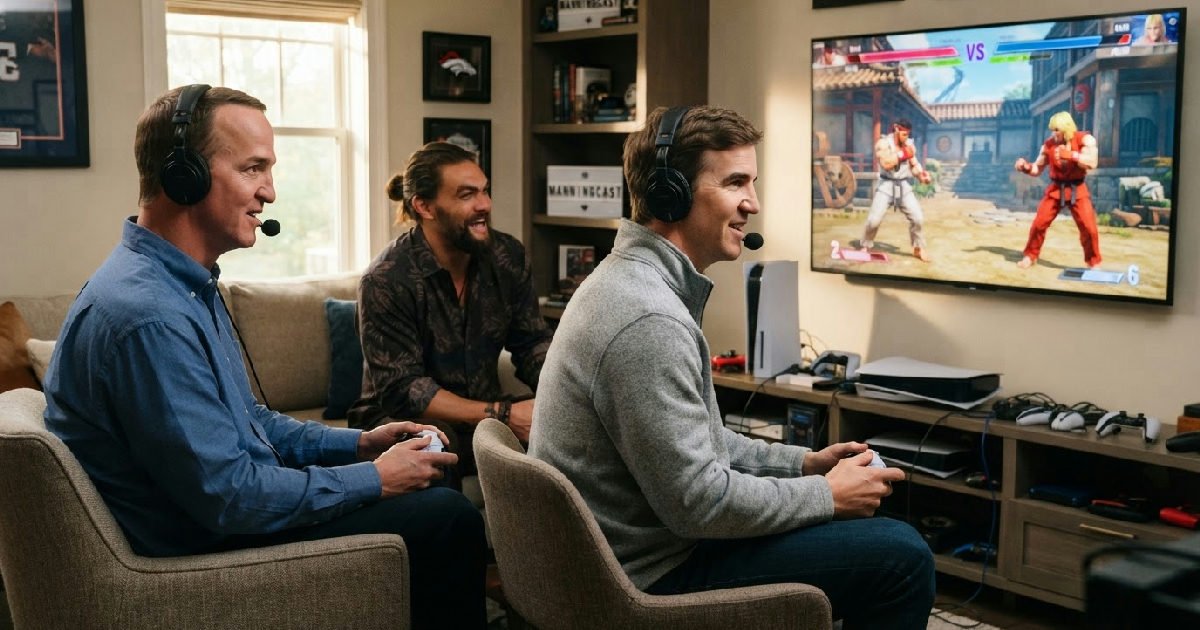
Peyton and Eli Manning settle rivalry in ‘Street Fighter
The legendary sibling rivalry between NFL quarterbacks Peyton Williams Manning and Elisha Nelson Manning has found a new battleground: the digital world of “Street Fighter.” In a promotional clip for the upcoming film adaptation, the brothers engage in their typical bickering before being urged by actor Jason Momoa to settle their differences in the iconic video game.
The segment, presented in the popular ManningCast format, aired on ESPN on Monday, September 21, 2026. It features Momoa as a guest, who listens to the brothers debate their historical dominance in the game. This clip serves as a unique marketing crossover, blending professional football, Hollywood entertainment, and classic video games.
Peyton and Eli Manning Bring Their Rivalry to the Big Screen
The promotion leans heavily on the established on-screen chemistry between the Manning brothers. The segment opens with their familiar back-and-forth, with Eli Manning claiming supremacy. “Jason, you are the perfect Blanka; he’s my favorite character to play in the game, and that’s how I always beat Peyton,” the younger Manning quipped.
Peyton, a five-time NFL MVP, quickly refuted the claim, asserting his own prowess. The argument escalated, with Eli accusing his older brother of quitting before a match was over.
“Just ’cause you turned off the console before the game was actually over, I still beat you,” Eli retorted, a sentiment familiar to any pair of competitive siblings. This kind of interaction echoes the dynamic between football teams, like the New England Patriots, in their fierce on-field contests.
It was at this point that Momoa, a star in the upcoming movie, interjected. The “Aquaman” actor suggested the only way to truly settle the long-standing argument was for them to face off in “Street Fighter.” This clever setup bridges the gap between the football-focused broadcast and the action movie promotion.
An animated brawl with signature NFL moves
Following Momoa’s suggestion, the clip transitions into a special animated sequence. Cartoon versions of Peyton and Eli Manning battle it out as “Street Fighter” characters. The animation creatively incorporates their famous on-field mannerisms as special moves, providing a treat for NFL fans.
Peyton Manning unleashes his signature pre-snap audible, “Omaha! Omaha!”, as an attack. Not to be outdone, Eli counters with a move based on his miraculous “Helmet Catch” from Super Bowl XLII. The digital skirmish eventually mirrors a real-life sibling tussle, ending with Peyton holding his brother in a headlock.
The scene then cuts back to the live broadcast, showing the brothers looking disheveled from their virtual fight. Despite the animated conclusion, their verbal sparring continues unabated. Peyton lays down a challenge for a rematch, to which Eli eagerly responds, “Let’s do it!” setting the stage for a potential sequel.
The Manning Brothers’ Media Empire
Since retiring from the NFL, Peyton Williams Manning and Elisha Nelson Manning have crafted remarkably successful second careers in media. Their flagship program, “Monday Night Football with Peyton and Eli,” commonly known as the “ManningCast,” has redefined sports broadcasting. The show offers a more relaxed, conversational, and analytical alternative to traditional game commentary.
Peyton Manning, inducted into the Pro Football Hall of Fame in 2021, and Eli Manning, a two-time Super Bowl MVP himself, leverage their deep knowledge of the game. They host the show from their respective homes, bringing on a variety of high-profile guests from the worlds of sports, entertainment, and politics.
This unique format has drawn critical acclaim and high viewership, earning them multiple Sports Emmy Awards.
Their appeal lies in the combination of elite football intelligence and the relatable, often humorous, brotherly dynamic. This “Street Fighter” promotion is a perfect extension of that brand. It showcases their ability to move seamlessly between hardcore sports analysis and lighthearted entertainment, proving their marketability extends far beyond the gridiron.
A history of rivalry and chemistry
The rivalry between the two brothers, sons of former NFL quarterback Archie Manning, has been a public narrative throughout their careers and beyond. Their careers were often compared and contrasted, fueling their enduring sibling rivalry.
Peyton, a former Indianapolis Colt and Denver Bronco, was known for his record-setting regular season performances, while Eli, who played his entire career with the New York Giants, built a reputation for his incredible postseason runs.
This competitive but affectionate dynamic is the cornerstone of their post-playing success. Whether they are trading jabs on the ManningCast, co-starring in commercials, or hosting game shows, their chemistry is palpable and authentic.
It allows them to connect with a broad audience, including those who may not be die-hard football fans but enjoy their family-friendly banter. The “Street Fighter” spot demonstrates that marketers see immense value in this proven formula.
From Arcade Classic to Movie Franchise
The “Street Fighter” franchise itself is a titan of the entertainment industry. Debuting in arcades in 1987, it revolutionized the fighting game genre with its sequel, “Street Fighter II,” in 1991. The game introduced a diverse roster of international characters, complex move sets, and a competitive framework that laid the foundation for modern esports.
The series has since spawned numerous sequels, spin-offs, and adaptations across various media, including comic books, television series, and multiple films. Its characters—like Ryu, Ken, Chun-Li, and Guile—are globally recognized pop culture icons.
The brand’s longevity is a testament to its compelling gameplay and memorable world, resonating with generations of players and building a dedicated fanbase. This enduring popularity makes it a valuable property for a new film adaptation, especially with the rising popularity of retro gaming rewards and content.
What to expect from the new film
The new “Street Fighter” movie, set for release on October 16, aims to capture the action and spirit of its source material for a modern audience. The film features an ensemble cast led by Noah Centineo as the iconic American fighter Ken Masters. He is joined by Jason Momoa, Andrew Koji, Callina Liang, Eric André, 50 Cent, and Andrew Schulz.
In a fascinating bit of casting that further connects the film to the world of combat sports, former WWE rivals Roman Reigns and Cody Rhodes will appear. The two wrestling superstars are slated to play the formidable warriors Akuma and Guile, respectively. This inclusion seeks to attract fans from the professional wrestling community, adding another layer to the film’s broad marketing appeal.
A Convergence of Major Entertainment Worlds
This promotional strategy represents a savvy convergence of sports, cinema, and gaming. By bringing the Peyton and Eli Manning together with Jason Momoa, the campaign targets three distinct but overlapping fanbases. It leverages the Mannings’ authority in the sports world, Momoa’s blockbuster Hollywood appeal, and the nostalgic power of the “Street Fighter” brand.
This type of cross-media synergy is becoming a go-to strategy in a fragmented media landscape. Brands are increasingly looking for authentic ways to cut through the noise, and a collaboration like this feels more like an organic piece of entertainment than a traditional advertisement.
It effectively uses the ManningCast platform to introduce the movie to a massive, engaged audience that might not otherwise be reached, much like how G2 Esports claims titles in front of their dedicated streaming fanbase.
The success of the Manning brothers demonstrates a new path forward for athletes after their playing days are over. They have built a media enterprise that allows them to remain central figures in the sports conversation while expanding their influence into broader entertainment ventures.
This “Street Fighter” spot is not just a one-off commercial; it’s a prime example of how modern athletes can evolve into multimedia personalities, leveraging their personal brand far beyond the field of play.