

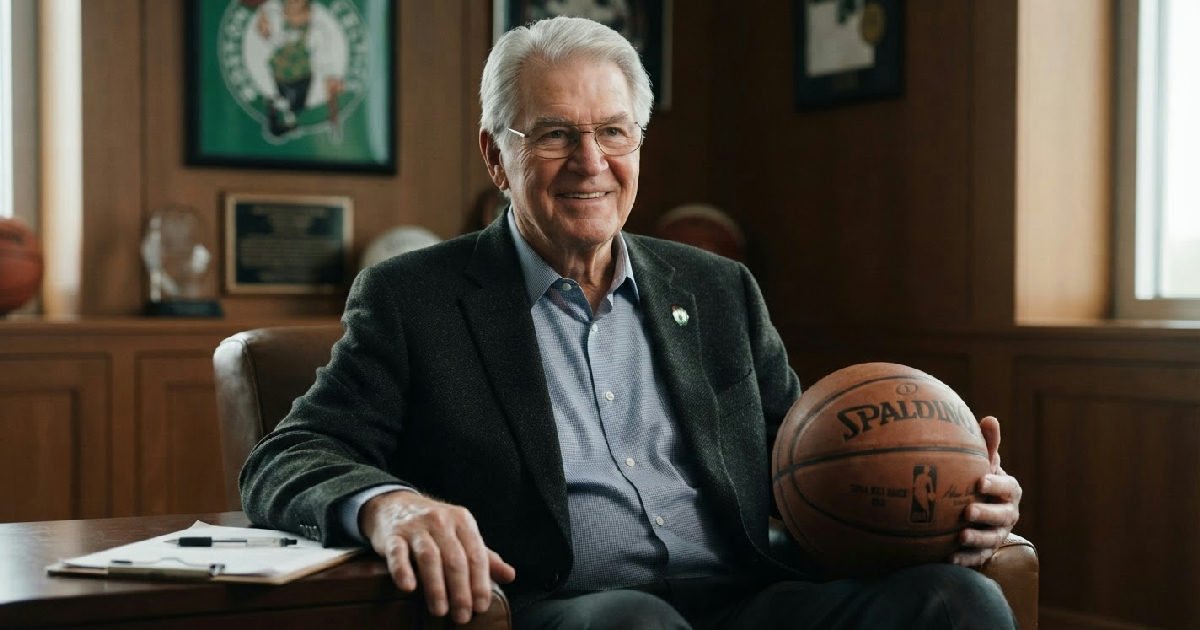
NBA legend Don Nelson passes away at 86 after storied career
Basketball Hall of Famer Don Nelson, a five-time champion player and iconic head coach, passes away at 86. His family confirmed on Sunday, August 9, 2026, that Nelson died peacefully, surrounded by loved ones.
The announcement sent ripples through the basketball world, mourning the loss of a man who left an indelible mark on the sport. His career spanned decades, highlighted by significant achievements on the court and revolutionary strategies from the sidelines.
A legacy forged in Boston: Five-time NBA champion
Don Nelson began his playing career as a standout at the University of Iowa, earning two All-American selections. He was then drafted 17th overall in the third round of the 1962 NBA Draft by the Chicago Zephyrs, marking the start of a distinguished 14-season professional journey.
While he also played for the Los Angeles Lakers from 1963-1965, it was with the Boston Celtics where Nelson truly cemented his playing legend. From 1965 to 1976, the small forward was a crucial part of five NBA championship teams.
He celebrated titles with the Celtics in 1966, 1968, 1969, 1974, and 1976. Known as a reliable reserve and one of the league’s best “sixth men,” Nelson’s high basketball IQ and shooting ability were consistently praised.
He even led the NBA in field-goal percentage during the 1974-75 season, showcasing his efficiency. Across 1,043 regular season appearances, Nelson averaged 10.3 points and 4.9 rebounds in 20.6 minutes per game, proving his consistent value.
Following his retirement as a player, the Celtics honored Nelson by retiring his number 19 jersey in 1978. It now hangs prominently in the TD Garden rafters, a permanent tribute to his contributions.
Pioneering an innovative coaching philosophy
Nelson’s impact wasn’t limited to his playing days; he transcended the game through his innovative coaching. His career on the bench spanned over 30 years, overseeing four NBA franchises and leaving a profound strategic legacy.
He coached the Milwaukee Bucks, the New York Knicks, the Dallas Mavericks, and had two stints with the Golden State Warriors. Nelson quickly became known for his groundbreaking approaches, often referred to as “Nellie Ball.”
He popularized concepts like the “point forward” and “small ball,” which were revolutionary at the time and have since become staples in modern basketball. These tactical shifts often prioritized versatility, speed, and shooting over traditional positional play.
His coaching success earned him the NBA Coach of the Year award three times, in 1983, 1985, and 1992. These accolades underscore his consistent ability to adapt and innovate in an ever-evolving league.
Record-setting wins and Hall of Fame induction
Nelson achieved a remarkable 1,335 NBA coaching victories during his career. This made him the all-time record holder for nearly 12 years, surpassing Lenny Wilkens in 2010.
His record stood until 2022 when San Antonio Spurs head coach Gregg Popovich surpassed him. Nelson’s overall coaching record was an impressive 1,335-1,063, a testament to his enduring success and strategic prowess.
He also holds the unique distinction of being the only coach in NBA history to record over 300 wins with three different franchises: Milwaukee, Golden State, and Dallas. This illustrates his ability to build and sustain successful teams across various organizations.
In recognition of his extraordinary contributions, Don Nelson was inducted into the Naismith Basketball Hall of Fame in 2012. This honor solidified his place among the sport’s greatest figures.
Impact beyond the stat sheet
Nelson’s influence extended far beyond his win-loss record and strategic innovations. He was known for fostering dynamic, often unconventional, teams that captivated audiences, from the “Run TMC” era Warriors in the late 1980s and early 90s to the beloved “We Believe” Warriors of the mid-2000s.
He had a knack for getting the most out of his players, often placing them in roles that maximized their unique skill sets rather than conforming to rigid positions. This player-centric approach helped define many careers.
The innovative spirit Nelson brought to the game reshaped how many coaches approached offense and defense. His willingness to experiment with lineups and strategies challenged traditional basketball wisdom, making the game more dynamic and exciting.
For instance, his use of smaller, quicker lineups to spread the floor and create mismatches became a blueprint for offensive strategies that are common today. His foresight was years ahead of its time, providing a blueprint for the pace-and-space offenses prevalent in today’s NBA. The core principles of strategic adaptation and maximizing player potential remain crucial in modern sports.
Nelson’s teams were frequently thrilling to watch, embodying a spirit of audacious play that mirrored Nelson’s own personality. He cultivated an environment where players were encouraged to play freely within his innovative structures, attracting fans much like a top NFL venue draws crowds.
Family’s heartfelt tribute and outpouring of grief
Nelson was born on May 15, 1940, in Muskegon, Michigan, and his journey through basketball touched countless lives. His family’s statement provided a touching glimpse into his final days.
“On Sunday morning our beloved husband, dad, grandfather and great-grandfather Don Nelson peacefully went to be with the Lord, surrounded by his loving family,” read the statement, shared by NBA insider Marc Stein. “Throughout his last week, friends and family encircled him with love, sharing the blessing of his friendship and revisiting treasured memories.”
This poignant message reflects the deep personal connections he maintained throughout his life, beyond the glare of professional sports. His passing leaves a void in the hearts of his family and the broader basketball community.
Tributes are expected from across the NBA and beyond as details of remembrance services emerge. Many will recall his fierce competitive spirit, his groundbreaking mind, and the warmth he showed off the court.
The Boston Celtics franchise will undoubtedly organize a fitting tribute to their five-time champion player, whose number 19 hangs high in their arena. His absence will be felt by all who admired his enduring contribution to the game.
An enduring legacy of innovation
Don Nelson didn’t just win games; he changed the way they were played. His embrace of adaptability and his willingness to challenge conventional wisdom set a precedent for future generations of coaches.
The “point forward” concept, for example, essentially redefined how offensive initiators could operate. By empowering versatile forwards to handle the ball and facilitate the offense, he opened up new strategic possibilities.
Similarly, his aggressive use of “small ball” lineups, which often sacrificed traditional big men for increased shooting and quickness, forced opponents to adapt. This foresight was years ahead of its time, a blueprint for the pace-and-space offenses prevalent in today’s NBA.
His teams were frequently thrilling to watch, embodying a spirit of audacious play that mirrored Nelson’s own personality. He cultivated an environment where players were encouraged to play freely within his innovative structures, attracting fans.
Nelson’s legacy isn’t just in the banners he helped raise or the wins he accumulated; it’s in the fundamental shifts he engineered within the sport. His ability to navigate challenges and embrace change provided lessons that resonate across competitive fields, even amidst periods of market volatility.
He leaves behind a basketball world fundamentally altered by his creativity and courage. As the NBA continues to evolve, adapting to new dynamics is essential, much like monitoring ETF inflows in financial markets.