

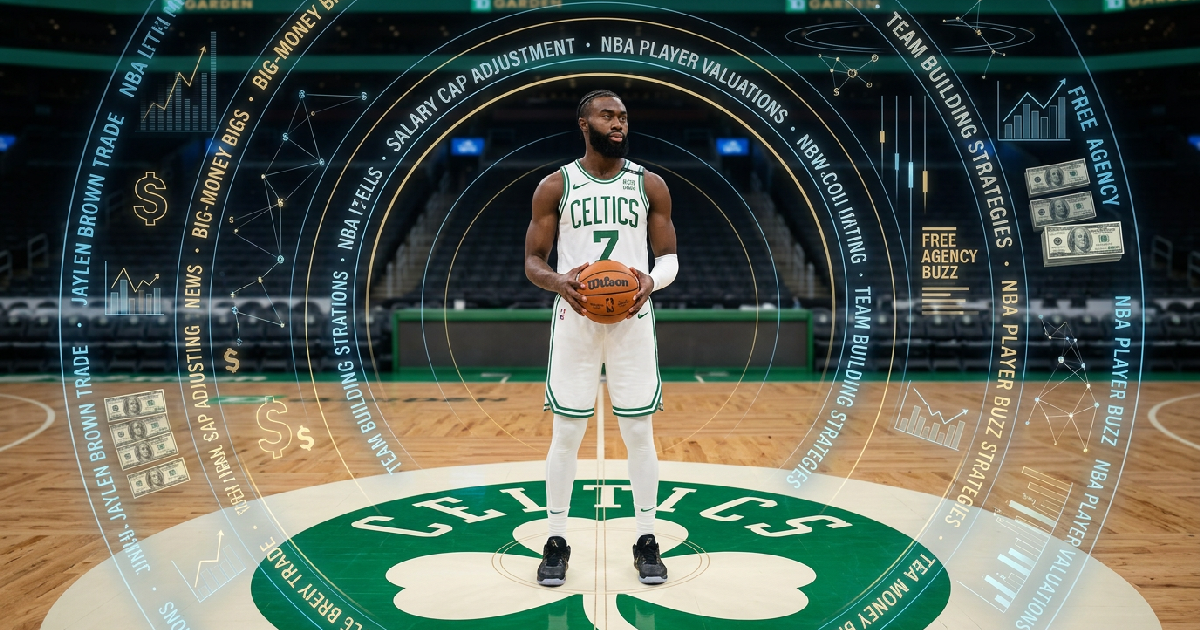
NBA Free Agency Buzz: Execs Dissect Brown Trade, Big-Money Bigs, and Cap Shift
The NBA free agency buzz is reaching a fever pitch across the league this summer. Front offices are intensely scrutinising the strategic fallout from the blockbuster Jaylen Brown trade and unprecedented financial commitments to big men. These developments are redefining player valuations and reshaping team-building philosophies.
An unexpected, impactful shift in the league’s salary cap has added another layer of complexity. This has sent ripples through team strategies and challenged long-term financial planning. The confluence of these factors has created a uniquely dynamic and, for some, uncertain market.
Jaylen Brown trade sparks NBA free agency buzz
The seismic trade involving Jaylen Brown has undeniably dominated the NBA free agency discussions. It sends a clear message about the escalating value placed on established two-way stars. Teams are now rigorously reassessing their frameworks for identifying and retaining players of his calibre.
Sources familiar with league discussions indicate the deal underscores a significant willingness among franchises to overhaul rosters. This includes moving even foundational players. This aggressive approach is expected to influence how other organisations evaluate their own marquee talent.
Redefining superstar compensation benchmarks
The financial terms for players like Brown are setting fresh, elevated benchmarks for superstar compensation across the NBA. Executives are reportedly modelling future deals and extension offers based on these new high-water marks. This affects salary negotiations throughout the league.
This escalating trend suggests other prominent stars approaching extensions will likely command even more substantial sums. It’s creating considerable pressure on teams to manage their cap space with greater foresight and agility. Failing to do so could leave them behind competitively.
Strategic implications for team building
Beyond the raw numbers, the Brown trade signals a pivot in how teams perceive the path to contention. It suggests a focus on acquiring proven talent. This is true even if it means sacrificing future assets or enduring short-term financial discomfort.
This shift could see more top-tier players moved in pursuit of immediate impact. For general managers, it means a continuous recalibration of risk versus reward. This balancing act is familiar to anyone managing high-stakes situations, such as Toto Wolff’s analysis of intense on-track contact in Formula 1. Critical decisions are made under immense pressure in such scenarios.
Big money for big men drives market activity
Despite previous narratives suggesting a diminishing role for traditional centers, this NBA free agency period has showcased substantial financial commitments to frontcourt players. Multiple centers have reportedly secured substantial contracts. This highlights a significant market correction.
This spending spree signals a confident strategic pivot by teams. It reaffirms the value placed on specific skill sets that modern big men offer. Securing the paint, from rim protection to versatile offence, remains a high priority.
Evolving role and diverse skill sets
The lucrative contracts aren’t just for traditional, back-to-the-basket centers. Modern NBA bigs are increasingly expected to contribute on both ends of the floor. They often showcase the ability to stretch the floor, facilitate offense, or even handle the ball.
Their defensive versatility, particularly against various matchups and pick-and-roll schemes, is now a critical factor. This heavily influences their market valuation. Teams are seeking players who can anchor a defence while also providing a dynamic presence on offence.
Impact on roster construction
The investment in big men also has knock-on effects for the rest of the roster. With significant cap space allocated to centers, teams must be more creative in filling out other positions. This potentially relies more on draft picks or minimum contracts.
It also means a greater emphasis on player development to ensure these expensive assets live up to their price tags. The competitive landscape for interior players has never been more intense. Teams are actively chasing size and skill.
Unexpected salary cap adjustment challenges teams
Adding another layer of complexity to this already frenetic period of NBA free agency buzz is a surprising development. Initial projections for the league’s salary cap reportedly shifted unexpectedly. This caught many teams off guard in their financial planning.
This adjustment has compelled numerous front offices to hastily revise their spending plans. They are re-evaluating contract offers and even pulling back on tentative agreements. It’s created an exceptionally challenging environment for teams already navigating tight financial constraints.
Immediate roster adjustment scramble
The sudden and unforeseen cap shift means some teams are now operating with considerably less financial flexibility. This is less than they had anticipated just weeks prior. This directly impacts their ability to pursue remaining free agents or execute additional trades.
The fluid cap situation only exacerbates complex player valuations. Much like how external factors can impact individual player situations and market values across sports, teams must adapt swiftly. This dynamic environment influences everything from contract negotiations to trade discussions.
Long-term financial planning revisions
Beyond immediate roster construction, the cap adjustment forces a re-evaluation of long-term financial strategies. Teams with multiple years of expensive contracts might find themselves in a precarious position. They could need to shed salary or avoid the punitive luxury tax.
This ripple effect extends to future draft strategies and asset management. Franchises are now likely to adopt even more conservative approaches to spending. This is especially true when considering extensions for their own players.
Executive outlook on remaining summer spending
NBA executives are now deep into recalibrating their strategies for the remaining weeks of summer. The prevailing sentiment suggests a significantly more cautious approach to spending. This is particularly for teams that have already made substantial financial commitments.
There’s a palpable sense of adjustment and careful consideration. Teams are weighing the immediate necessity of adding talent against the long-term financial health. Flexibility of their franchises is also a key factor.
Opportunity for prudent teams
Some teams with remaining, albeit reduced, cap space might find themselves in an unexpectedly stronger negotiating position. They could potentially acquire valuable players at more team-friendly prices. This capitalises on other teams’ cap limitations.
Many others will need to get exceptionally creative. They will explore trade exceptions, sign-and-trade scenarios, or rely heavily on minimum contracts. This summer is becoming a masterclass in financial engineering for savvy general managers.
Broader implications for league’s competitive landscape
These collective developments within the NBA free agency buzz point towards a league constantly evolving. Its economic and strategic underpinnings are shifting. The high-profile Jaylen Brown trade unequivocally signifies an increasing premium on versatile star power.
This dictates a new level of ambition for contenders. Simultaneously, the significant investments in centers highlight a renewed appreciation for inside presence. Versatile big-man play is challenging earlier assumptions about positional value.
The fluctuating salary cap, meanwhile, serves as a stark reminder of inherent unpredictability. This affects managing professional sports franchises. Just as global markets react to unexpected capital shifts, NBA teams must adapt rapidly to maintain stability.
This dynamic period of free agency will profoundly shape the competitive landscape for several years. It influences everything from long-term draft strategies to key trade deadlines. General managers are navigating a complex environment.