

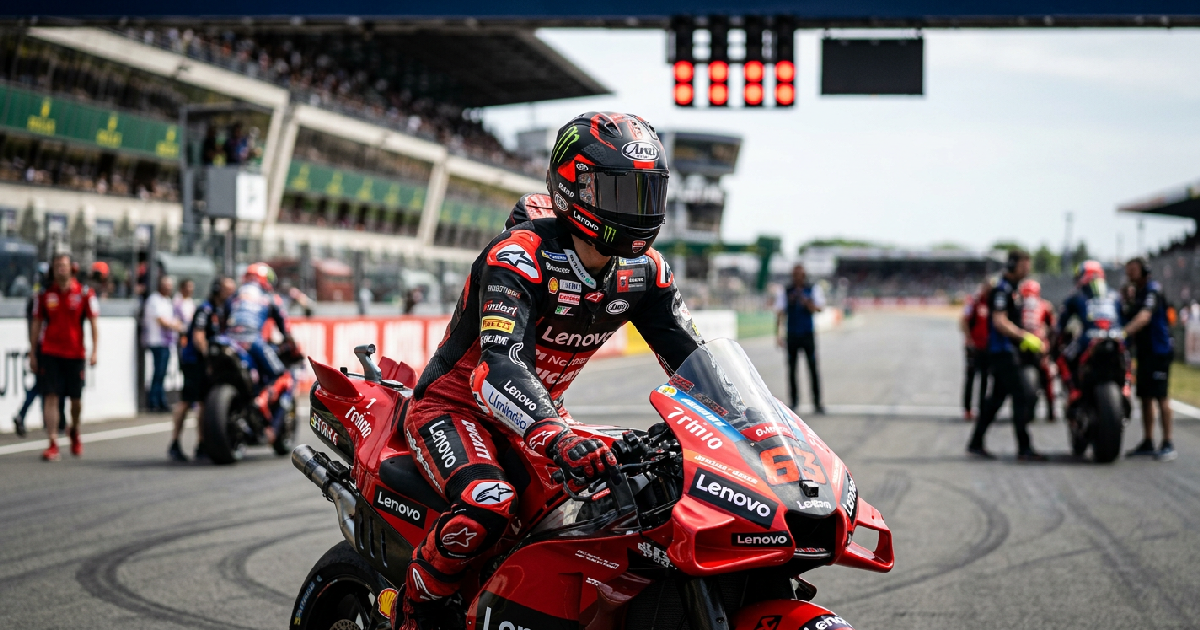
MotoGP Safety Commission Proposes Holeshot Ban Following Rider Concerns
The MotoGP Safety Commission has reportedly held discussions regarding a potential mid-season ban on holeshot devices, following safety concerns raised during a recent meeting at the French Grand Prix. Officials and participants sought to prohibit the specialized starting technology for upcoming rounds at Le Mans and other high-speed venues. However, reports suggest the proposal did not reach a unanimous agreement among manufacturers, meaning the technology remains in place for now.
Holeshot systems mechanically lower the motorcycle’s center of gravity to prevent wheelies during initial acceleration. These devices have become a central focus of safety discussions among the paddock’s competitors. Typically, the systems disengage only when a rider applies significant braking force into a corner. At circuits with exceptionally fast opening turns, there is often a lack of the heavy braking required to “unlock” the suspension, which can leave a bike in a compromised state during the opening lap.
The debate surrounding these devices mirrors the volatility seen in other high-stakes sectors where rapid innovation moves faster than regulation. Just as investors must monitor how market shifts and negative news impact assets, motorcycle racers are currently grappling with the unpredictable side effects of mechanical evolution. If a rider cannot generate enough force to release the device, the motorcycle remains in a state that makes it difficult to turn or decelerate efficiently in a pack.
Technical Risks at High-Speed Circuits
The primary concern involves the mechanics of the front and rear start systems. While rear devices are often used throughout a lap, the front-end start device is intended solely for the initial launch. Analysts have suggested that the lack of harsh braking at certain tracks forces riders to be more aggressive than usual to reset their suspension. This creates a potential ripple effect; if a lead rider brakes unexpectedly hard to unlock their device, those following in the slipstream face a higher risk of collision.
These safety implications are a growing concern for the field. Past incidents in the championship have been attributed by some paddock insiders to the complications of managing ride-height systems in heavy traffic. The complexity of these machines has reportedly reached a point where some practitioners feel like passengers when the technology fails to disengage as intended. This struggle for control is a common theme across competitive disciplines, from the physical demands of high-level sports to the strategic pressures found when new gaming platforms demand perfect execution from the user.
Manufacturing Deadlock Prevents Early Ban
Despite a reported consensus among various riders that the devices pose a risk at specific tracks, MotoGP regulations generally require support from the manufacturers’ association to implement rule changes during a live season. Sources indicate that several teams were unwilling to sacrifice the competitive advantage their specific systems provide. Consequently, the holeshot devices are expected to remain in use for the immediate future, including the sprint and full-length races this month.
The refusal to pivot quickly highlights the rigid nature of the sport’s governance during a championship battle. Much like the tech industry, where companies like Epic Games adjust mobile strategies to find a competitive edge, manufacturers are hesitant to abandon costly development mid-campaign. A total prohibition of all ride-height and holeshot devices is expected in the coming years, but the current grid remains at a crossroads regarding immediate safety changes.
Future Outlook for High-Speed Venues
While an immediate ban was not enacted, the Safety Commission is expected to revisit the proposal ahead of upcoming events in the United Kingdom and Australia. Both venues feature some of the fastest opening sectors on the calendar, where the risk of a device becoming stuck is considered highest. Riders are reportedly pushing for specialized technical waivers for these specific events to avoid potential opening-lap accidents.
For now, the field must continue to manage the existing technology. Several riders have been observed practicing starts with the devices recently, highlighting that the performance benefit remains too significant to ignore despite the safety debate. If one manufacturer utilizes the technology, others feel forced to follow suit to remain competitive at the start of the race.
The tension between mechanical innovation and rider safety remains a dominant storyline in the paddock. As the sport moves toward future regulatory changes, the next several months will serve as a high-speed testing ground for whether the current rules can keep the grid safe on increasingly complex machinery. The focus now shifts to on-track performance, where riders must hope their equipment behaves as intended during the high-speed run into the first corner.