

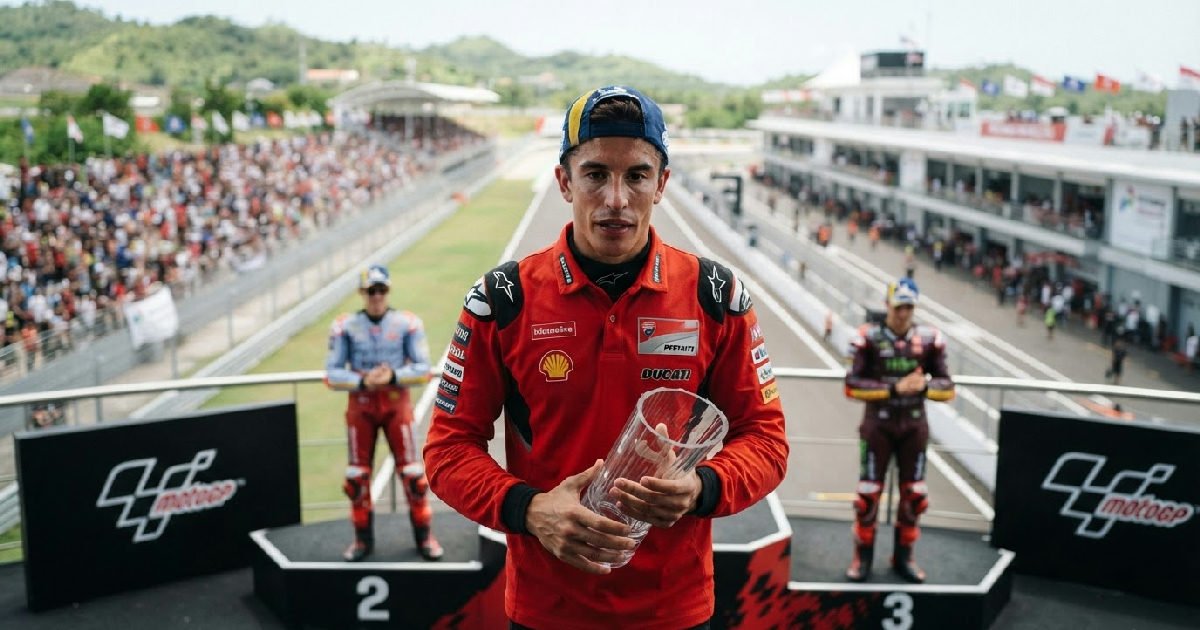
Marc Marquez calls MotoGP sprint podium ‘inhumane’
Marc Marquez, the seasoned Ducati Team rider, openly described his post-sprint podium commitments as “inhumane” after securing victory at the Indonesian Grand Prix sprint race on Saturday, October 10, 2026. Speaking at the Pertamina Mandalika International Circuit, Marquez’s remarks spotlight an escalating tension between riders and MotoGP organizers over the sport’s physically demanding schedule and proposed future formats.
His pointed comments also extended to sharp criticism of the planned 2027 MotoGP weekend format, highlighting a perceived lack of rider consultation and concerns over increased intensity. Marquez’s outspoken stance follows a pattern of subtle and overt pushback against non-racing obligations, as he prioritizes his energy conservation while aiming for an eighth MotoGP world title.
Marc Marquez MotoGP demands on the circuit
The “inhumane” label applied to the sprint podium ceremony was a direct result of the intense heat in Lombok, Indonesia. Marquez stated that remaining in his racing suit on the podium, while visually appealing for cameras, was detrimental to his preparation for the crucial main Grand Prix race scheduled for Sunday.
He deliberately chose to forego the standard golf cart ride to cool off immediately, emphasizing the need for optimal physical recovery for elite athletes. This decision underscores a calculated approach to managing his physical resources, particularly in light of a persistent right shoulder injury.
Prioritizing Performance Over Public Appearances
Marquez’s recent actions reflect a growing emphasis on performance over peripheral demands. The Ducati Team rider has notably toned down his celebratory displays since the Austrian Grand Prix sprint race on August 16, 2025, where his “unusually serious” demeanor on the podium first sparked discussion.
He has also reportedly sent a ‘stunt double’ to a promotional kart race during the Japanese Grand Prix in September 2026 and skipped a pre-event appearance at the British Grand Prix in August 2026. These instances illustrate a clear strategy to minimize energy expenditure outside of competitive racing.
Podium Pressure and Rider Welfare
The specific comments regarding the sprint podium illuminate a significant aspect of rider welfare in modern MotoGP. Marquez articulated that while the spectacle of riders on the podium in full gear is great for photos, it directly impacts their ability to perform at their peak in subsequent events.
He explained, “It’s inhumane having to stand there on the podium in my racing suit,” and highlighted the practical implications: “It looks great for the photos, but it’s not good for my performance [in the grand prix] tomorrow.” This concern is magnified by the current MotoGP schedule, which includes both qualifying and sprint races before the main event.
The Physical Toll of Modern Racing
For Marc Marquez, conserving energy is paramount, especially given his recovery from a right shoulder injury sustained during the 2025 Indonesian Grand Prix. The relentless physical and mental demands of the MotoGP calendar mean that every ounce of energy and focus is crucial.
His strategy involves carefully managing adrenaline rushes and subsequent drops throughout the race weekend. This meticulous approach aims to ensure he arrives at Sunday’s main race with his energy levels maximized, providing him the best chance to compete for victory.
Future Format Raises Concerns
Beyond the immediate post-race commitments, Marquez voiced strong opposition to the proposed 2027 MotoGP weekend format. He questioned the fundamental “main goal” of the changes, suggesting that from a rider’s perspective, they only promise “more intense, more demanding” competition.
This criticism highlights a broader disconnect between organizers and competitors regarding the evolution of the sport. Marquez’s sentiment echoes a growing unease among riders who feel their input is not sufficiently valued in decisions directly impacting their careers and well-being.
Rider Input and Career Longevity
Marquez underscored the riders’ limited influence, stating, “With the [current] schedule, it’s enough. But we don’t decide. It is what it is, and we must shut up.” This frank assessment points to a power imbalance that many riders find frustrating. The veteran racer also concurred with fellow rider Pedro Acosta’s assessment that increased strain could lead to shorter rider careers.
The push for new formats, often driven by commercial interests, appears to clash with the realities of athlete endurance and safety. The continuous physical and mental load on top-tier athletes requires careful management to ensure sustained performance and career longevity. Even professional athletes across different sports, like football stars, grapple with balancing peak performance with recovery and injury prevention.
A Growing Chorus for Change
Marquez is not alone in his concerns. His strong words contribute to a building wave of pushback from riders against MotoGP organizers. This collective sentiment suggests a wider dissatisfaction with how decisions affecting the core nature of the sport are being made and communicated.
The complaints are not simply about comfort but fundamentally about fair competition and the sustainability of a career in one of the world’s most physically grueling sports. Riders are increasingly advocating for their voices to be heard in the strategic direction of MotoGP.
Impact on the Sport’s Future
The implications of this ongoing debate are substantial for the future trajectory of MotoGP. While organizers aim to boost spectacle and fan engagement through format innovations, they risk alienating the very athletes who make the sport compelling.
Finding a balance between commercial imperatives and rider welfare will be critical for MotoGP’s long-term health. The current friction suggests that this balance has yet to be adequately struck, potentially leading to further dissent and calls for greater rider representation in decision-making bodies.
The Road Ahead for MotoGP and its Riders
Marc Marquez’s recent comments underscore a critical juncture for MotoGP. His status as a multi-time world champion lends significant weight to his criticisms, forcing organizers to confront legitimate concerns about rider well-being and the practicality of new race formats.
The dialogue between riders and organizers will need to evolve, moving towards greater collaboration and transparency. Ignoring these seasoned voices could lead to unintended consequences, impacting not just individual rider careers but the overall appeal and integrity of Grand Prix motorcycle racing.
As the sport looks towards 2027 and beyond, the challenge will be to innovate while safeguarding the health and long-term participation of its most valuable assets: the riders. Marquez’s “inhumane” verdict serves as a stark reminder of the intense pressures behind the glamorous facade of MotoGP.