

Madring Circuit’s Extended Pitlane Demands One-Stop Spanish GP Strategy
The highly anticipated Madrid Grand Prix, set for its inaugural Formula 1 race, is already shaping up to be a complex strategic battle. A surprisingly high level of grip at the new Madring circuit has caught teams off guard, yet it coexists with exceptionally high tire degradation. This combination, alongside a uniquely long pitlane, presents a formidable challenge for race engineers.
The circuit’s design, particularly its extensive pitlane, is expected to heavily influence team decisions on Sunday, September 13, 2026. Experts believe the substantial time penalty incurred during pit stops will push most competitors toward a single tire change strategy. However, the unexpected degradation could force some radical rethinking.
Circuit’s extended pitlane demands alter pit stop economics
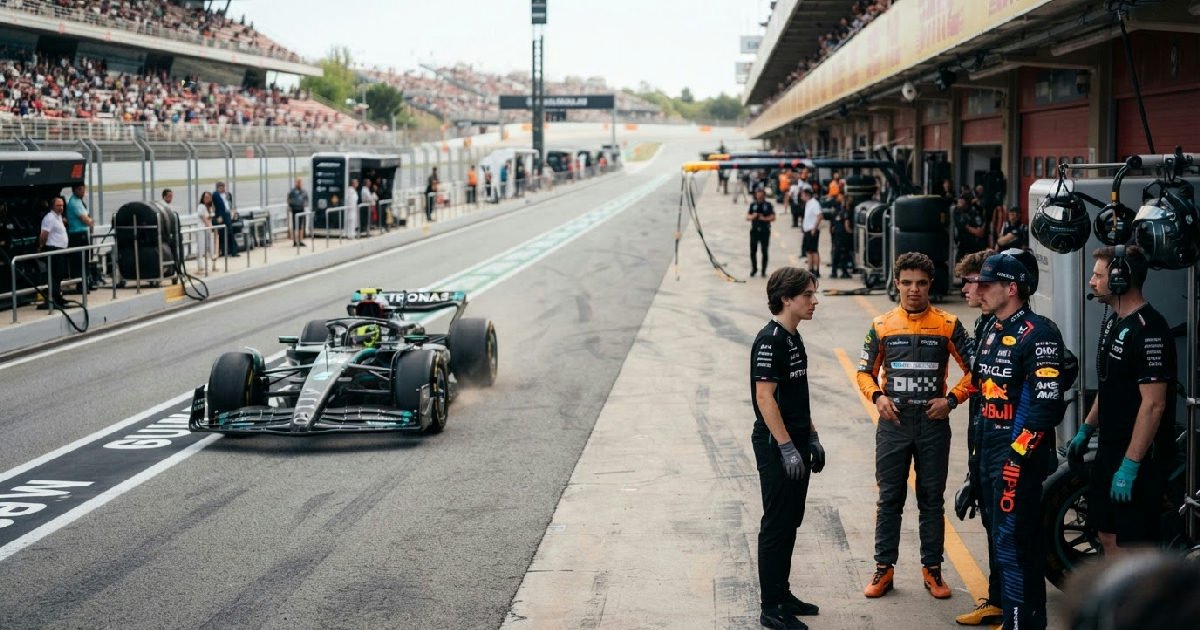
The Madring circuit’s pitlane, stretching approximately 550 to 562 meters between the speed limiter lines, stands out on the current Formula 1 calendar. This extended distance translates into a significant time loss during a pit stop, estimated by Pirelli to be around 25 seconds.
Other assessments put the pit-lane time loss at roughly 22 seconds, excluding the car’s stationary time. This emphasis on efficiency and strategic planning mirrors recent discussions across various industries, even touching on OpenAI’s latest news regarding long-term strategy.
Such a substantial time penalty inherently discourages multiple pit stops. Teams face a difficult trade-off: preserving tires for a longer stint or sacrificing valuable track position for fresh rubber. The sheer cost of entering and exiting the pitlane becomes a pivotal factor in the overall race strategy.
Degradation Complicates One-Stop Intentions
Despite the strategic advantage of a single pit stop, teams are grappling with unexpectedly high tire degradation observed during practice sessions. Pirelli’s motorsport director, Dario Marrafuschi, acknowledged that a one-stop strategy seems the “most natural choice” due to the pitlane and anticipated difficulty in overtaking. However, he admitted a two-stop could become competitive if degradation persists.
Simone Berra, Pirelli’s chief engineer, echoed these concerns. He noted that degradation values were “outside our range of expectations,” forcing teams to balance the long pit-stop loss against significant front-left graining. Mercedes team boss Toto Wolff initially quipped about a “six-stop” race after FP1, citing “eight-tenths of degradation per lap,” but later conceded a one-stop was more likely for the race itself.
A prevalent one-stop strategy involves starting on Medium tires and switching to Hards between laps 18 and 24. A more aggressive two-stop approach might see teams using Medium to Hard to Hard, with stops between laps 10-16 and 31-37. Soft tire options are also on the table, likely leading to earlier first stops for those cars.
Overtaking Challenges Magnify Track Position Value
The Madring circuit is expected to offer very few genuine overtaking opportunities, which further reinforces the one-stop preference. Maintaining track position will be paramount, making any pit stop an even riskier proposition for losing ground. Williams likened the circuit’s overtaking challenge to that of Singapore, a notoriously difficult track for passing.
This constant evaluation of risk and reward is a pervasive theme, even in areas like AI development slowdown.
Mercedes driver Kimi Antonelli, after struggling to pass a Williams in practice, candidly stated, “I think it’s going to be very difficult (to overtake).” This lack of clear overtaking zones means that ceding track position by pitting an extra time could prove insurmountable. Teams will aim to avoid situations where they need to make up ground through overtakes.
This emphasis on track position places immense pressure on qualifying performance and clean starts. Any advantage gained at the beginning of the race will be fiercely defended, transforming the Grand Prix into a strategic chess match. Early gains will be crucial given the limited chances for overtakes later on.
Safety Car Scenarios and Driver Feedback
Adding another layer of complexity, the probability of a Safety Car (SC) or Virtual Safety Car (VSC) deployment at Madring is considered exceptionally high. Such interruptions could prove game-changing, offering “cheap pit stops” and allowing teams to mitigate the time loss associated with the long pitlane. This potential adds a significant element of chance to an already intricate strategic landscape.
Some teams might even gamble by starting on Hard tires, hoping for an early Safety Car to make a virtually free pit stop. Such a high-risk, high-reward approach could dramatically alter the race outcome. The unpredictable nature of Safety Car periods could lead to significant swings in fortune for competitors.
The pitlane’s unusual design has also drawn direct feedback from drivers. It includes a 150-meter gap between some garages, like Williams and Racing Bulls, and an exit that rejoins the track not at Turn 1, but at Turn 3. These design choices contribute to the unique challenges of the new circuit.
McLaren’s pole-sitter Lando Norris voiced hopes for future improvements. He said, “If we’re going to build a new track and spend so much money in building a new track, this is probably one of the main factors, I would say, in making a track, is you have a short pit lane so people can pit and you then create overtaking.”
Max Verstappen also suggested that driver input could help improve track design for better racing and overtaking. This implies that the current pitlane length is a factor impacting racing quality. Such feedback from top drivers highlights the critical role of circuit infrastructure in shaping competition.
Circuit Characteristics Drive Tire Degradation
The underlying cause of Madring’s pronounced tire degradation lies in its unique circuit characteristics. The 5.416 km (3.365 miles) track, featuring 22 corners, blends tight, street-style sections around the IFEMA exhibition halls with a faster, more permanent section in Valdebebas. This hybrid layout contributes to the unusual tire wear patterns.
The new, smooth asphalt surface and remarkably high grip levels, initially welcomed by drivers, ultimately put immense strain on the tires. Fast corners and high lateral g-forces, particularly at “La Monumental” — a 500-550 meter long, 24% banked corner — accelerate this wear.
The front-left tire bears the brunt of these forces, experiencing particularly severe graining and thermal degradation. This intense combination will test tire management to its absolute limits.
Inaugural Race Promises Unpredictable Outcomes
The inaugural Formula 1 Spanish Grand Prix at Madring, which was announced on 2024-01-23 to run from 2026 to 2035, looks set to be an unpredictable affair. The strategic tug-of-war between the costly pitlane and the relentless tire degradation means teams must adapt quickly.
Success will hinge on shrewd real-time decision-making, meticulous tire management, and perhaps a touch of luck with Safety Car timings. Such anticipation for a major event is also seen in the excitement surrounding new game launches.
As the grid prepares for the race on September 13, 2026, all eyes will be on how teams navigate these unprecedented challenges. The Madring circuit promises to deliver a captivating spectacle, where strategy could very well outweigh raw pace. This event marks a significant new chapter for Formula 1 in Spain, moving from Barcelona-Catalunya to a dynamic new hybrid street circuit.