

Liverpool Ticket Protest Highlights Growing Tension Over Anfield Price Hikes
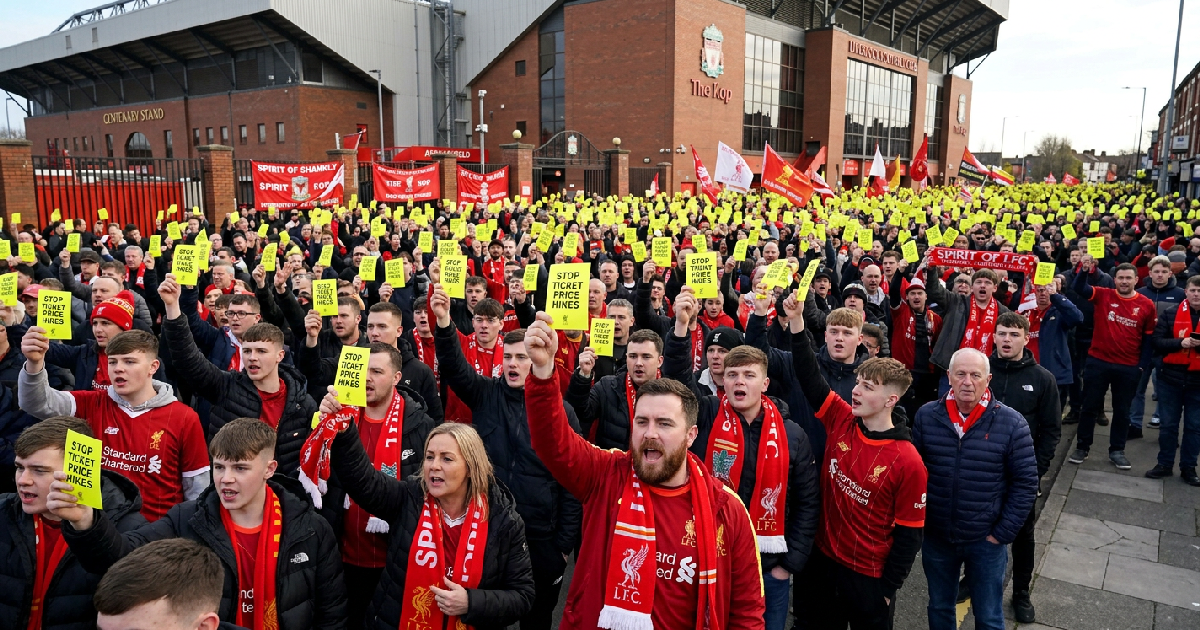
Liverpool supporters staged a significant protest against rising ticket prices at Anfield during the club’s recent home fixture against Crystal Palace. Supporters groups organized the distribution of yellow protest cards to fans outside the stadium, signaling widespread frustration with the club’s decision to implement a multi-year price hike. The demonstration marked a visible shift in the atmosphere at Anfield, highlighting a growing rift between the matchday faithful and the club’s ownership during a transitional period for the squad.
The visual impact of the protest was undeniable as yellow cards were held aloft throughout the stands, despite suggestions from some quarters that the movement only represented a minority of the fanbase. For many, the timing of the price increases feels difficult to justify given the current economic climate and the adjustment period the club is navigating under head coach Arne Slot. While the team secured a positive result on the pitch to bolster their pursuit of European qualification, the narrative of the day remained firmly focused on the supporter response in the stands.
Liverpool has long traded on the unique selling point of its atmosphere, often cited by players and rivals alike as a decisive factor during high-stakes matches. However, supporters argue that by squeezing the financial margins of local fans, the club risks diluting the energy that has made Anfield a fortress. The sentiment behind the protest suggests that these actions were a last resort for a community that feels increasingly marginalized by commercial decisions. This friction mirrors broader trends in the industry where bad news across sports and financial sectors has led to a more cautious and defensive stance from traditional fan bases.
The challenge of maintaining Anfield’s identity
The transition from a period of major trophy success to a season of rebuilding has been remarkably swift. This shift in momentum has naturally placed more scrutiny on the club’s off-field operations. When the performance on the pitch is perceived to be in a state of flux, the tolerance for rising costs among the match-going public inevitably narrows. The protest suggests that the unity often preached by the club’s hierarchy is being tested by the realities of modern football finance.
Captain Virgil van Dijk has previously touched upon the team’s standards, noting the importance of meeting the high expectations set in recent years. But even the most experienced players cannot fully insulate the pitch from the palpable tension in the stands when supporters feel their loyalty is being leveraged. As the club looks to secure its standing in the upper echelons of the league, the relationship with the local community remains a primary concern for the long-term health of the institution.
Commercial expansion versus supporter accessibility
Liverpool’s recent infrastructure projects, including the expansion of the Anfield Road stand, were designed to boost revenue and capacity. While these developments offer premium matchday experiences, the core supporter base remains wary of being priced out. The tension lies in the balance between being a global commercial powerhouse and maintaining the local identity that makes the club attractive to global partners in the first place.
The rise in ticket prices comes at a time when other entertainment sectors are seeing similar patterns of inflation. For instance, Sony recently increased PS5 prices citing global economic pressures, a move that parallels the justifications often used by football clubs regarding rising operational costs. But for football fans, the club is viewed as a community asset rather than a standard consumer product, and the reaction at Anfield suggests that supporters will not accept corporate logic without a vocal challenge.
Arne Slot and the backdrop of unrest
For Arne Slot, the backdrop of supporter unrest is an unwelcome distraction during his debut season in the Premier League. While recent results on the pitch have provided some breathing room for the coaching staff, managing a squad in a period of necessary improvement is made more difficult when the atmosphere becomes fractious. The Dutch manager is tasked with delivering success while the club navigates these sensitive commercial waters.
Protest organizers emphasize that the character of Anfield—its noise, its passion, and its local flavor—must be protected at all costs. There is a fear that if the stands are eventually filled by those who can afford the tickets but do not share the vocal tradition of the Kop, the club’s identity could be permanently altered. This concern is similar to debates in the tech world, such as how gaming platforms shift strategies to target different markets while potentially alienating their original core user base.
Future outlook for the Anfield faithful
The coming months will be critical for the Liverpool hierarchy as they monitor the ongoing reaction to their pricing strategy. If the planned price hikes remain unchanged, further organized actions from supporter groups are likely to follow throughout the campaign. The club’s leadership must decide whether the incremental revenue gain is worth the long-term risk of a disenfranchised local fanbase that provides the club’s most famous asset.
As the race for European spots continues, the players will need the crowd more than ever. However, that support can no longer be taken for granted as a given. The sight of thousands of yellow cards remains a powerful image for the season, serving as a reminder that while football operates as a multi-billion dollar business, it remains a social institution rooted in the people who fill the stands every week.