

Kings Hit Historic 15-Game Slide as Magic’s Record Shooting Signals NBA Style Shift
Sacramento’s season crossed a painful threshold Thursday night, and it wasn’t just another loss. It was a statement game that highlighted two franchises moving in opposite directions — one accelerating into a next-gen identity, the other grappling with structural collapse.
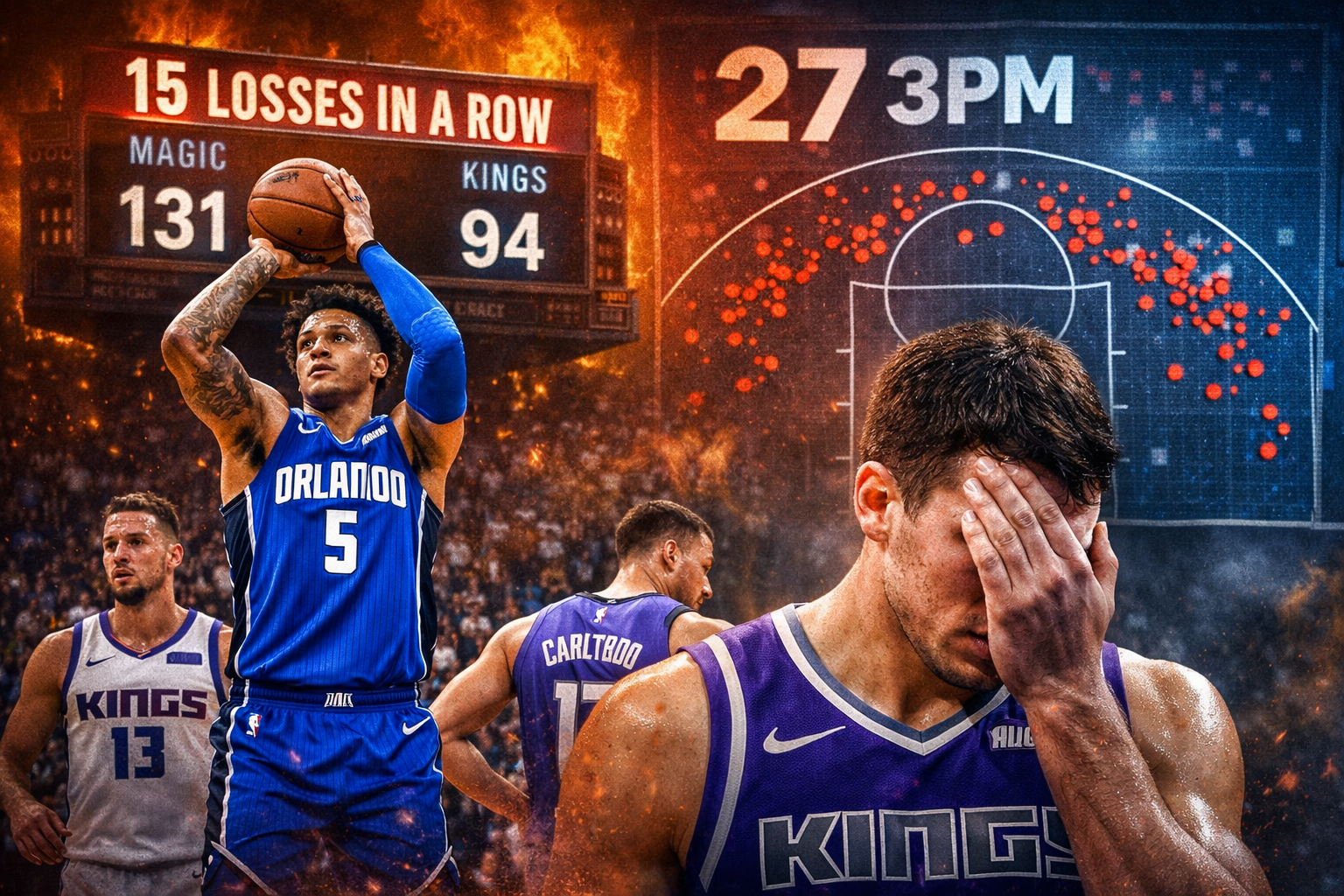
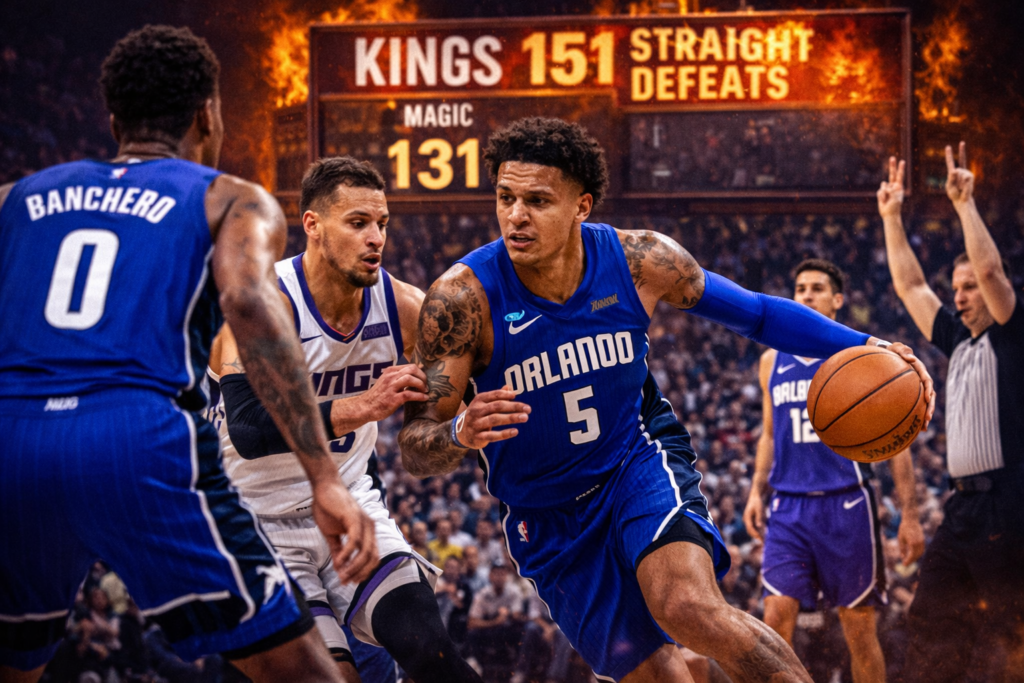
Orlando overwhelmed the Kings with a relentless perimeter assault, turning a competitive third quarter into a one-sided finish and extending Sacramento’s skid to a franchise-record 15 straight defeats.
The scoreboard told part of the story. The shot chart told the rest.
A Perimeter Storm That Rewrote Orlando’s Playbook
Orlando didn’t simply win — it redefined its own offensive ceiling.
The team unleashed a franchise-best 27 made three-pointers, spacing the floor with precision and speed. Ball movement was crisp. Shot selection was decisive. And once the rhythm locked in, Sacramento had no defensive counter.
Paolo Banchero led the surge with 30 points, combining scoring bursts with playmaking that kept defenders rotating and scrambling. His outside shooting efficiency set the tone early and never cooled.
Several supporting scorers amplified the pressure, turning every defensive breakdown into immediate punishment. By the fourth quarter, the game had shifted from competition to demonstration.
This kind of performance reflects more than hot shooting — it signals a tactical development update for Orlando’s offensive identity. The franchise is leaning heavily into modern spacing principles and volume perimeter production, a shift increasingly defining winning teams across the league.
Sacramento’s Losing Streak Becomes Structural, Not Situational
Losing streaks can come from bad luck, tough schedules, or temporary chemistry issues. Sacramento’s slide now points to something deeper.
The team has not recorded a victory since mid-January, and the roster has been further destabilized by season-ending surgeries to two cornerstone players. Without those anchors, both offensive organization and defensive communication have deteriorated.
Thursday’s game illustrated that fragility clearly.
Sacramento briefly trimmed the deficit late in the third quarter, hinting at a possible push. Instead, Orlando responded with a decisive run that effectively ended the contest before the fourth even settled in.
From that moment forward, the Kings looked physically tired and strategically overwhelmed — a combination that often defines extended losing stretches across the league’s historical data.
Injury Fallout Alters the Production Timeline
The absence of key contributors has reshaped Sacramento’s competitive window in real time.
When foundational players exit the lineup, systems built around them collapse quickly. Offensive sets require redesign. Defensive rotations lose continuity. Bench roles expand beyond intended limits.
For Sacramento, that adjustment period has arrived during an already fragile stretch of the schedule.
Insider report chatter around the league suggests the franchise is now navigating more than recovery — it’s managing a disrupted production timeline that could extend beyond this season. The focus may shift from short-term wins to structural recalibration.
Orlando’s Momentum and the Broader Industry Shift
While Sacramento confronts uncertainty, Orlando is building momentum that fits neatly into a broader NBA trend.
High-volume three-point shooting is no longer just a strategy — it’s becoming a defining competitive standard. Teams capable of sustaining extreme perimeter output gain massive scoring swings in short bursts, often deciding games within minutes.
Orlando’s performance offers a clear example of that industry shift in action.
The team entered the game fighting for playoff positioning. It left with a statistical milestone and a growing reputation as one of the league’s most dangerous spacing-driven offenses.
Source: Magic use 3-point flurry to hand the Kings their franchise-record 15th straight loss
What Comes Next: Pressure on Both Ends of the Standings
Sacramento now faces an extended road stretch while carrying the weight of franchise history. Each additional loss compounds both statistical significance and psychological pressure.
Orlando, meanwhile, continues refining a system that could reshape expectations heading into the postseason push.
The trajectories are unmistakably diverging — one team searching for stability, the other accelerating into a modern offensive blueprint built for the league’s evolving era.
And if Thursday night is any indication, the gap between those paths may widen before it narrows.