

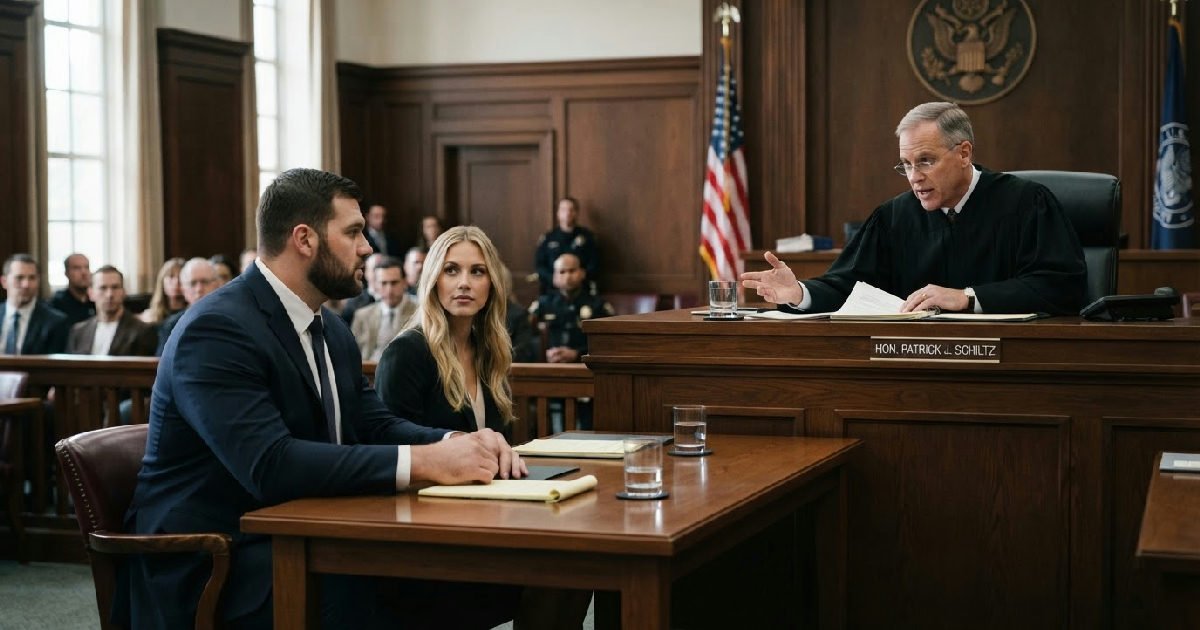
Judge Dismisses Matt Kalil Suit Against Haley Baylee
A federal judge on September 17, 2026, dismissed a high-profile lawsuit filed by former NFL offensive lineman Matt Kalil against his ex-wife, influencer Haley Kalil, known online as Haley Baylee. U.S.
District Judge Patrick Schiltz granted Haley Baylee’s motion to dismiss with prejudice, ruling that her viral remarks about Matt Kalil’s penis size were a matter of “legitimate public concern.” The decision effectively ends Kalil’s claims of invasion of privacy and unjust enrichment, which had sought more than $75,000 in damages.
Judge dismisses Matt Kalil’s claim
The legal battle ignited after Haley Baylee discussed her nearly seven-year marriage during a November 2025 Twitch livestream with creator Marlon Garcia. While she never explicitly named Matt Kalil, she referred to her only ex-husband, suggesting the size of his anatomy was a significant factor in their divorce.
She graphically compared it to “two Coke cans stacked on top each other, maybe even a third,” sparking widespread online discussion.
Haley Baylee’s candid discussion on the Twitch platform stemmed from an open conversation about her personal life and experiences. She told viewers that despite seeking help from therapists and doctors, the couple couldn’t resolve the issue, which ultimately contributed to the end of their marriage.
She also praised her ex throughout the stream, calling him the “greatest guy in the world” and “a really good guy,” attempting to soften the impact of her revelations.
But the remarks quickly went viral, attracting millions of views and comments across various social media platforms. Matt Kalil, a former NFL offensive lineman, filed his lawsuit on January 6, 2026. He alleged that Baylee’s comments subjected him and his family to unwanted attention, ridicule, and invasive messages, arguing they constituted an invasion of privacy and unjust enrichment.
Judge Schiltz’s Ruling on Public Concern
In his 14-page ruling, Judge Patrick Schiltz acknowledged the potentially offensive nature of the remarks, recognizing they touched upon Matt Kalil’s private life. However, the crux of his decision rested on the determination that the comments were indeed a matter of “legitimate public concern.” This pivotal finding considered both Matt Kalil and Haley Baylee to be public figures.
The judge emphasized that Haley Baylee was discussing her own marriage, health, and divorce — her lived experiences. He stated, “Haley was discussing her life, not Matt’s,” underlining the principle that individuals generally have the right to share their personal experiences, even if those experiences reveal details about others.
Defining Public Figure and Private Matters
Judge Schiltz elaborated on this distinction, noting that if Matt Kalil’s celebrity was solely derived from his football career and Haley Baylee was a “random social-media maven” merely spreading gossip, the outcome might have been different. However, her status as a prominent influencer, coupled with Kalil’s public profile, shifted the legal landscape.
The court also dismissed Kalil’s claim of unjust enrichment. Judge Schiltz found no unlawful basis for Haley Baylee to retain any benefit derived from remarks that were not deemed tortious. Consequently, the court did not need to rule on her separate First Amendment defense.
Reactions and the Path Forward
Haley Baylee expressed significant relief following the dismissal. “I am so relieved this is over,” she told TMZ. “Your story belongs to you and you shouldn’t fear sharing it.”
Her attorney, Matthew Bialick, echoed this sentiment, asserting that the ruling validates a woman’s right to speak about her own life and the “trauma she went through and what led to her divorce.” He emphasized that “No woman should need her ex-husband’s permission to tell the story of her own marriage.”
Despite the dismissal, Matt Kalil’s legal team isn’t backing down. His attorney, Ryan Saba, confirmed that his client intends to appeal the ruling. This indicates the legal saga may continue, potentially setting a more definitive precedent for privacy and speech rights in the digital age, especially concerning personal details shared by public figures.
The Social Media Megaphone and Legal Challenges
The case underscores the complex interplay between personal privacy, public persona, and the vast reach of social media. Haley Baylee commands an enormous audience, with 15.9 million TikTok followers, 9.3 million Instagram followers, and 8.07 million YouTube subscribers as of January 2026. Marlon Garcia, her co-host during the Twitch stream, also boasts millions of followers across platforms.
Such massive platforms mean that personal anecdotes, even those framed as autobiographical, can instantaneously become global news. This creates unique challenges for individuals, particularly those with existing public profiles, when private details are thrust into the spotlight. The ruling suggests a judicial inclination to protect speech in personal narratives, even when they involve sensitive information about others who are also in the public eye.
Broader Implications for Public Figures and Privacy
This decision could have far-reaching implications for how public figures navigate their personal lives in the digital sphere. It raises questions about the boundaries of privacy when one party to a relationship is a prominent social media influencer. While the judge acknowledged the remarks could be offensive, the emphasis on “legitimate public concern” marks a significant legal stance.
The ruling effectively states that if you are a public figure, and your former partner, also a public figure, discusses their shared experiences as part of their personal narrative, those discussions may fall under protected speech.
This could encourage other influencers to be more open about their past relationships, even at the risk of revealing intimate details about ex-partners, provided those ex-partners also hold public status. It highlights an evolving legal landscape where personal stories increasingly intersect with the public domain.