

Jenson Button warns Esteban Ocon risked F1 career
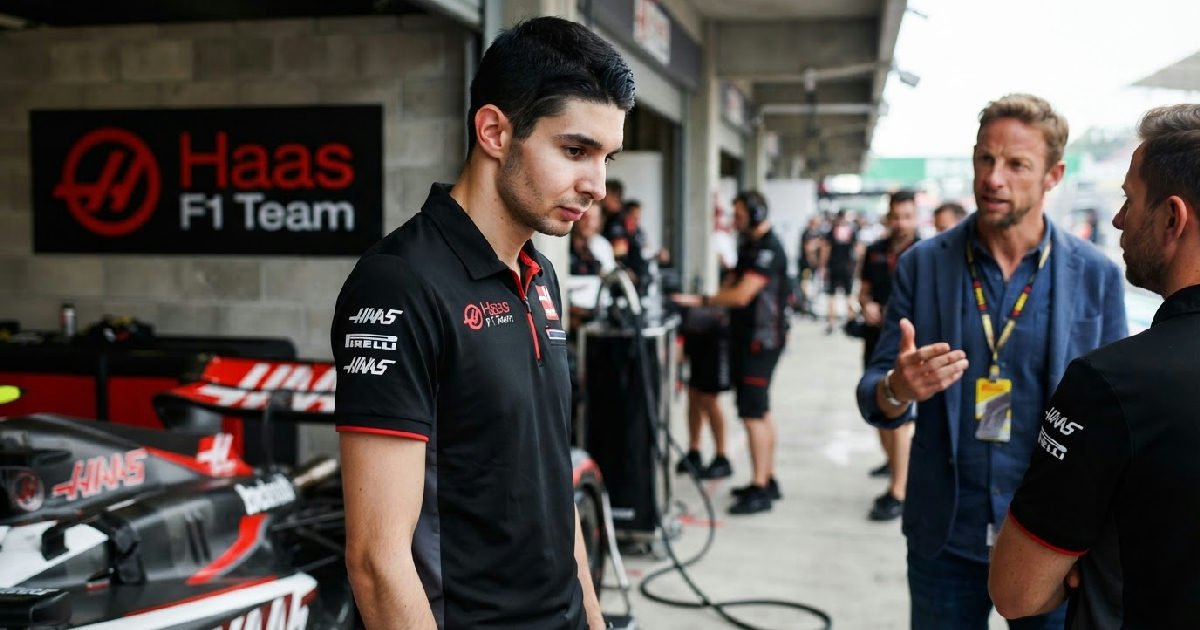
Esteban Ocon’s Formula 1 career is in serious jeopardy, according to 2009 world champion Jenson Button. The former driver, a respected pundit on Sky Sports F1, delivered a stark warning on November 1, 2026, after Ocon was dramatically dropped by the Haas F1 Team midway through the Mexico City Grand Prix weekend.
This unprecedented move followed a furious bust-up with team principal Ayao Komatsu, casting a dark shadow over the Frenchman’s future in the sport.
Esteban Ocon’s weekend meltdown in Mexico City
The Haas team took the extraordinary step of replacing Ocon with reserve driver Ryo Hirakawa on Saturday, October 31, 2026, for the remainder of the race weekend. This decision stemmed from a heated dispute over tyre strategy during a Friday practice session that reportedly escalated into a major confrontation.
Such an abrupt benching highlights the severe fallout within the team, potentially marking a critical turning point in Ocon’s F1 prospects.
The conflict that derailed Ocon’s Mexico City weekend began with a seemingly minor disagreement during the second practice session (FP2) on Friday, October 30, 2026. Ocon was heard on team radio arguing intensely with his race engineer, Laura Mueller. The dispute centered on a team decision to switch his planned high-fuel run from soft to medium compound tyres.
“No, no, I wanted the soft, like, don’t do that to me. Come on,” Ocon protested over the radio, expressing clear frustration. This radio exchange, typically a private moment, quickly became public. It underscored the immediate tension and the driver’s strong disagreement with the team’s strategic call. The pressures of a Grand Prix weekend can amplify even small issues.
Sources within the paddock quickly suggested this disagreement spiralled into a significant behind-the-scenes altercation. Sky Sports F1 pundit Ted Kravitz reported a “big row” between Ocon and Haas leadership.
French newspaper L’Equipe further fuelled speculation, reporting that a subsequent meeting between Ocon and team principal Ayao Komatsu “ended abruptly, perhaps even physically.” This incident served as a stark reminder of the intense pressures in elite motorsport, a reality also seen in the recent chaotic Malaysian MotoGP.
While Haas remained notably tight-lipped on the official reason for his removal, Ocon swiftly took to social media to address the escalating speculation. He acknowledged that a “difference in viewpoints” had indeed led to a discussion.
However, he strongly refuted any claims of violence, stating, “I categorically reject any reports or allegations suggesting that any form of physical violence was used to resolve any differences of any nature.”
Despite his public denial, the team’s actions were decisively punitive. Ocon was benched, and Hirakawa was quickly put into the car for the crucial final practice and qualifying sessions. This swift and uncompromising move sent a clear signal that a line had been crossed.
It left little ambiguity about the severity of the fallout within the American-owned team, making his status with future teams uncertain.
The weight of Button’s warning
Jenson Button’s commentary on Ocon’s situation carries significant weight in the Formula 1 world. As a former world champion and an experienced media analyst, his opinions are highly respected. Button articulated his dismay, stating, “It’s always difficult for a driver when you know the team is looking at someone else for the following year and you’re out.”
He continued, “But the best thing for him to do to for number one, which is himself, is to drive as hard as he can and work as hard as he can and show how good he is. He can’t do that anymore because of a disagreement on tyres in practice.”
Button highlighted the trivial nature of the disagreement relative to the potential cost. “It’s not even qualifying or the race; it’s practice. That frustrates me when I see that.”
The 2009 world champion underscored the immense privilege of being an F1 driver. “These are 22 of the best drivers in the world who don’t get this opportunity easily,” Button remarked. His most damning assessment followed: “and he’s possibly just thrown away the rest of his career in F1.”
This stark statement reflects the harsh realities of a sport where reputation and professional conduct are paramount.
This sentiment was echoed by fellow Sky Sports F1 pundit Karun Chandhok.
“If you look at the tyre choice itself, in a normal situation I don’t think a driver would care as much but in the situation he is in, knowing he has been dropped for next year, he is fighting for a drive,” Chandhok observed.
He concluded, “I think you have to be smart picking your battles,” suggesting Ocon’s actions were strategically unwise given his tenuous position.
Ocon’s turbulent F1 trajectory
Esteban Ocon, born September 17, 1996, has had a Formula 1 career marked by flashes of brilliance and periods of uncertainty. After stints with Force India and Renault, he found a stable home at Alpine. His tenure there, however, often involved intense rivalries with teammates, particularly Fernando Alonso, which sometimes boiled over on track.
Ocon ultimately departed Alpine at the end of the 2024 season, a move that saw him replaced by Jack Doohan for the final race in Abu Dhabi. He then joined the Haas F1 team for the 2025 season on a two-year deal. Despite the fresh start, Ocon’s performance at Haas in 2025 saw him largely outperformed by rookie teammate Oliver Bearman, accumulating fewer points.
By September 2026, Haas had already confirmed Ocon would leave at the end of the season. Ferrari junior Rafael Camara was announced as his replacement for 2027. Ocon had publicly declared himself a “free agent” for 2027, signalling a scramble for a new seat.
This backdrop made his conduct in Mexico City particularly perplexing, as it damaged his value at a critical time in his career.
Navigating driver-team relations in Formula 1
The relationship between a Formula 1 driver and their team is a complex interplay of high stakes, enormous pressure, and shared objectives. Drivers rely on their teams for competitive machinery and strategic support. Teams, in turn, depend on drivers not just for speed, but also for consistent feedback, professionalism, and a cohesive working environment.
A breakdown in trust, especially over fundamental strategic decisions like tyre choices, can have profound consequences.
Incidents like the one involving Esteban Ocon and the Haas F1 team highlight the delicate balance that must be maintained. While drivers are fiercely competitive individuals, there’s an expectation of a unified front, particularly when representing a constructor.
Disagreements, when aired publicly or allowed to escalate, can undermine team morale and create an image of internal instability. This can deter potential future employers and sponsors alike, impacting a driver’s long-term viability in a sport where professionalism extends beyond the cockpit.
Historically, F1 has seen its share of challenging driver-team dynamics. But in today’s highly commercialised sport, maintaining a positive working relationship is more crucial than ever. A driver’s marketability is intertwined with their ability to be a “team player.”
The perceived lack of judgment in handling the tyre dispute, especially when Ocon was already on his way out of Haas, suggests a significant misstep in managing his professional brand.
This situation also raises questions about how young talent navigates their careers in such an intense environment.
Ted Kravitz articulated the harsh reality: “I’m afraid to say, this looks like it might be the end of Esteban Ocon’s Formula 1 career, because I don’t think they are going to want him back, especially after what happened.” His comments underline how quickly opportunities can vanish when professionalism is questioned.
The benching of Esteban Ocon by the Haas F1 team, and the subsequent sharp criticism from Jenson Button, serve as a stark reminder of the tightrope F1 drivers walk. With his future already uncertain and a reputation for team friction, the Mexico City bust-up could indeed be a turning point.
It remains to be seen if Ocon can rebuild his standing in the high-octane world of Formula 1 or if Button’s grim prediction will ultimately prove true.