

Jadarian Price’s fumbling problem haunts Seahawks
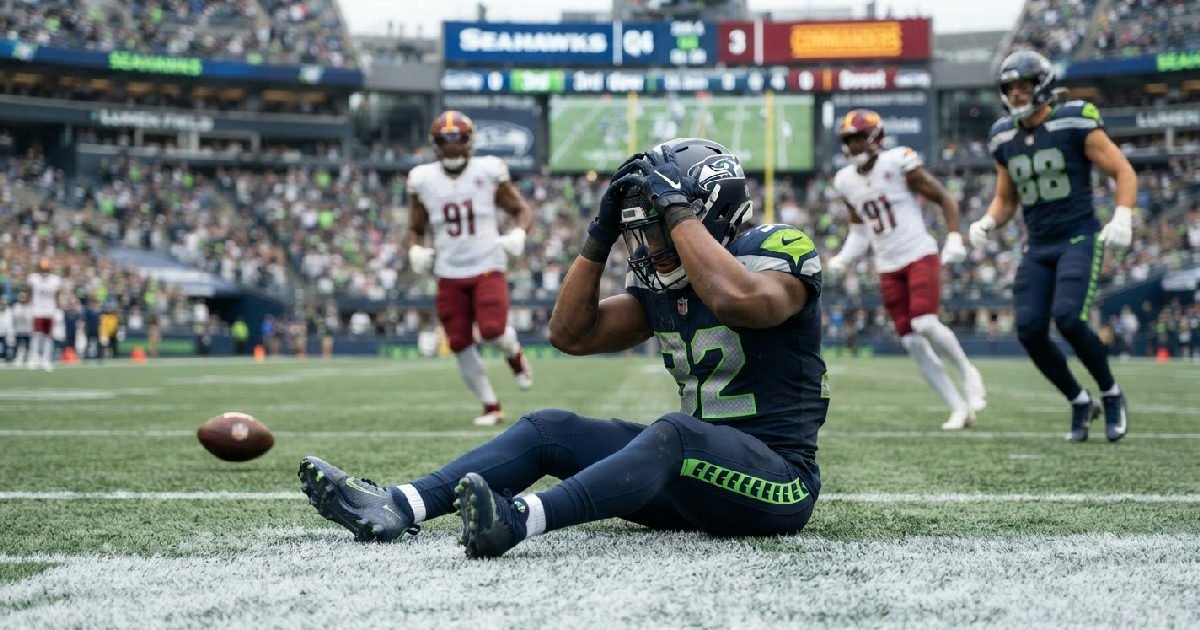
A troubling pattern of turnovers for Seattle Seahawks rookie running back Jadarian Price has cast a pall over the team’s backfield. The issue became glaringly apparent during the Week 3 game against the Washington Commanders on 2026-09-27, where Price lost his second fumble in just three games, raising serious questions about Jadarian Price’s fumbling problem and overall ball security.
The rookie’s struggles are sharply contrasted by the concurrent success of former Seahawk Kenneth Walker III. While Price battles to hold onto the football, Walker is thriving elsewhere in the league, compounding the frustration for the Seahawks organization and its fanbase.
Understanding Jadarian Price’s Fumbling Problem
The divergence in fortunes was on full display Sunday. Early in the first quarter against the Commanders, Price put the ball on the turf, a costly mistake for an offense trying to find its rhythm with the return of starting quarterback Sam Darnold. It was a moment that underscored the team’s current vulnerability at the position, especially with veteran Zach Charbonnet still recovering from injury.
These individual errors carry significant weight across the league, particularly during a packed historic NFL Week 3 slate where every possession is critical. For Seattle, the timing couldn’t be worse. Meanwhile, Kenneth Walker III was demonstrating exactly what the Seahawks are missing, continuing his strong start to the 2026 season.
The Athletic’s Michael-Shawn Dugar captured the brutal comparison in a social media post, stating, “Seahawks catching the wrong side of turnover fortune. Ken Walker III in 4 years = zero lost fumbles. Jadarian Price in 3 games = 2 lost fumbles.” This single statistic encapsulates the painful narrative unfolding for Seattle: a reliable star thriving elsewhere while his replacement struggles with the fundamentals.
The Ripple Effect on Seattle’s Offense
For a rookie running back, fumbling is more than just a statistical blemish; it can become a psychological burden. Each turnover erodes the trust of the coaching staff, potentially leading to more conservative play-calling and fewer opportunities for the player to prove himself. Price is now in the difficult position of having to earn that trust back with every carry.
This issue extends beyond the rookie himself, sending ripples across the entire offensive unit. With quarterback Sam Darnold easing back into action after an injury, a stable and productive running game is not a luxury—it’s a necessity. An unreliable ground attack places immense pressure on the passing game to carry the load, a tough ask for a quarterback shaking off rust.
The situation puts an even brighter spotlight on the recovery of Zach Charbonnet. The Seahawks are now in a position where they are not just hoping for his return, but likely counting on him to be a stabilizing force immediately. That adds considerable pressure on a player coming off an injury, who will have little time to ramp up before being expected to contribute significantly.
Navigating Rookie Ball Security Issues
While alarming, Price’s early-career fumbling issues are not entirely without precedent in the NFL. Many legendary running backs, from Adrian Peterson to Franco Harris, had to overcome fumbling problems early in their careers. The key determinant of their success was their ability to address the mechanical flaws and, just as importantly, the mental side of the game.
Coaching staffs typically respond to these issues with an intense focus on fundamentals. Drills designed to reinforce proper carrying technique—keeping the ball “high and tight” and securing it with multiple points of contact—will undoubtedly become a central part of Price’s practice regimen. It’s a process of rebuilding muscle memory under the simulated pressure of game situations.
Beyond the physical drills, managing the mental game is paramount. A young player can easily fall into a spiral of self-doubt, playing tentatively for fear of making another mistake. Building focus is crucial, requiring a sustained effort from the player to block out external noise and commit to flawless execution during practice.
The Long Shadow of Kenneth Walker III
The departure of Kenneth Walker III was a calculated business decision, a common occurrence in the salary-cap era of the NFL. Teams must often make difficult choices, letting talented players walk to allocate resources elsewhere. However, when those decisions backfire so visibly, they inevitably face intense scrutiny from fans and media alike.
Walker is a key weapon for a team that appears poised for a deep postseason run. His sure-handedness and explosive playmaking are on national display, serving as a constant reminder of the asset Seattle let go. Every successful run he makes is another point of comparison for a Seahawks fanbase that adored him for his reliability and game-breaking talent.
This dynamic creates a difficult environment for a rookie like Price. He isn’t just being asked to replace a running back; he’s being asked to fill the void left by a fan favorite who seemed incapable of making a critical error. The constant comparisons, fair or not, add another layer of pressure to an already challenging transition to the professional level.
Outlook for Jadarian Price and Seattle’s Backfield
The immediate future for Jadarian Price is uncertain. The Seahawks coaching staff faces a classic dilemma: do they show faith in their rookie and allow him to play through his mistakes, or do they shorten his leash to protect the team from further turnovers? His snap count in the upcoming home game against the Los Angeles Chargers will be telling.
The team’s handling of this situation will be a major storyline in the coming weeks. A reduction in playing time could further damage the rookie’s confidence, but continuing to give him carries that result in fumbles could cost the team games. It’s a delicate balancing act between player development and the urgent need to win in a competitive league.
Ultimately, Price’s career in Seattle may hinge on his ability to conquer this early adversity. He has the talent that prompted the Seahawks to draft him, but talent alone doesn’t guarantee a long NFL career. Ball security is non-negotiable, and his capacity to fix this fundamental flaw will determine whether he becomes a reliable contributor or a cautionary tale of unfulfilled potential.