

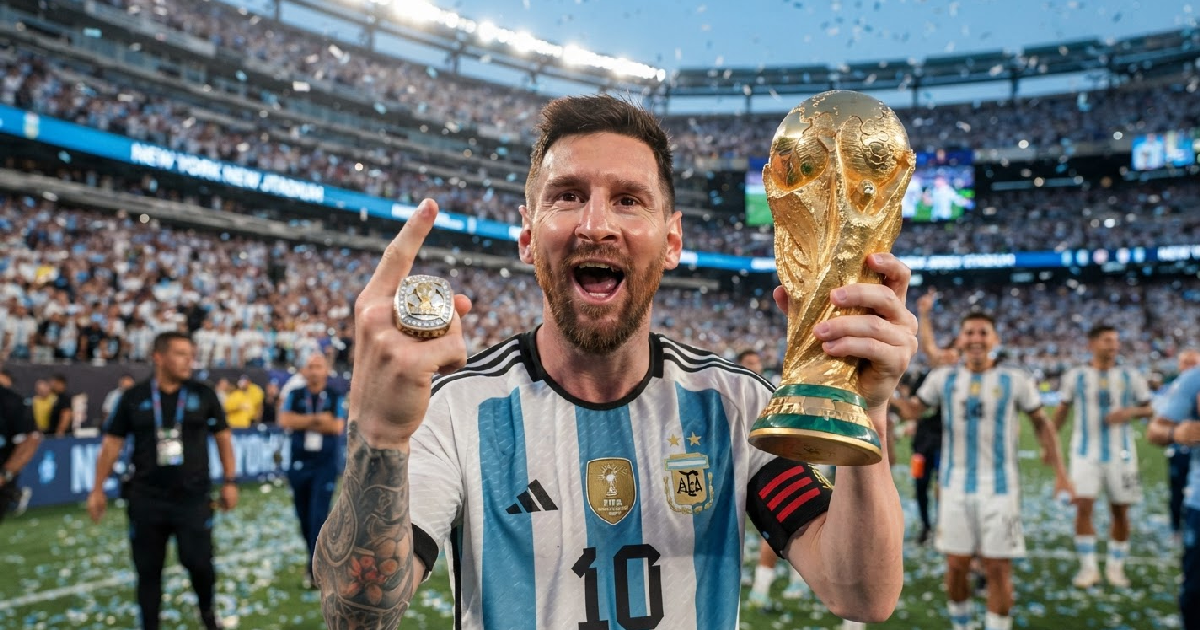
FIFA unveils bespoke championship rings for 2026 World Cup winners
FIFA is set to introduce bespoke championship rings for the winners of the 2026 FIFA World Cup, a significant departure from tradition that brings a touch of North American sporting culture to global football. This historic move marks the first time such 2026 World Cup rings will be awarded in the tournament’s 96-year history.
The decision sees the victors of the final, contested between Argentina and Spain on Sunday, July 19th, at New York New Jersey Stadium in East Rutherford, New Jersey, receiving this unique honour alongside the iconic trophy and gold medals. It’s a clear nod to the host nations: Canada, Mexico, and the United States, and their deep-rooted athletic customs.
A new era for football’s biggest prize
For decades, the ultimate prize for World Cup champions has been the coveted FIFA World Cup Trophy and a set of gold medals. Now, players and staff on the triumphant squad will also receive a permanent, personalized keepsake. This elevates the celebratory experience for those who reach football’s pinnacle.
While the full 30 custom-fitted rings will be officially presented to the team and staff at a later date, there’s an immediate symbolic gesture. The captain and head coach of the winning side will get temporary rings right after the final whistle. This ensures an instant recognition of their monumental achievement.
Details of the historic 2026 World Cup rings
FIFA has provided specific details about these groundbreaking awards. The initiative marks a conscious effort to blend the global appeal of football with the unique sporting heritage found across North America. This is a first for the tournament.
- Total Limited-Edition Rings: A strictly limited edition of 2,026 individually numbered rings will be produced, directly paying tribute to the tournament year.
- Rings for the Victorious Team: 30 bespoke championship rings will be presented to the victorious team and its staff.
- These rings will be custom-fitted and officially presented at a later date after the final.
- Immediately after the final match, the captain and head coach of the winning team will receive temporary rings to commemorate the occasion.
- Rings for Fans: 1,996 rings will be made available to fans worldwide as an Official Licensed Product, allowing supporters to own a unique piece of FIFA World Cup 2026 history.
- Ring Design Elements:
- One side of each ring will proudly feature the FIFA World Cup trophy.
- The other side will be customized to reflect the identity of the winning team, including its crest and identity.
- Each ring will be individually numbered.
- Each ring will be delivered with its own certificate of authenticity.
- An engraving in the band will reflect the culture of the victorious country.
Personalised symbols of victory
These aren’t generic trinkets. FIFA has confirmed the rings are bespoke creations, meticulously designed to reflect the champions’ journey. Each ring will proudly feature the FIFA World Cup trophy on one side, a universal emblem of football supremacy.
The opposite side of the ring will be uniquely customised. It’s set to showcase the winning team’s identity, including their crest and visual motifs. This ensures a deep, personal connection to their historic triumph on the global stage.
Authenticity and fine details
Exclusivity defines these new awards. Each ring will be individually numbered, custom-fitted for its recipient, and delivered with a certificate of authenticity. These measures guarantee their unique value and provenance, making them highly prized possessions.
While initial images suggest yellow gold, precise specifications like karat content (e.g., 14 or 18 karats) remain undisclosed. An engraving on the band will also subtly incorporate the victorious nation’s culture. This adds another layer of personalised storytelling to each piece, making each ring truly unique.
Beyond the pitch: fan access to World Cup history
FIFA isn’t limiting this new tradition solely to the players and coaching staff. They’re making a strictly limited edition of 2,026 individually numbered rings available to the public. This quantity directly tributes the tournament year, creating a unique collector’s item for enthusiasts.
Out of this total, 30 rings go to the winning team and its personnel. The remaining 1,996 rings will be offered to fans worldwide as an Official Licensed Product. This allows supporters to own a tangible piece of FIFA World Cup 2026 history, broadening engagement beyond match days and into personal collections.
A storied athletic custom
The concept of championship rings is deeply embedded in North American sports, serving as a powerful symbol of ultimate athletic success. The NFL’s Super Bowl ring is perhaps the most recognisable example globally. Its tradition dates back to Vince Lombardi and the Green Bay Packers after their 1967 victory.
But this custom predates American football’s biggest game. World Series rings for baseball champions date back to 1927, while NBA championship rings first appeared after the 1947 finals. These rings are prized possessions, often passed down through generations, representing peak athlete experience in North American sports.
Ornate designs and manufacturers
Super Bowl rings are known for their intricate designs and lavish embellishments. They typically feature yellow or rose gold, often encrusted with diamonds. Common elements include the team name, logo, “World Champions,” and the Super Bowl number in Roman numerals, making each a wearable work of art.
Manufacturers like Jostens, an American memorabilia company established in 1897, have produced 37 of the 57 Super Bowl rings through 2024. Tiffany & Co. and, more recently, Jason of Beverly Hills, have also designed these coveted pieces. They often incorporate subtle tributes to specific plays or achievements, adding to their symbolic weight.
For instance, the New England Patriots’ Super Bowl LI ring in 2017 featured 283 diamonds. This number referenced their remarkable comeback from a 28–3 deficit in that game. Such details highlight the rings’ storytelling capability, capturing memorable moments.
The Philadelphia Eagles’ Super Bowl LII ring included 127 diamonds, representing combined jersey numbers from their famous “Philly Special” trick play. Modern designs have become even more elaborate. Some rings, such as those for the Tampa Bay Buccaneers in 2021 and the Los Angeles Rams in 2022, feature removable tops.
These reveal miniature replicas of their home stadiums, adding another layer of intricate detail and personalization. Each ring is a microcosm of the season’s journey, a physical representation of hard-won victory.
Cost and market value
Manufacturing these high-end rings isn’t cheap, with costs typically ranging from $30,000 to $50,000 per piece. The NFL itself contributes between $5,000 and $7,000 for up to 150 rings per winning team. Any additional costs are then covered by the franchise, a substantial investment in team morale.
On the open market, genuine Super Bowl rings can fetch significant sums, often in the low six figures. The value fluctuates based on the original owner’s identity and the historical significance of the win. Robert Kraft, owner of the New England Patriots, even sold his Super Bowl LI ring for over $1 million at a 2020 charity event, showcasing their immense value as collectibles.
What this means for global football
FIFA’s adoption of the championship ring tradition signals a strategic effort to enhance the World Cup’s appeal, especially in the North American market. It blends the established global prestige of football with a beloved local custom. This move could redefine how future victories are celebrated and commemorated.
The introduction of these bespoke 2026 World Cup rings also offers new revenue streams through licensed merchandise. It creates a powerful, tangible link for fans, allowing them to literally wear their team’s success. This initiative could set a precedent for other international tournaments, potentially inspiring similar innovations.
But there’s also a cultural exchange at play. While some traditionalists might view this as an Americanisation of football, it’s more likely an evolution. It recognises the growing influence of North American sports marketing and presentation on the global stage. It’ll be interesting to see if this innovation sparks similar changes in other major sporting events.
The final between Argentina and Spain on July 19th won’t just crown a world champion. It will also usher in a new era of recognition for football’s elite. The inclusion of personalized championship rings means the glory will endure not just in history books, but also as a glittering, wearable testament to ultimate victory.