

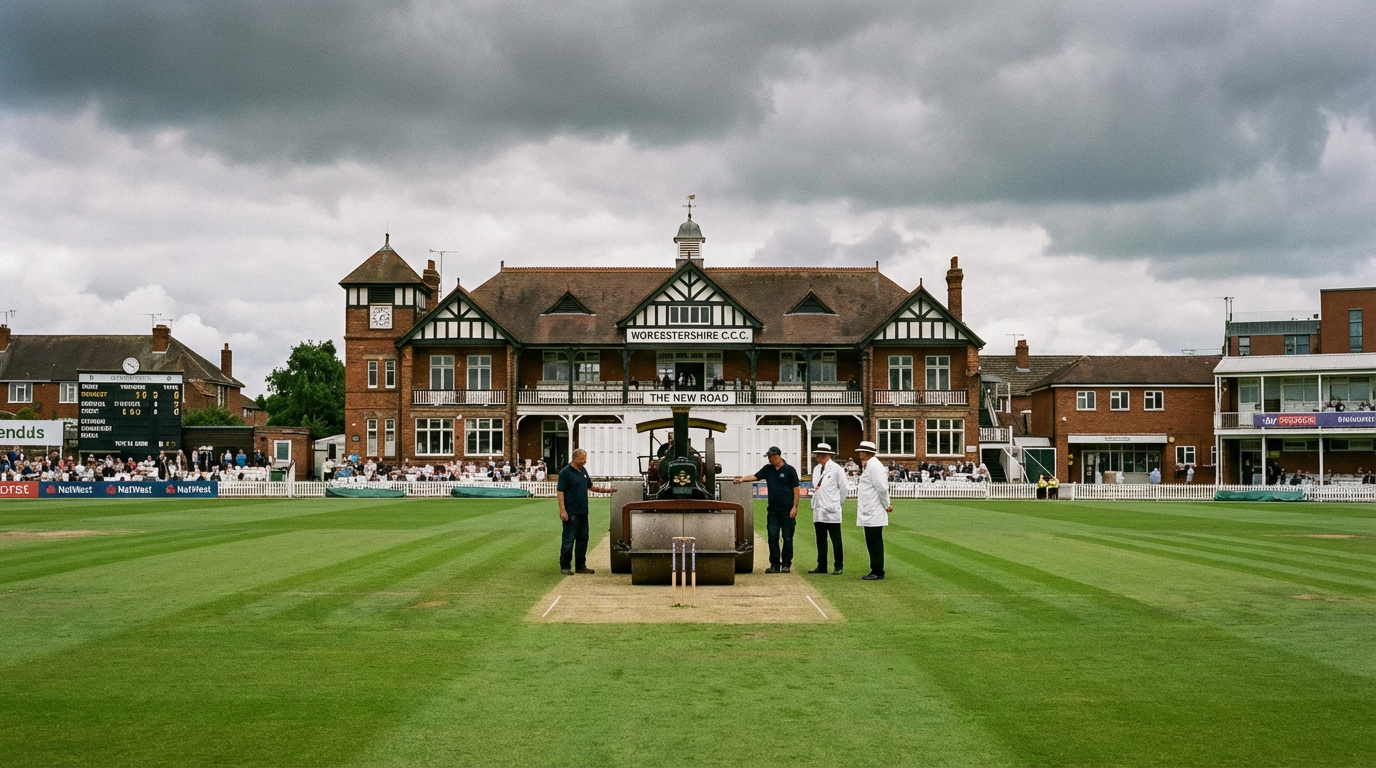
Counties Face Draconian Point Deductions: ECB Doubles Pitch Penalty for 2026 Season
Counties Face Draconian Point Deductions: ECB Doubles Pitch Penalty for 2026 Season
English county cricket is bracing for a seismic shift in pitch preparation regulations, as the England and Wales Cricket Board (ECB) has announced a significant escalation in penalties for “below average” pitch ratings, set to take effect from the 2026 season. Under the new stringent guidelines, counties whose pitches are deemed “below average” by match referees – a classification that previously carried a lighter sanction – will now face an automatic deduction of all points from the match. This drastic measure, unveiled as part of the ECB’s continuous efforts to improve playing conditions and foster more competitive cricket, marks a substantial tightening of an already contentious area of domestic cricket.
The announcement has sent ripples through the county game, sparking intense debate among club officials, groundskeepers, players, and pundits alike. While the ECB maintains that these heightened penalties are crucial for upholding the integrity of the game and promoting the development of multi-faceted cricketers, there are palpable concerns about the practicality of implementation, the potential for arbitrary judgments, and the profound impact on championship races.
The Evolution of Pitch Regulations: A Historical Context
Pitch assessment in English county cricket has a long and often controversial history. For decades, the assessment of playing surfaces was largely subjective, leading to inconsistencies and grievances. The advent of more formalized systems, including the use of independent pitch inspectors and standardized rating criteria, aimed to bring greater objectivity to the process. However, even with these advancements, the debate surrounding what constitutes a “good” or “bad” pitch has persisted.
Historically, penalties for subpar pitches have varied, ranging from fines to minor point deductions. The existing system, which often saw counties lose a handful of points for a “below average” rating, was designed to act as a deterrent without unduly influencing the outcome of a season. The ECB’s decision to move to a “loss of all points” model for such ratings represents a dramatic departure from this incremental approach.
“We believe that the quality of playing surfaces is fundamental to the health of county cricket,” commented an ECB spokesperson, speaking on condition of anonymity due to the ongoing consultations. “These new regulations are designed to reinforce the message that counties have a responsibility to provide pitches that offer a fair contest between bat and ball, and that encourage the development of well-rounded skills. We are committed to ensuring a better spectacle for fans and a fairer environment for players.”
Defining “Below Average”: The Criteria Under Scrutiny
Central to the effectiveness and fairness of these new regulations will be the precise definition and consistent application of the “below average” criterion. Currently, pitch ratings are assigned by match referees, who consider various factors including pace, bounce, turn, and seam movement throughout a match. A pitch can be deemed “below average” if it is perceived to disproportionately favour either batsmen or bowlers, or if it offers an unusually low or high amount of challenge compared to acceptable standards.
Key Factors in Pitch Assessment:
- Pace and Bounce: Consistent and reasonable pace and bounce are generally desired, avoiding dangerously lively or excessively slow and low surfaces.
- Seam Movement: An appropriate amount of seam movement, particularly in the initial stages of a match, is often seen as vital for a balanced contest.
- Turn: While spin is an integral part of the game, excessive turn from day one can be deemed unfair, just as a complete lack of turn can disadvantage spinners.
- Wear and Tear: The pitch should ideally deteriorate gradually, allowing for different phases of the game to unfold naturally. Rapid or unpredictable deterioration can be problematic.
The ambiguity inherent in some of these subjective assessments is a primary concern for county groundskeepers and coaches. What one referee deems “below average,” another might consider “average” or even “good.” The potential for inconsistency in application, despite standardized guidelines, remains a significant worry.
The Rationale Behind the Drastic Measures
The ECB