

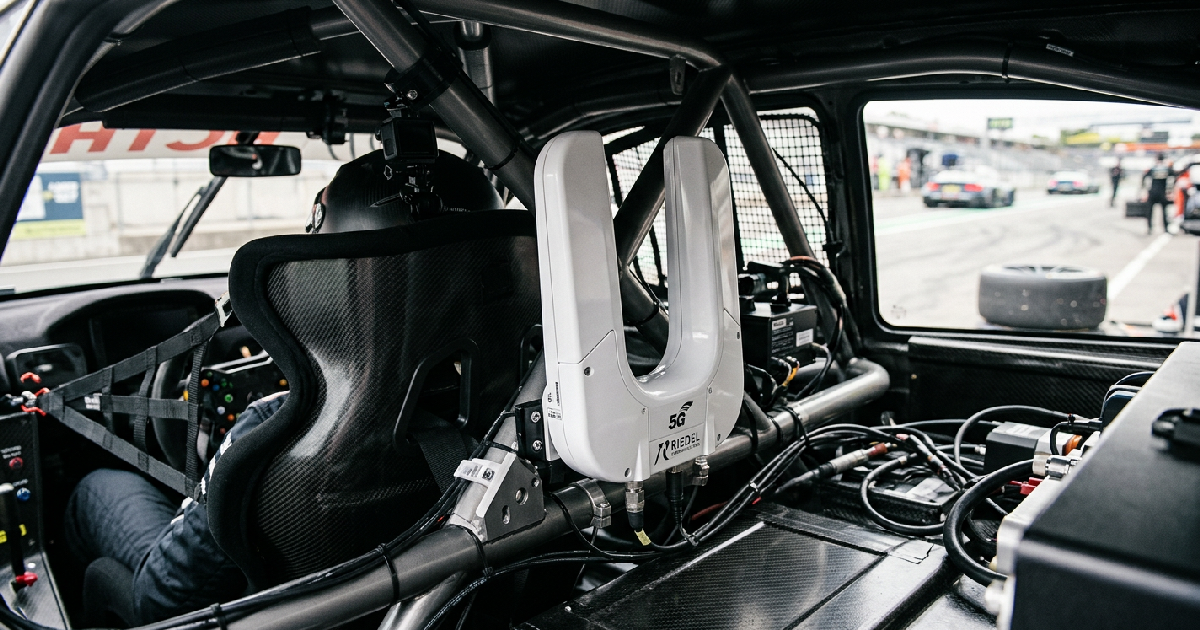
DTM Integrates 5G Antenna Technology for Enhanced Live Streaming
The Deutsche Tourenwagen Masters (DTM) and ADAC Motorsport have reportedly begun the implementation of 5G-capable onboard antennas across the field to enhance live race broadcasting capabilities. The white U-shaped components, which appeared during testing sessions in preparation for the current competition cycle, are now becoming a standard fixture for vehicles within the series, including the ADAC GT Masters and GT4 Germany. This technological shift, reportedly managed by hardware supplier Riedel, aims to provide high-definition streaming from inside the cockpit to global audiences with minimal delay.
The introduction of these antennas marks a shift away from traditional fiber-optic and radio signal relays that have long anchored motorsport broadcasting. By utilizing the fifth generation of mobile communications, the series is expected to transmit larger volumes of data with reduced latency. This is particularly relevant for onboard camera feeds, which have occasionally faced signal reliability issues or resolution limitations under older transmission standards.
During the initial testing phases, the devices drew attention for their industrial appearance. However, as the competition has progressed, several teams have reportedly worked to integrate the units more seamlessly into their vehicle liveries. For example, some Mercedes-AMG GT3 teams have reportedly explored moving the hardware to different sections of the roof to balance aerodynamics and aesthetics. Even as international sports icons influence global branding, the DTM is proving that technical requirements often dictate the visual evolution of a racing series.
Enhancing the Onboard Viewer Experience
The primary driver behind this hardware rollout is the desire to expand the “onboard” experience to a larger portion of the field. While not every car has historically carried active cameras for the live TV feed, the presence of these units—sometimes as “dummy” units to maintain aerodynamic and weight parity—ensures competitive balance across the grid. This ensures that no team gains a weight advantage by opting out of the broadcast equipment.
Engineers have reportedly placed the U-shaped housing in specific areas on the roof to minimize interference from the cars’ own internal radio systems. The units include an integrated router that connects to local access points established at the circuits. This dedicated network is designed to maintain a stable connection even at the high speeds reached on long straights. Teams have reportedly been advised to monitor cooling for the units, as high-speed data processing can generate heat during a full race distance.
This push for better digital integration mirrors trends in other sectors where high-speed data is becoming the backbone of the industry. Just as global capital flows are increasingly reliant on digital speed, the DTM is betting that better connectivity will translate into higher engagement for its audience.
Streamlining Race Oversight and Incident Reviews
Beyond the entertainment value, the 5G transition has implications for how race stewards manage on-track incidents. DTM cars typically carry multiple camera systems: one for the TV broadcast, one for internal team analysis, and a mandatory “incident camera” used by ADAC officials. Traditionally, these incident cameras have relied on physical memory cards that technicians must manually retrieve after a session to review collisions or penalties.
With the 5G system in place, the long-term objective is reportedly to consolidate these systems. Officials are expected to eventually stream incident footage directly to race control. This would facilitate faster decisions on penalties, potentially reducing the wait times for final race results. As technical and economic pressures mount in various industries, much like how Sony raises prices due to economic shifts, the DTM is looking for ways to make operations more efficient through integrated data solutions.
The visual evolution of these antennas is expected to continue as the season progresses. While they remain a distinct feature of the cars’ silhouettes for now, future iterations are expected to be more streamlined. The current implementation serves as a bridge toward a more connected grid where sensor data could eventually be monitored in real time. If the network proves stable under professional racing conditions, it may serve as a blueprint for other GT3-based championships worldwide.