

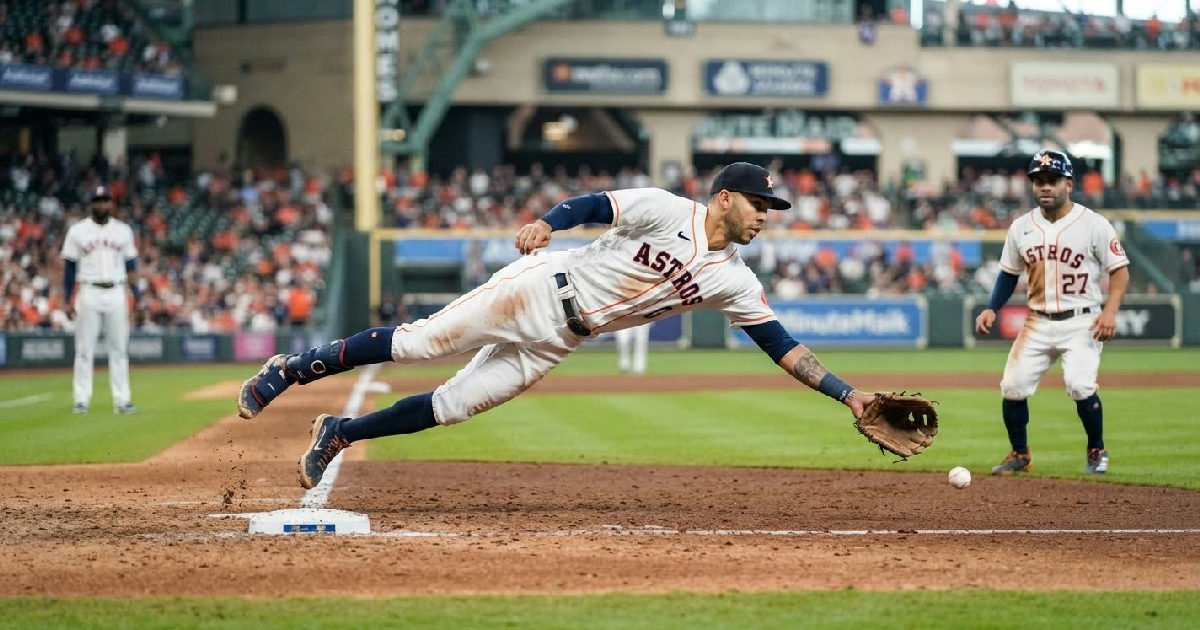
Astros Eye Carlos Correa Shift to Second Base Upon Ankle Injury Return
Carlos Correa is returning from an ankle injury to play second base for the Houston Astros, a strategic shift for the postseason.
This potential move, first reported by Ken Rosenthal of The Athletic, would have wider implications for the Astros’ infield alignment, notably impacting veteran second baseman Jose Altuve and slugger Yordan Alvarez.
Second base upon ankle: a strategic shift
Correa, who underwent surgery for a torn peroneus brevis tendon in his left ankle in early May 2026, has been diligently rehabbing at the Astros’ minor-league facility in West Palm Beach, Florida. His return, initially feared to be season-ending, is now anticipated before the end of the regular season, injecting a much-needed boost into a team battling for the American League West title.
The proposed positional change for Carlos Correa centers on maximizing the team’s offensive and defensive capabilities as they head into the final weeks of the season. By moving Correa to second base, the Astros could unlock greater flexibility within their roster.
This tactical adjustment would primarily allow Jose Altuve to transition into a more consistent designated hitter role, keeping his valuable bat in the lineup without the daily defensive strain. Such a move also paves the way for Yordan Alvarez to see more playing time in the outfield, further strengthening the team’s defensive coverage and offensive power.
Redefining Defensive Roles
With Correa potentially at second, the infield picture becomes clearer. Jeremy Peña would retain his role at shortstop, a position he has capably manned, while Isaac Paredes could continue to hold down third base. This configuration would effectively place two former shortstops up the middle, potentially enhancing defensive prowess.
The idea is to create a formidable defensive spine while ensuring the team’s most productive hitters, including Correa and Alvarez, are consistently contributing. It reflects a proactive approach to optimize player strengths during a critical stretch of the season.
Correa’s Arduous Road to Recovery
Carlos Correa’s journey back to the field has been a challenging one, marked by extensive rehabilitation following his left ankle surgery. The injury, sustained during pregame batting practice in early May 2026, initially cast a shadow over his entire season.
Despite the grim initial prognosis, Correa has made remarkable progress. He has been seen fielding ground balls and hitting in the cage. Crucially, he ran the bases on Wednesday, September 9, 2026, a significant milestone in his recovery.
Rehab Milestones and Readiness
Astros manager Joe Espada has expressed confidence in Correa’s recovery, stating that “Carlos is progressing well.” Correa himself reported feeling “roughly at 95%,” but acknowledged the need to test critical baseball movements like changing direction, sliding, and planting in the batter’s box.
He is expected to face live pitching in live batting practice “pretty soon” this week, a crucial step before a likely minor-league rehab assignment. These rigorous steps are essential to ensure his readiness for MLB-level competition after missing 110 consecutive games.
High Stakes in the AL West Race
The Houston Astros find themselves in a tight race for the American League West title, with every game carrying immense weight. As of Saturday, September 12, 2026, the team holds a 75-73 overall record, giving them a three-game lead over the Texas Rangers.
With only 15 regular-season games remaining, the return of a high-caliber player like Carlos Correa, even in a new role, could be pivotal. His proven ability at the plate and invaluable postseason experience could provide a much-needed boost.
Balancing Risk and Reward
Introducing a position change this late in the season, particularly after a significant injury, carries inherent risks. But the potential rewards, including enhanced lineup flexibility and offensive output, appear to outweigh these concerns for the Astros.
Correa, a competitor known for his dedication, is expected to embrace the challenge wholeheartedly. The team is aiming to clinch a postseason spot, and his presence, regardless of the glove he wears, would undoubtedly elevate their chances. Similar to other athletes returning from injury, the focus remains on ensuring peak performance.
Past Injury Concerns and Long-Term Trajectory
Correa’s history with injuries has been a recurring theme throughout his career. Notably, in 2022, free-agent agreements with both the San Francisco Giants and the New York Mets fell apart due to concerns over his physicals, specifically related to his right ankle.
He ultimately signed a discounted deal with the Minnesota Twins that year, before reuniting with the Astros at the trade deadline in 2025. These past events underscore the caution and thoroughness with which any injury return and positional change are being approached.
Impact on Correa’s Career Outlook
A successful transition to second base could fundamentally alter Carlos Correa’s long-term career trajectory. It would showcase his versatility and commitment to the team, potentially extending his value as a player capable of performing at multiple infield positions.
This adaptability could prove crucial for future contract negotiations and his overall legacy in Major League Baseball. His willingness to adapt to a new role speaks volumes about his dedication to winning.
Maximizing Offensive Firepower for October
At its core, the potential shift for Carlos Correa is about optimizing the Astros’ lineup for the critical games ahead and into the postseason. Correa was batting an impressive .279 with a .369 on-base percentage, three home runs, and 16 RBIs in 32 games before his injury in 2026.
Getting that offensive production back into the daily lineup is paramount. Even if a position change adds a layer of complexity, the primary goal is to have his bat available and impactful.
Synergy with Key Players
The re-alignment would create interesting dynamics with Jose Altuve and Yordan Alvarez. Altuve, a cornerstone of the Astros, could benefit from reduced defensive responsibilities, potentially leading to even greater offensive consistency. Alvarez, meanwhile, could leverage his power from the outfield, becoming a more complete player.
This strategy reflects a sophisticated understanding of player strengths and how to best deploy them in high-pressure situations. The success of this move will hinge on seamless integration and individual performance, much like any high-stakes athletic competition.
What Lies Ahead for the Astros
As the regular season winds down, all eyes will be on Carlos Correa’s return and the Astros’ strategic deployment of their star infielder. His ability to perform at a new position, coupled with the team’s overall health and momentum, will dictate their path in the competitive AL West.
The coming weeks promise intense baseball as the Astros aim to secure their playoff berth and contend for another World Series title. The integration of Correa back into the fold, especially in a revamped role, adds an intriguing subplot to their pursuit of glory.