

Audi Project Faces “Firefighting” Realities After Technical Woes at F1 Miami
Audi’s debut season in Formula 1 faced severe technical scrutiny at the Miami Grand Prix as Nico Hulkenberg and Gabriel Bortoleto dealt with a series of mechanical setbacks and power unit reliability issues. The German manufacturer, navigating its inaugural campaign, reportedly spent the weekend managing a succession of engine-related failures and regulatory complications that hampered its performance during the sprint and qualifying sessions. Team sources indicated that the high temperatures in Florida contributed to the volatile environment, forcing mechanics into a frantic rebuilding process to keep both cars on track for the main event.
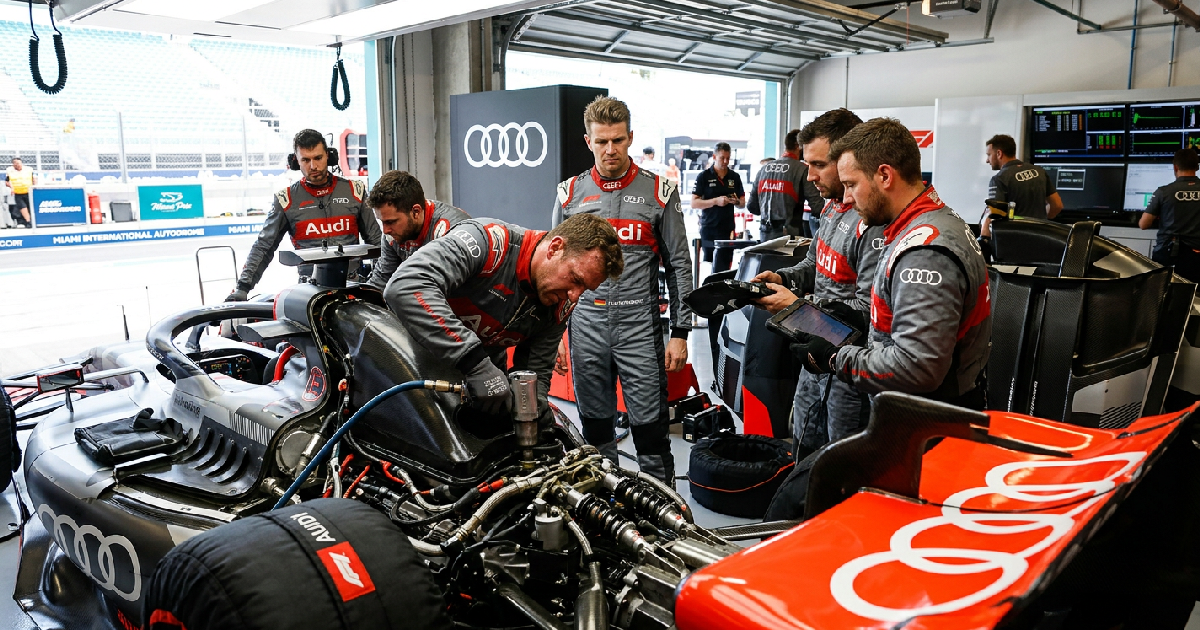
The weekend reportedly took a turn for the worse when a power unit issue on Hulkenberg’s car led to an localized fire in the garage during the buildup to the sprint. This forced the crew to attempt a major overhaul of the rear assembly under intense time pressure. On the other side of the garage, Bortoleto’s performance was reportedly marred by technical inconsistencies, with rumors from the paddock suggesting that the team faced scrutiny from officials regarding technical violations linked to internal intake pressures. This technical volatility mirrors the market uncertainty seen in other high-stakes sectors this year.
Managing Mechanical Strain Under Pressure
Nico Hulkenberg has reportedly remained stoic despite the early-season reliability hurdles, acknowledging that the project is currently in a demanding learning phase. As the sole team utilizing the new Audi power unit, the squad lacks the luxury of customer team data to accelerate their development cycle. Internal reports suggest the team is frequently operating in a “firefighting” mode, a situation that many analysts expected given the complexities of the current technical regulations.
The workload on the mechanical crew has been immense. Reports from the Miami paddock noted that Bortoleto’s car required a swift gearbox change in a very narrow window to ensure participation in the subsequent sessions. This rushed process reportedly led to secondary issues, including overheating components and brake concerns that briefly left the young Brazilian stranded. Much like how premier sports organizations search for specific solutions to address deep-seated tactical or structural flaws, Audi is actively looking to bolster its technical department to prevent these recurring failures.
Structural Changes and Long-Term Stability
Despite the smoke and technical disruptions, the team’s ability to field both cars for the qualifying sessions was viewed by some within the garage as a minor miracle. The extensive repairs required the replacement of significant portions of the internal architecture on both vehicles. While the results on the timing sheets remained modest, the focus has shifted toward building a more stable foundation for the remainder of the season.
This period of transition is not limited to the garage, as the organization is reportedly undergoing a leadership restructure. Reports indicate that new administrative and racing directors are being integrated into the project to stabilize the operation following a series of high-profile hires and departures. The goal is to move beyond the current cycle of emergency repairs and into a more predictable development rhythm.
Future Perspectives for the Audi Entry
While the Miami weekend served as a stark reminder of the challenges facing a new manufacturer, the team’s pace in certain sectors suggests the chassis may be competitive once the power unit reaches a higher level of maturity. The primary narrative surrounding the project has been one of resilience in the face of persistent technical volatility. Just as fluctuations in liquidity can test the patience of global market participants, the mechanical gremlins in Florida are testing the resolve of the Audi F1 project.
As the championship moves toward its next phase, the focus for the Hinwil-based squad will likely center on cooling solutions and energy recovery systems. The “firefighting” described by those close to the team is expected to persist until a more robust testing protocol is established. For now, the German giant leaves Miami with more data than points, looking for a smoother path forward that avoids the dramatic scenes witnessed in the Florida heat.