

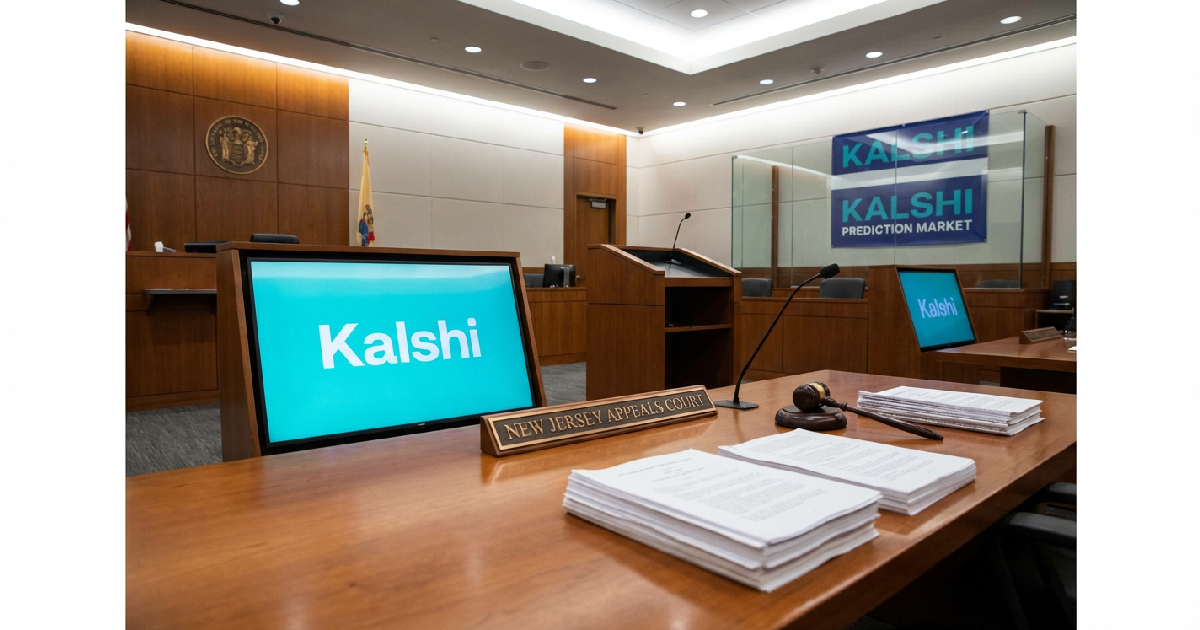
Appeals court allows Kalshi sports bets despite New Jersey challenge
In a decision that carries significant weight for the future of prediction markets, a federal appeals court has permitted Kalshi to maintain its sports betting operations. The ruling comes as a blow to New Jersey regulators who had sought to halt the platform’s expansion, arguing that such markets bypass traditional state-level gaming oversight.
The legal friction between Kalshi and New Jersey has become a flashpoint for the broader intersection of financial derivatives and gambling. While Kalshi operates as a regulated exchange for event contracts, its foray into sports-related outcomes has ruffled feathers in a state that has long prided itself on being the epicenter of American sports wagering regulation. But for now, the court’s refusal to grant an emergency stay means the platform can keep its doors open to traders looking to hedge on athletic results.
The Jurisdictional Battle over Prediction Markets
At the heart of the dispute is how Kalshi’s products are classified. Unlike a traditional sportsbook where a bettor takes fixed odds against the house, Kalshi functions as an exchange. Users trade contracts on whether a specific event will occur, with the price of the contract reflecting the market’s perceived probability of that outcome. This structure allows the company to argue it falls under the purview of federal commodities laws rather than state gambling commissions.
New Jersey officials have expressed concerns that this model creates a “backdoor” into sports betting that lacks the consumer protections and tax frameworks mandated by state law. They’ve argued that without state intervention, the integrity of the sports betting ecosystem could be compromised. However, the appeals court appears focused on the immediate legal standing of Kalshi’s federal authorizations, allowing the status quo to remain while the deeper merits of the case are debated.
What This Means for the Betting Public
For the average user, the court’s decision translates to uninterrupted access. Kalshi has been aggressive in rolling out contracts that mirror popular sporting events, from professional league outcomes to individual player performances. This ruling prevents a sudden blackout for users in jurisdictions where the service has gained traction.
The implications also ripple into the tech and crypto spheres. Prediction markets have long been a staple of the decentralized finance (DeFi) world, with platforms like Polymarket proving the massive demand for “betting on everything.” Kalshi’s ability to successfully navigate the U.S. court system provides a potential blueprint for how these markets might eventually gain full mainstream legitimacy without being relegated to offshore or unregulated corners of the internet.
| Feature | Traditional Sportsbook | Kalshi Prediction Market |
|---|---|---|
| Business Model | House vs. Bettor | Peer-to-Peer Exchange |
| Primary Regulator | State Gaming Commissions | Federal (CFTC oversight) |
| Pricing Mechanic | Handicapper Odds | Market Demand / Contract Price |
| Conflict Interest | House wins when you lose | Exchange earns on trade fees |
The Regulatory Outlook and New Jersey’s Next Step
While Kalshi has cleared this hurdle, the fight is far from over. New Jersey is expected to continue its pursuit through the legal system, potentially seeking a more permanent injunction or pushing for legislative changes that would more clearly define “event contracts” under state gambling statutes. The state has a vested interest in protecting its tax revenue from licensed operators who pay significant fees to operate within the Garden State.
And then there is the federal perspective. The Commodity Futures Trading Commission (CFTC) has had a complicated relationship with prediction markets, alternating between enforcement actions and periods of relative allowance. If more states follow New Jersey’s lead in challenging these platforms, we could see a fragmented market where certain event contracts are legal in some states but blocked in others—a logistical nightmare for a digital-first exchange.
So, the industry watches closely. If Kalshi eventually wins on the merits, it could open the floodgates for more financial institutions to offer sports-themed derivatives, effectively blurring the line between Wall Street and the Las Vegas Strip even further. For now, the lights stay on, and the trades continue to flow.
Frequently Asked Questions
Is Kalshi the same as a sportsbook like DraftKings?
Not exactly. While you can put money on sports outcomes on both, Kalshi is an exchange where you buy and sell contracts with other people. A sportsbook sets the odds themselves and you bet against them. Think of Kalshi like a stock market for events rather than a betting window at a casino.
Why is New Jersey so concerned about this?
New Jersey has a very strict and lucrative regulatory system for sports betting. They’ve argued that Kalshi is essentially offering the same product as a sportsbook but without following the state’s specific gambling rules, which include consumer protections and tax payments that go directly to the state.
Can I still use Kalshi if I live in a state that challenges it?
As of this court ruling, the platform is allowed to continue its operations. However, the legal situation is fluid. If a state successfully wins an injunction in a different court or passes new laws, access could change. It’s always best to check the platform’s current availability in your specific region.