

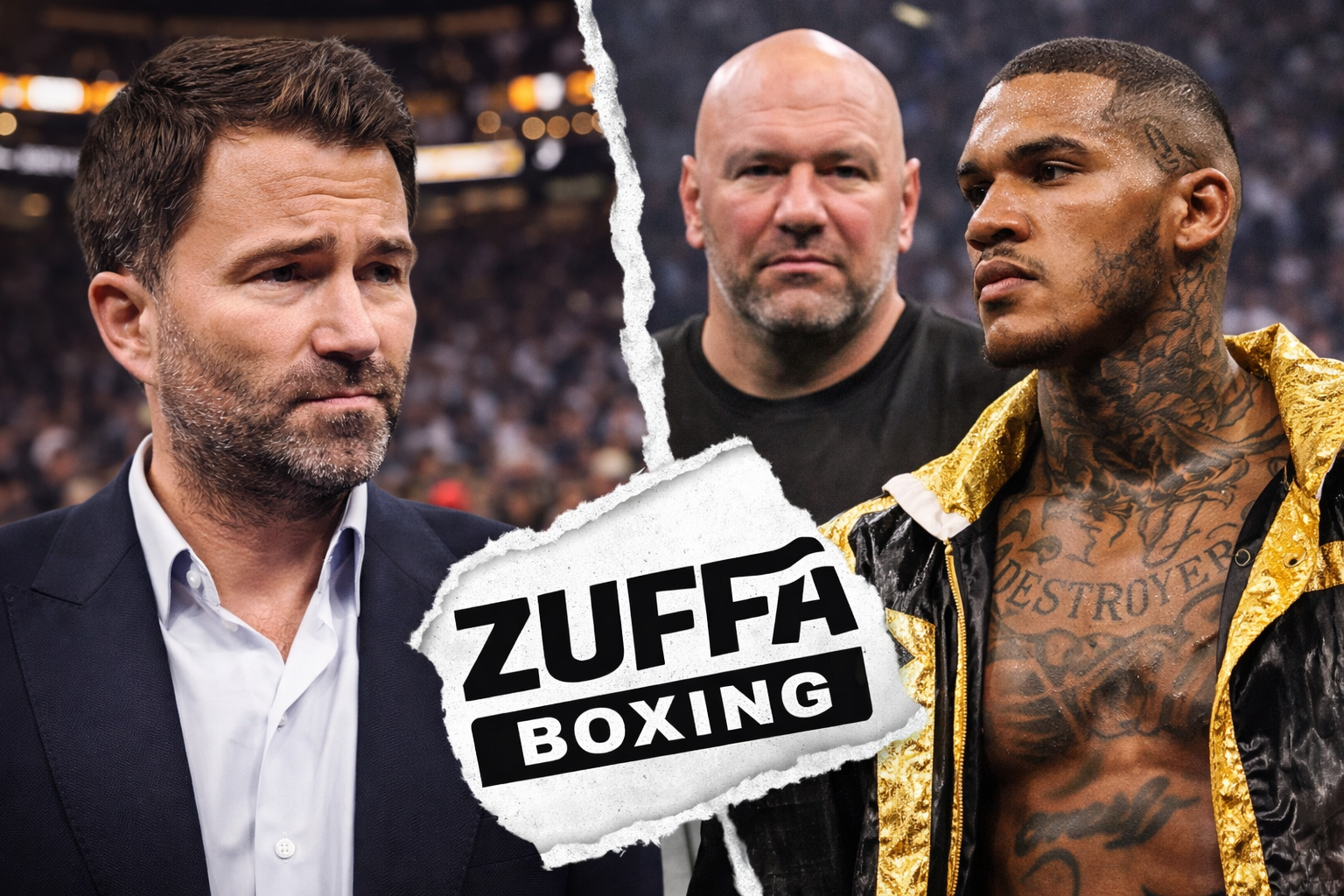
Conor Benn’s Breakaway Deal Signals a Turning Point in Boxing Power Dynamics
Conor Benn’s decision to align with Dana White’s new boxing venture has sent shockwaves through the sport’s promotional landscape. What makes the move especially significant is not just the new partnership — it’s the abrupt end of a long-standing relationship many believed would continue shaping Benn’s career for years.
This development is being viewed less as a routine contract change and more as a moment that reflects how quickly influence, leverage, and loyalty can shift in modern boxing.
A Split Few Expected to See
For nearly a decade, Benn’s rise unfolded under the same promotional structure. From early development fights to headline-level attention, his career was built within a stable framework that appeared firmly intact.
That continuity made the sudden change difficult for industry observers to anticipate. Long-term collaboration in boxing often creates the impression of permanence — until a new opportunity alters the equation overnight.
The decision to move on suggests that even well-established partnerships now operate within a far more fluid competitive environment.
Eddie Hearn’s Response Reveals the Human Side of Business
Eddie Hearn’s public reaction reflected more than professional disappointment. His comments pointed to genuine surprise and personal frustration at how events unfolded.
He acknowledged believing that the relationship’s history — built on support, development, and shared success — would naturally guide future negotiations. Instead, communication broke down quickly once the new offer entered the picture.
Hearn’s admission that he misread the situation highlights an uncomfortable reality within elite boxing: emotional investment rarely guarantees contractual stability.
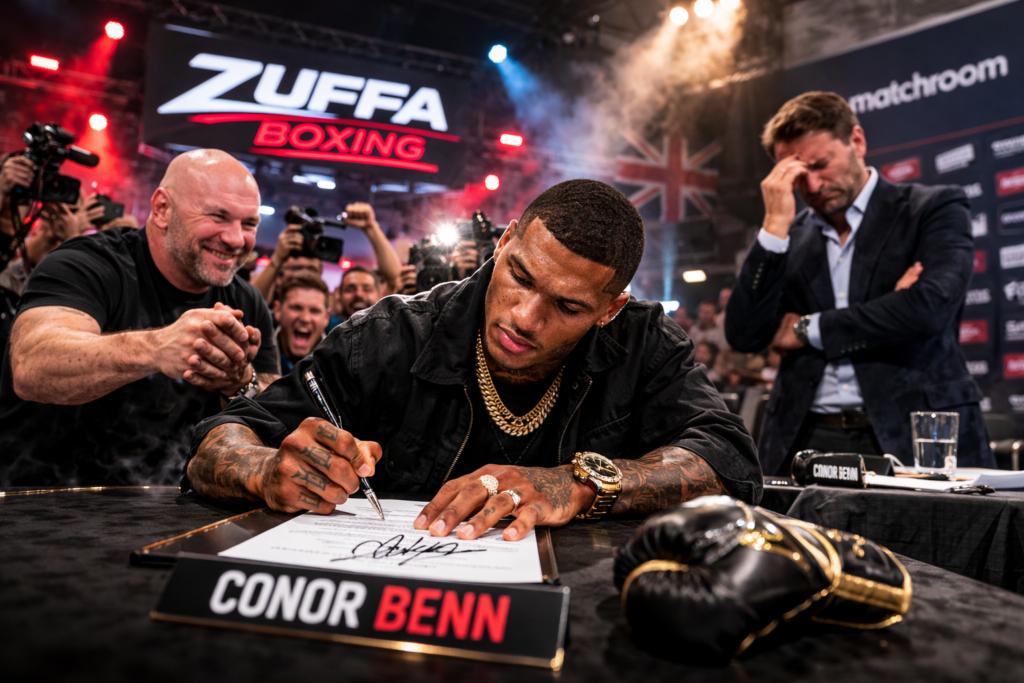
Communication Breakdown Marks the Real Divide
Perhaps the most telling aspect of the situation is how little discussion took place before the transition became final. Attempts to open dialogue reportedly failed, leaving little room for negotiation or compromise.
In a sport where deals often involve complex bargaining and prolonged talks, the speed of this separation stands out. The absence of meaningful conversation suggests the decision had already moved beyond reconsideration.
That silence effectively closed the chapter on one of boxing’s most visible promoter–fighter relationships.
A New Promotional Era Takes Shape
Benn’s move places him within a different competitive ecosystem — one shaped by new investment, new strategic priorities, and a different approach to event promotion.
Such a transition can alter everything from opponent selection to global broadcast positioning. Fighters entering a new promotional environment often encounter a redefined career trajectory almost immediately.
This shift will likely influence how Benn is positioned in major fights, how aggressively his brand is marketed, and how quickly high-profile matchups materialize.
What This Means for the Business of Boxing
The implications extend beyond a single fighter’s contract. The move reflects a broader trend: emerging promotional structures are increasingly capable of attracting talent away from established organizations.
This intensifies competition across multiple levels of the sport:
- negotiating leverage among elite fighters
- bidding pressure for marquee matchups
- strategic expansion by new promotional entities
- accelerated reshuffling of talent pipelines
The sport’s commercial ecosystem is becoming more dynamic — and less predictable.
The Future Relationship That Won’t Be the Same
While both sides may continue operating within the same industry, the previous partnership cannot simply resume where it left off. Trust, expectation, and alignment have fundamentally shifted.
In boxing, professional relationships often evolve, but rarely return to their former structure after such a decisive break.
What Comes Next for Conor Benn
Attention now turns to Benn’s competitive schedule under his new promotional banner. His next opponent, event scale, and global exposure will reveal how aggressively this partnership intends to reshape his standing in the sport.
Each decision from this point forward will serve as a test of whether the move delivers the strategic advantages that prompted it.
A Moment That Reflects Boxing’s Changing Reality
This situation underscores a central truth about modern boxing: long-term alliances exist only as long as opportunity, ambition, and market forces remain aligned.
Conor Benn’s decision represents more than a contractual shift. It signals that the balance of power in boxing promotion is actively evolving — and that even the most established relationships are subject to sudden transformation.
The sport has entered a phase where movement is faster, loyalty is conditional, and influence is constantly renegotiated.