

jd vance claims microsoft hires amid us visa crackdown
The Trump administration has escalated its crackdown on corporate immigration, suspending Microsoft, Adobe, and six other technology companies from a key program for sponsoring foreign workers for green cards. This move, announced on Thursday, October 8, 2026, was amplified by Vice President JD Vance, who claimed Microsoft replaced thousands of laid-off American workers with foreign hires on H-1B visas.
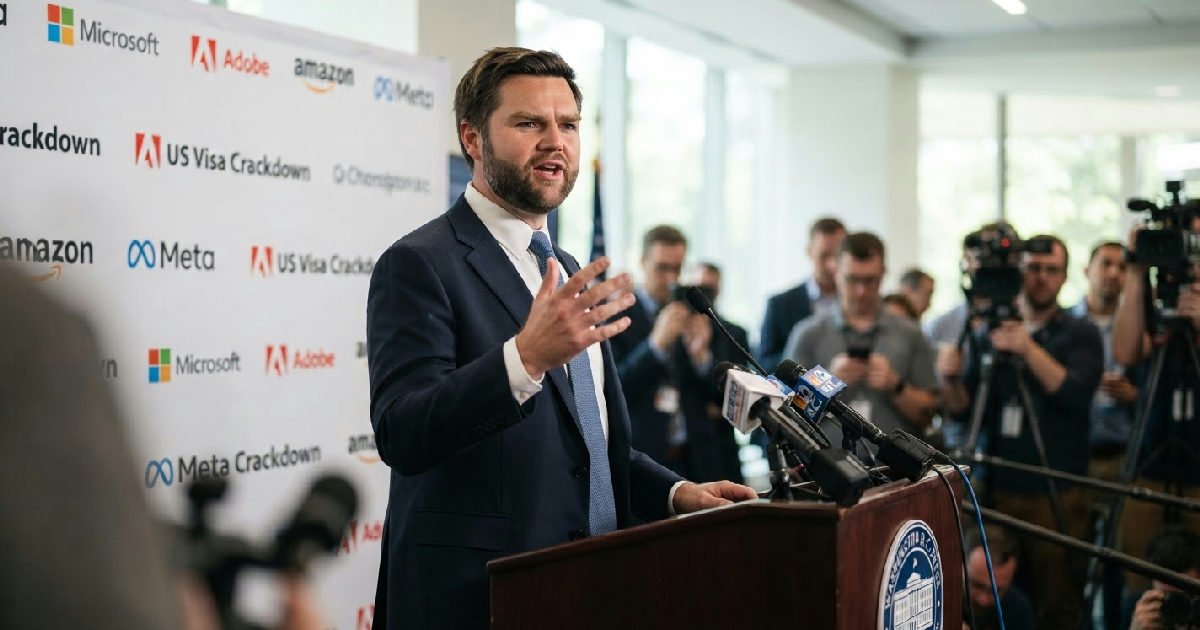
Speaking at a press conference in Washington, D.C., Vance directly linked Microsoft’s 2025 layoffs of 6,000 employees to its subsequent intake of foreign workers. The federal program suspension specifically targets the PERM program, a critical pathway to permanent residency, though the administration’s comments focused heavily on the H-1B temporary work visas.
Vance hires amid visa crackdown
The core of the administration’s case against Microsoft came directly from Vice President JD Vance. He accused the company of using a popular visa program to undercut American jobs.
“If you do the math, for every worker that Microsoft laid off, they replaced that worker with one and a half foreign indentured servants,” Vance stated during the press conference, while also calling Microsoft a “great American company.”
However, federal data from the U.S. Citizenship and Immigration Services (USCIS) H-1B Employer Data Hub presents a more nuanced picture. While Microsoft did secure 6,258 H-1B approvals in fiscal year 2025, a significant two-thirds of these went to individuals already employed by the company. This suggests many approvals were for extensions or transfers, rather than entirely new foreign hires.
The data also highlights a disparity in how companies utilize the H-1B program. Amazon, for instance, received 19,178 H-1B approvals in the same period, nearly three times Microsoft’s total. Crucially, Amazon brought in almost four times as many H-1B workers new to the company compared to Microsoft, yet it was not included in the recent Labor Department suspension.
Understanding the PERM program suspension
The Trump administration’s action specifically targeted the Program Electronic Review Management (PERM) system. This Labor Department program is a crucial first step for employers seeking to sponsor foreign workers for permanent residency, commonly known as green cards. A suspension from PERM effectively blocks these companies from initiating the green card process for new foreign hires.
The suspension impacts Microsoft, Adobe, and six IT services firms, all of whom rank among the top 50 H-1B sponsors nationally. This move signals a significant escalation in the administration’s efforts to reshape immigration policies affecting the technology sector. It also underscores a broader push to prioritize American workers.
While the PERM suspension does not directly affect the H-1B temporary work visa program, it sends a clear message to companies heavily reliant on foreign talent. The administration is scrutinizing the entire pipeline of foreign worker recruitment, from temporary visas to permanent residency. This could force companies to re-evaluate their long-term staffing strategies.
The enduring debate over H-1B visas
The H-1B visa program has long been a flashpoint in American immigration policy, drawing both fervent support and sharp criticism. Proponents argue it allows U.S. companies to access highly skilled talent, particularly in specialized tech fields where domestic supply may be limited. They contend it fosters innovation and helps maintain America’s competitive edge.
Conversely, critics, including Vice President Vance and many within the Trump administration, argue the program is often abused. They claim it enables companies to replace American workers with cheaper foreign labor, driving down wages and exacerbating job insecurity for U.S. citizens. This debate has intensified amid recent tech industry layoffs.
The program’s structure, which ties workers to specific employers, has also drawn scrutiny. Critics often refer to H-1B visa holders as “indentured servants,” a term Vance himself used, highlighting concerns about potential exploitation and limited worker mobility. These long-standing issues are now at the forefront of the administration’s policy agenda.
Broader implications for tech and immigration policy
This latest action against major tech firms like Microsoft and Adobe fits within a consistent pattern of the Trump administration’s immigration enforcement. Since taking office, the administration has pursued policies aimed at restricting legal immigration and increasing scrutiny on visa programs. This includes tightening rules for various visa categories and increasing enforcement actions.
The focus on tech companies, particularly those with significant H-1B reliance, indicates a strategic effort to address perceived imbalances in the U.S. labor market. This approach aligns with President Trump’s agenda of “America First” economic nationalism. It suggests a continued push for policies that prioritize domestic employment across all sectors.
For the tech industry, these actions could lead to significant operational adjustments. Companies may face increased pressure to invest in domestic talent development and reduce their reliance on foreign workers. This shift could reshape hiring practices and potentially influence the global competitiveness of U.S. tech giants in the coming years.
Industry scrutiny and future outlook
While the affected companies have not publicly addressed Vance’s accusations or the PERM suspension, the broader tech sector is undoubtedly assessing the implications of this aggressive stance. Such government interventions routinely create uncertainty for long-term business planning and talent acquisition strategies. This scrutiny reflects a significant shift.
This federal suspension could also signal further regulatory actions. The administration has consistently expressed concerns about visa fraud and abuse, leading to investigations beyond the tech sector, such as into J-1 visa fraud at several universities. This indicates a comprehensive review of various immigration pathways.
Looking ahead, immigration policy will remain a key area of focus for the administration. Companies operating in the U.S. will need to navigate an increasingly complex and restrictive immigration landscape. This could impact everything from innovation pipelines to global talent mobility within the global tech sector.