

US dollar rally to withstand midterm election gridlock
The US dollar rally will likely continue past the November 3rd midterm elections, driven by high interest rates and AI spending.
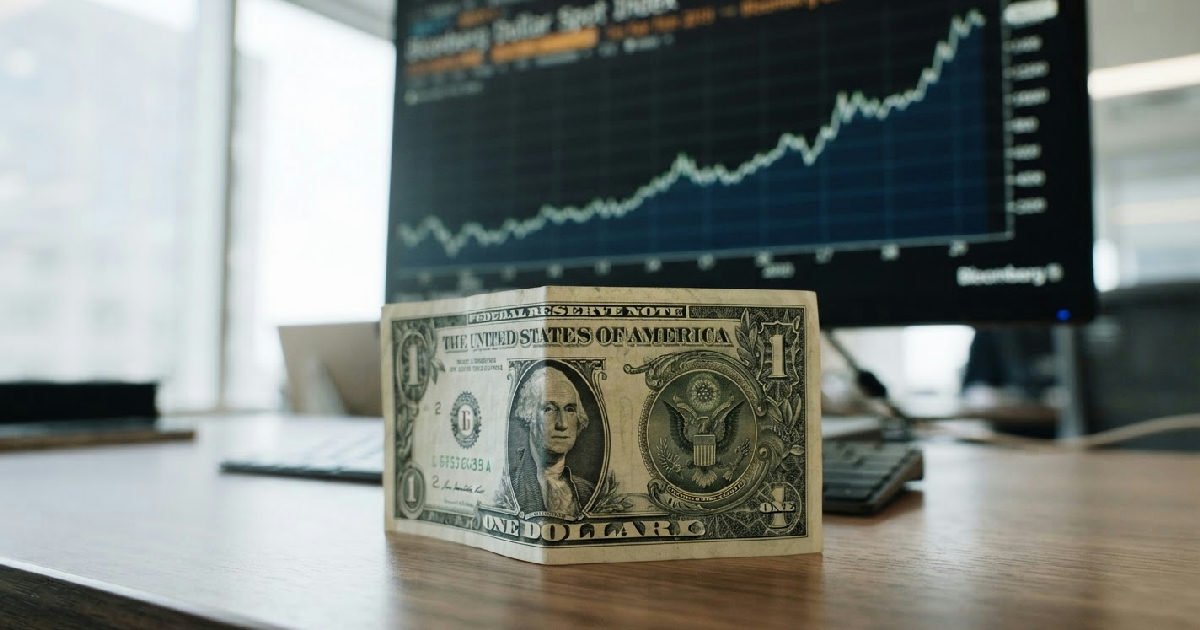
Even as investors brace for a divided government, a scenario that often creates policy paralysis, the dollar’s underlying momentum remains the dominant force. The Bloomberg Dollar Spot Index soared this month to its highest level since May 2025, propelled by stronger-than-expected inflation data that reinforces the case for a hawkish Federal Reserve.
US dollar rally despite political gridlock
For currency traders, the main drivers of the dollar’s ascent are economic, not political. The consensus view is that even if the Democratic Party wins control of one or both houses of Congress, as polls indicate, it won’t derail the Federal Reserve’s monetary policy, which is the primary engine behind the dollar’s strength.
High interest rates in the United States make the dollar more attractive to foreign investors seeking higher returns, a simple but powerful dynamic. This inflow of capital supports the currency’s value regardless of the political climate in Washington. The narrative is further bolstered by a surprisingly resilient economy.
A secondary, yet powerful, force is the surge in capital expenditure related to artificial intelligence. This wave of investment is enhancing productivity and driving growth, making the US a uniquely attractive destination for global capital. The recent US economic surge, fueled in part by this trend, creates a fundamental tailwind for the currency that political squabbles are unlikely to disrupt.
While legislative gridlock can create uncertainty, it also reduces the likelihood of significant fiscal spending packages that could fuel inflation or increase the national debt. Some analysts argue this predictability is a net positive, removing a key variable and allowing markets to focus on the Fed.
The Federal Reserve remains in command
Ultimately, the dollar’s fate rests with the Federal Reserve, not Congress. Persistent inflation has forced the central bank to maintain a hawkish stance, and markets are increasingly pricing in the possibility of further rate hikes rather than the cuts many had hoped for by this point.
This reality is reflected in government bond yields. The US 10-year Treasury yield recently touched 5.365% before pulling back slightly, remaining significantly higher over the past month. The US Dollar Index (DXY) itself climbed approximately 2% in September as yields rose, underscoring the tight correlation.
Comments from key officials have reinforced this outlook. New York Fed President John Williams stated on September 29, 2026, there was “no need for urgency” after the last rate hike but suggested one more increase could be necessary this year. This “higher for longer” interest rate environment is the bedrock of the dollar’s current valuation.
Traders will be watching upcoming data releases for further clues. The October jobs report on November 6 and the October Consumer Price Index (CPI) reading on November 10 will be critical inputs for the Fed’s final 2026 meeting on December 8-9.
Historical precedent and market scenarios
History suggests that midterm election years are often bullish for US assets, which can lend indirect support to the dollar. Since 1925, US stocks have risen in the fourth quarter of midterm years 84% of the time. The average dollar-denominated return over the nine-month period following a midterm election has been a remarkable 19.8%.
This historical tailwind contributes to a positive backdrop for the American economy and its currency. It’s a trend that plays into the “gridlock is Goldilocks” theory suggested by strategists like Michael Hartnett of Bank of America, where a split Congress prevents policy extremes, creating a stable environment for equities. A strong stock market, particularly one showing robust innovation, often attracts foreign investment.
Market pricing reflects a high probability of a divided government. According to prediction market Polymarket, as of October 25, 2026, the probability of Democrats winning the House stood at 92%, with a 65% chance of them taking both chambers.
The base case: a divided Congress
The market’s base case is a Democratic victory in the House of Representatives while Republicans, led by President Donald Trump, retain a narrow majority in the Senate. This outcome would likely limit the scope for major new spending initiatives, which could help ease upward pressure on Treasury yields and inflation.
According to analysts at T. Rowe Price, this scenario could actually be beneficial for the dollar. They argue that the political risk premium currently priced into assets like gold would diminish, while the dollar benefits from the resulting policy stability. However, it also raises the specter of contentious budget negotiations and a potential debt-limit fight in 2027.
Alternative election outcomes
An unexpected Republican sweep is seen as the only outcome that would add significant new borrowing, potentially leading to higher long-dated yields and a stronger dollar in the short term. However, this could be tempered by rising concerns over government deficits and Treasury issuance down the line.
A full Democratic sweep is viewed by some analysts as similar to gridlock but with the added risk of a more pronounced debt-limit confrontation in 2027. Such an event tends to cause volatility in short-term Treasury bills and gold more than it impacts the broader US dollar index.
Global factors and the dollar’s safe-haven status
The dollar’s strength isn’t happening in a vacuum. It remains the world’s primary safe-haven currency, and ongoing geopolitical uncertainty and economic weakness in other regions further enhance its appeal. As other central banks struggle to keep pace with the Fed, the yield differential continues to favor the greenback.
The dollar’s rally has put significant pressure on other currencies, becoming a source of global financial tension. For now, its fundamental pillars appear solid enough to weather domestic political storms. Its attractive yield provides a compelling alternative to more speculative assets.
Even as some markets experience speculative fervor, institutional capital continues to flow towards the stability and return offered by US assets. Crackdown efforts on crypto activities by various nations further highlight the perceived stability of traditional financial markets.
Until the Federal Reserve explicitly signals a pivot away from its inflation-fighting stance, the path of least resistance for the dollar appears to be upward.