

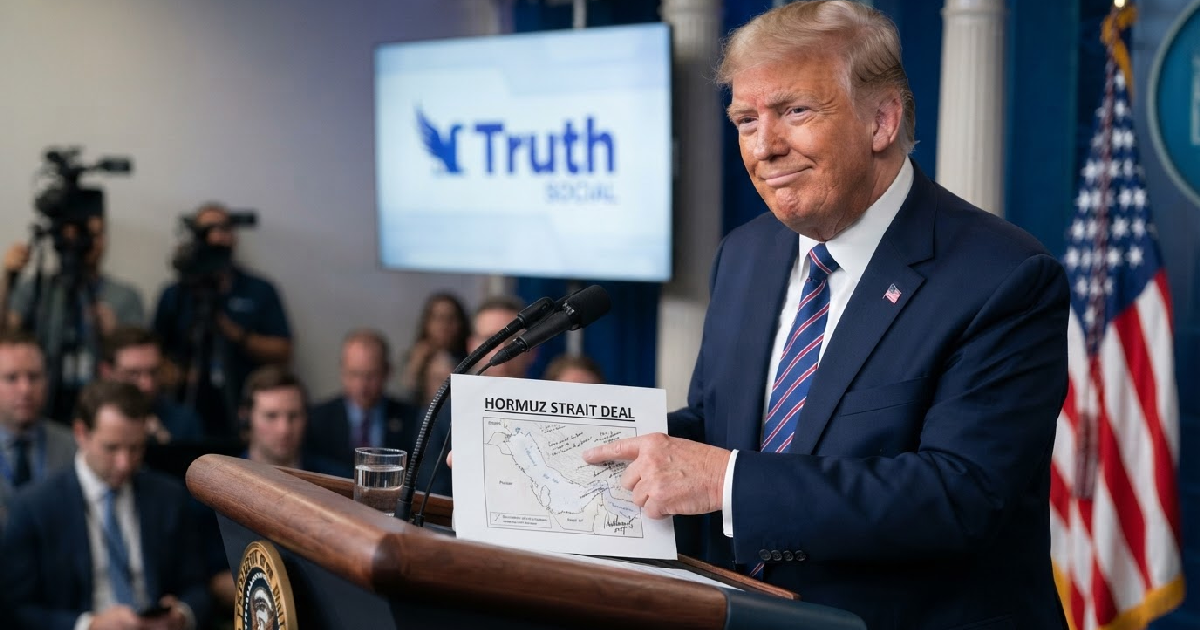
President Donald Trump halts planned Iran attack after deal outline agreed
President Donald Trump canceled a planned U.S. military attack on Iran on Saturday, August 2, 2026, following requests from Tehran and other Middle Eastern countries. S. President Donald Trump announced on Saturday, August 2, 2026, that he had canceled a planned military attack on Iran. This decision came after Tehran and other Middle Eastern countries reportedly requested a halt to the strikes, citing an agreement on the “perimeters of a deal.” The unexpected diplomatic opening marks a potentially fragile shift in the ongoing conflict.
President Donald Trump communicated the development via his Truth Social platform, outlining that the proposed agreement would include the “Immediate, Complete, and Total OPENING OF THE HORMUZ STRAIT, and an end to Iran’s nuclear threat.” This came as U.S. media reports had suggested fresh strikes against Iran were imminent this weekend.
Diplomatic shift amidst heightened tensions
This sudden halt to military action follows weeks of escalating hostilities in a conflict that began on February 28, 2026. Hopes for a negotiated end to the war had dwindled, particularly after a temporary ceasefire, initiated by a memorandum of understanding on June 17, effectively broke down.
Before President Donald Trump’s announcement, U.S. Embassies in Iraq, Jordan, and the United Arab Emirates had issued urgent warnings. They advised American citizens in the region to exercise caution and prepare for potential flight cancellations.
Many were also told to consider leaving the region immediately. These warnings underscored the dire security situation, exacerbated by recent incidents like a tanker near Oman reportedly struck late Friday, with another vessel seeing an explosion nearby.
Iran’s Fars International state news agency, however, quickly dismissed President Donald Trump’s stated demands as merely a “wish list.” This immediate pushback from Tehran suggests the path to a comprehensive deal remains fraught with significant challenges and mutual distrust.
The terms of a tentative agreement
President Donald Trump articulated the core tenets of the potential agreement on Truth Social. He emphasized the necessity of an “Immediate, Complete, and Total OPENING OF THE HORMUZ STRAIT.” This critical global oil chokepoint historically saw approximately one-fifth of the world’s oil supplies pass through it before the war.
Beyond maritime access, the deal’s framework also targets “an end to Iran’s nuclear threat,” a long-standing point of contention for Washington and its allies. President Donald Trump also stated that “The Country of Israel joins me in this commitment,” indicating a coordinated diplomatic front with a key regional partner.
Despite the cancellation, President Donald Trump maintained a hardline stance. He warned that the U.S. remains “locked and loaded and ready to go” should diplomacy fail, highlighting the underlying military readiness that has characterized his administration’s approach.
Meanwhile, Iran’s Foreign Minister Abbas Araqchi had previously warned against any “aggression” by the U.S. and Israel, or participation by regional countries. He stressed that such actions would be met with a “decisive and proportionate response,” according to Araqchi’s Telegram account.
Echoing this sentiment, Mohammad Bagher Zolghadr, Secretary of Iran’s Supreme National Security Council, cautioned that continued U.S. naval blockades and “warmongering” would not only tighten control over the Strait of Hormuz. He added that it would also “shut down other straits and chokepoints.” These warnings underscore Iran’s capacity and willingness to disrupt global shipping routes.
Broader conflict context and economic impact
The “war with Iran,” which commenced on February 28, 2026, with coordinated U.S.-Israeli airstrikes, has had devastating consequences. Codenamed “Operation Epic Fury,” the initial offensive aimed to dismantle Iran’s ballistic missile capabilities, eliminate its navy, and prevent nuclear weapon acquisition.
The conflict also sought to sever Iran’s support for proxy forces. President Donald Trump later claimed regime change had occurred, following the death of Supreme Leader Ayatollah Ali Khamenei in the initial waves of strikes.
The broader regional instability has had a clear impact on global markets, particularly energy prices. Rising energy prices illustrate the volatility sparked by escalating tensions across the Middle East.
On Friday, West Texas Intermediate (WTI) futures rose over 1% to close at $84.67 per barrel. Brent crude, the international benchmark, also gained more than 1% to settle at $90.12. Prices had previously fallen more than 5% earlier in the week, fueled by fleeting hopes of de-escalation.
The war has been marked by retaliatory attacks. Iran targeted U.S. military bases in Kuwait and Bahrain following U.S. strikes against its Islamic Revolutionary Guard Corps targets. A drone strike on Thursday on two ships at Egypt’s Mediterranean port of Damietta also signaled the conflict’s expansion, though no one claimed responsibility.
A history of strained relations and pressure
The U.S. reimposed a naval blockade on Iranian ships on July 13, prohibiting their entry or exit from Iranian ports. This aggressive move followed previous waves of strikes that the U.S. had “completed” against Iran, hitting dozens of targets over the last week.
These actions are part of President Donald Trump’s long-standing “maximum pressure” campaign against Iran. The campaign has intensified dramatically during his current term, aiming to curb Iran’s regional influence and prevent its nuclear ambitions.
The role of key figures like John Ratcliffe, Director of the Central Intelligence Agency (CIA), who was pictured with President Donald Trump at Camp David on July 31, underscores the administration’s coordinated approach. Ratcliffe’s continued presence suggests the deep involvement of intelligence operations in the ongoing strategy.
The breakdown of the June 17 Memorandum of Understanding underscored the persistent gulf between the two nations on critical issues. Neither side has budged on key sticking points, including the future of Iran’s nuclear program and the control of shipping through the Strait of Hormuz.
This diplomatic setback earlier in the summer paved the way for renewed hostilities. It pushed the region closer to widespread military confrontation. Against this backdrop, President Donald Trump’s latest announcement represents a significant pivot, albeit one that remains highly conditional.
Implications for regional stability and global markets
The agreement on “perimeters of a deal” offers a narrow window for de-escalation, but its fragility is evident in Iran’s immediate dismissal of the terms as a “wish list.” The success of any rapid deal hinges on bridging these deep-seated differences, particularly concerning the nuclear program and maritime security.
Should a diplomatic resolution materialize, the reopening of the Strait of Hormuz could alleviate some of the upward pressure on energy prices. This would provide a measure of stability to global markets, offering a potential reprieve for consumers and industries alike.
Conversely, a failure to secure a comprehensive deal could swiftly reignite military confrontations, with severe economic and human costs. The continued volatility highlights the high stakes involved for all parties.
The involvement of “other Middle Eastern Countries” in requesting the halt to attacks signals a broader regional desire for de-escalation. This collective plea could provide a crucial impetus for sustained diplomatic efforts, potentially fostering a more inclusive and durable peace process in the volatile region.
However, the underlying structural issues that fuel the conflict remain unresolved, including proxy warfare, competing regional hegemonies, and the enduring nuclear question. Any lasting peace will demand fundamental shifts in policy and perception from all parties involved, going beyond a temporary pause.
Broader geopolitical uncertainties, even beyond the direct conflict, can ripple through global economies, affecting various sectors. These broader market shifts underscore the interconnectedness of global finances, where stability in one region impacts all.
The global community will be watching closely as events unfold, with the specter of renewed conflict continuing to hang over the region. The interplay between diplomacy and military readiness will define the immediate future of U.S.-Iran relations and, by extension, the stability of the broader Middle East.
For now, the cancellation offers a temporary reprieve, preventing immediate bloodshed and allowing for a renewed focus on negotiations. But the path to a lasting solution remains exceptionally challenging, requiring delicate diplomacy and a genuine commitment to compromise from all sides.