

Nvidia halts AI servers to Southeast Asia
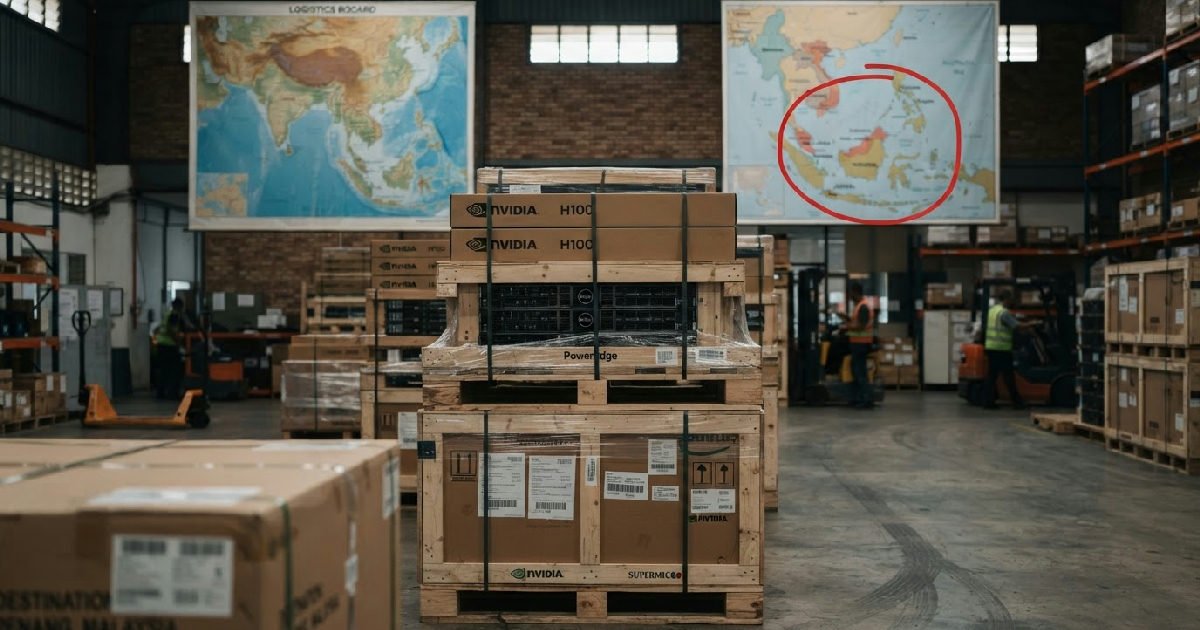
Nvidia has instructed its manufacturing partners, including Dell and Supermicro, to halt shipments of servers containing its advanced artificial intelligence processors to four key Southeast Asian nations. The move is a direct response to a U.S. campaign to block China from accessing top-tier computing power through regional intermediaries.
The halt, reported on November 26, 2026, impacts Malaysia, Singapore, Thailand, and Indonesia. It follows new regulations from the U.S. Commerce Department designed to close a loophole that allowed Chinese firms to rent computing capacity from data centers in these countries, effectively bypassing direct sales bans on the high-performance chips.
Washington tightens its grip on AI chip exports
The core of this disruption is a new set of rules from the U.S. Commerce Department, announced on November 16, 2026. These regulations are explicitly aimed at stopping Chinese companies from using cloud computing providers in other countries to train their AI models on restricted American technology. The practice, sometimes called “remote access,” had become a significant workaround.
Under the updated rules, which took effect around November 20, U.S. export licenses are now required for shipments of advanced chips to the four Southeast Asian countries and Brazil. This includes Nvidia’s highly sought-after H100, H200, and even the forthcoming Blackwell-series GPUs.
The regulations have teeth; cloud providers in the region now have a 90-day deadline to prove their services are not being secretly funneled to restricted Chinese entities.
This aggressive stance from Washington signals a new phase in the ongoing tech cold war. It expands the battlefield from direct sales to China to the entire global network of cloud infrastructure that might serve Chinese interests. For its part, Beijing has not taken these moves lightly, as China threatens retaliation over measures it sees as designed to stifle its technological growth and economic progress.
The immediate effect is that server manufacturers like Dell and Supermicro have had to inform their buyers in the affected nations that Nvidia will not permit their orders to be fulfilled. It remains unclear if the halt is a temporary pause while compliance frameworks are established or a more permanent fixture of the new export landscape.
Southeast Asia’s role as a transshipment hub
The U.S. government’s focus on these four nations is not random. The region had rapidly emerged as a gray market hub for the transshipment and leasing of restricted AI hardware. Investigations have uncovered extensive networks designed to procure Nvidia’s most powerful chips and make them available to Chinese clients, including state-backed entities.
One of the most significant cases concluded in October 2025, when Alan Hao Hsu and his company, Hao Global, pleaded guilty to a scheme involving at least $160 million in illegally exported Nvidia H100 and H200 processors. The operation used funding from China with transshipment routes running through Singapore and Malaysia.
Further research from the Center for Advanced Defense Studies (C4ADS) identified another $13.4 million worth of Nvidia A100 and H100-series GPUs moving through these regional trade routes between 2022 and 2025. This underscores the scale of the illicit trade that the new U.S. rules aim to dismantle. The problem extends beyond small-time smugglers, with serious allegations implicating larger players.
For instance, U.S. prosecutors have accused individuals linked to Super Micro of helping divert approximately $2.5 billion worth of Nvidia-powered servers to China via intermediaries in Southeast Asia. This has put a spotlight on the due diligence practices of major American hardware companies and their downstream partners in the region.
A turbulent period for Nvidia and its leadership
This export clampdown comes at a complicated time for Nvidia. The company has been navigating internal turmoil and intense public scrutiny. The controversy was amplified by the recent brief ousting and subsequent reinstatement of CEO Jensen Huang, which was reportedly linked to extramarital affairs, including one with an executive at Megaspeed International.
Megaspeed, a Singapore-based cloud provider, is itself at the center of allegations that it funneled advanced AI processors to Chinese companies. Singaporean authorities have confirmed they are investigating the firm for “suspected breaches of our domestic laws.”
The entanglement of Nvidia’s leadership with a key player in the alleged transshipment network has created a political firestorm around Huang’s return and raised questions about the company’s oversight.
The financial stakes are immense. In 2025, Nvidia booked an astonishing $104 billion in revenue through its Singapore subsidiary alone, a figure that marked a 72% increase in just twelve months. While this total includes revenue from other parts of Asia like Taiwan and some from China, it highlights Singapore’s critical importance to Nvidia’s financial operations and the potential impact of any disruption.
The situation puts Nvidia in a difficult position, forced to choose between massive revenue streams and compliance with increasingly stringent U.S. national security directives. The company’s actions in the coming months will be closely watched by both Washington and Wall Street, which has been sensitive to any hint of disruption in the AI hardware market.
Immediate fallout for regional companies and ambitions
The sudden halt in shipments has sent shockwaves through the tech ecosystems of Singapore, Malaysia, Thailand, and Indonesia. Companies that had placed large orders for AI servers to build out their own cloud services are now left in limbo. One named buyer, Aolani, a Singapore-based cloud firm, reportedly had plans to provide advanced computing power to ByteDance, the owner of TikTok, through leasing agreements.
These plans are now frozen, illustrating the direct impact of the U.S. rules on both local cloud providers and their major Chinese clients. This has thrown a wrench into the aspirations of Southeast Asian nations to become major hubs for AI development, a key part of their economic strategy.
Without access to the latest generation of chips, their data centers cannot compete at the cutting edge.
The uncertainty is creating a chilling effect across the sector, contributing to a wider AI trade panic as investors reassess the geopolitical risks embedded in the semiconductor supply chain. The value of a high-end server, with a rack-style GB200 NVL72 system costing nearly $5 million, means that even a temporary halt can have significant financial consequences for both the buyers and the manufacturers.
For global manufacturers like Dell and Supermicro, the situation is a logistical and legal nightmare. They are caught between their obligations to their customers in a high-growth region and the mandates of the U.S. government. Navigating these conflicting demands will require careful diplomacy and robust compliance systems to avoid severe penalties.
What comes next in the global AI supply chain
Looking ahead, the central question is how effectively these new U.S. export controls can be enforced. Technology companies are already preparing for a new era of heightened scrutiny. Nvidia is reportedly requiring computing providers in Southeast Asia to register with its Fleet Intelligence tracking system to become official Nvidia Cloud Partners (NCPs).
This system is described as a customer-installed agent designed to monitor hardware health, integrity, and inventory. It represents a technological solution to a geopolitical problem, allowing Nvidia to police the use of its own hardware and report suspicious activity to authorities. However, determined actors will likely continue to search for new loopholes.
The U.S. has also shown it is willing to pursue individuals and companies that flout its rules. Investigations into Chinese military and government procurement records have shown persistent demand for Nvidia hardware, including from sensitive branches like the Rocket Force and Cyberspace Force. This demand will not simply disappear; it will seek new channels.
The halt in shipments to Southeast Asia is not an isolated event but a calculated move in a much larger strategic conflict. It signals that the U.S. is prepared to accept significant collateral damage to its own companies and allied economies to achieve its primary objective: slowing down China’s progress in artificial intelligence.
The global tech landscape is being reshaped in real-time, with supply chains fragmenting along geopolitical lines.