

Natwest CEO Paul Thwaite becomes latest victim in AI social media scam
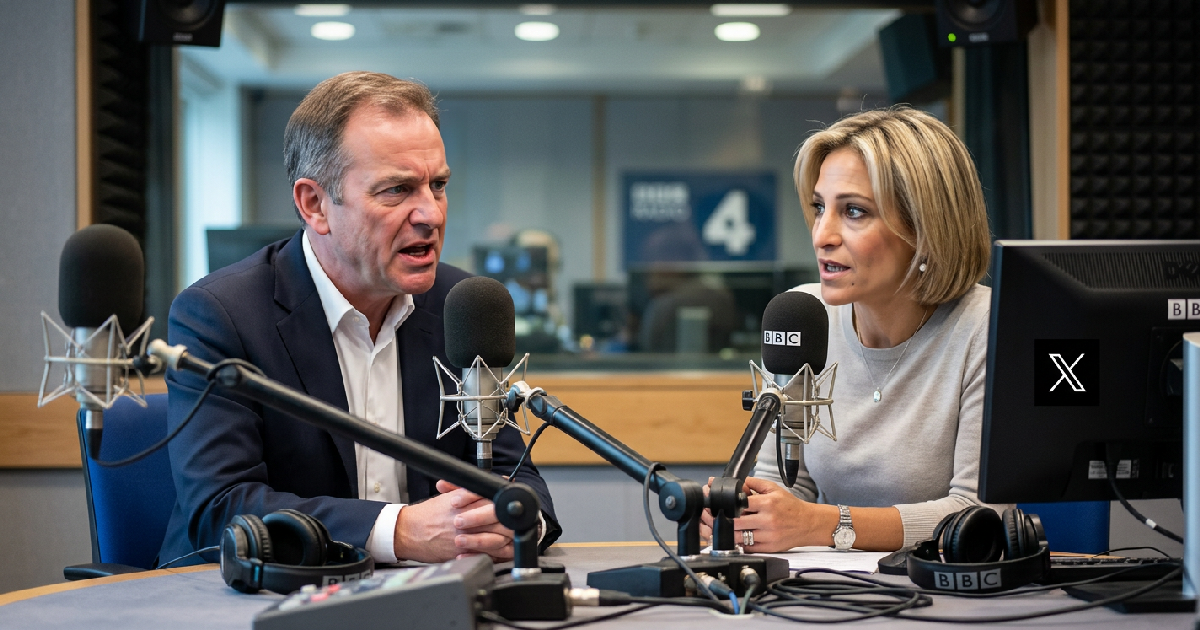
Natwest chief executive Paul Thwaite has become the latest high-profile figure in London’s financial district to be caught in an AI social media scam. On Friday, July 3, 2026, a deepfake image circulating on X depicted Thwaite alongside journalist Emily Maitlis in a fabricated BBC radio interview, falsely claiming a heated discussion about his salary.
This incident is part of an alarming surge in sophisticated AI-generated fraud that aims to deceive the public and erode trust in established institutions. Natwest has moved quickly to address the deepfake, working with social media platforms to remove the misleading content and issuing a strong caution to the public.
Natwest CEO caught in targeted deepfake campaign
The deepfake image of Paul Thwaite, the chief executive of the FTSE 100 bank, was accompanied by a caption on X that read: “On air, Emily Maitlis raised the NatWest CEO’s salary, causing a strong reaction.” This fabricated scenario capitalised on public discourse surrounding executive compensation, particularly given Thwaite’s recent earnings.
Thwaite’s remuneration package for the previous year stood at £6.6m, a substantial 33 per cent increase compared to his 2024 pay packet. Such figures often draw public scrutiny, making them fertile ground for scammers looking to add a layer of perceived authenticity to their deceptive content.
Bank of England raises alarms over AI deepfakes
The targeting of Paul Thwaite comes amidst a broader pattern of AI deepfakes affecting senior figures in the UK’s financial landscape. The Bank of England has previously made a forceful intervention after its Governor, Andrew Bailey, was similarly exploited in a series of disturbing deepfake videos.
One such video falsely depicted Bailey in a physical altercation with Reform UK leader Nigel Farage, with another even showing Farage brandishing a gun. These incidents highlight the increasing audacity and graphical capabilities of AI-driven deception, which can quickly spread across social media platforms.
Andrew Bailey’s urgent warning to the public
Responding to these threats, Andrew Bailey issued a stark warning. “Unfortunately, fake adverts impersonating the Bank of England and other central banks are on the rise,” Bailey stated. He emphasised that these elaborate scams are designed to criminally exploit individuals, particularly those who may be more vulnerable online.
Bailey urged everyone to remain vigilant and to report any suspicious activity. He stressed that collective action is vital for authorities to effectively identify and remove the fraudsters responsible for what he termed a “truly online scourge.”
The regulatory battle against online deception
The pervasive nature of AI deepfakes has brought the issue of online safety and accountability to the forefront of legislative efforts in the United Kingdom. The UK’s Online Safety Act, a landmark piece of legislation, includes provisions specifically aimed at curtailing the proliferation of deepfake media.
These rules mandate that tech platforms take proactive measures to tackle fraudulent advertising and deceptive content. However, the full implementation and enforcement of these crucial measures are not expected until next year, leaving a temporary gap in comprehensive protection against evolving AI threats.
Ofcom probes X over Grok AI deepfake concerns
Adding another layer to the regulatory scrutiny, the UK’s media watchdog, Ofcom, launched an investigation earlier this year into Elon Musk’s social media platform, X. The probe seeks to ascertain whether X has adequately safeguarded British users from explicit deepfakes generated by its own AI chatbot, Grok AI.
Ofcom explicitly cited “deeply concerning reports” indicating that the Grok AI chatbot account on X was being utilised to create and disseminate undressed images of people. The outcome of this ongoing investigation could have significant repercussions for the platform.
If X is found to be in breach of media law, Ofcom holds the authority to impose a substantial fine. This penalty could be as much as 10 per cent of the social media firm’s global revenue or £18m, whichever figure is greater. This potential financial impact underscores the seriousness with which regulators are viewing the spread of harmful AI content.
The broader impact on trust and financial stability
The continuous emergence of AI-driven scams, particularly those targeting senior financial figures like Paul Thwaite and Andrew Bailey, poses a significant threat beyond individual reputational damage. It systematically erodes public trust in mainstream media, financial institutions, and the very information consumed online.
For financial markets, the proliferation of deepfakes could introduce new vectors for manipulation. False information presented as genuine interviews or statements from influential leaders could trigger unwarranted market reactions, impacting investor confidence and overall stability. This is why a robust regulatory framework and swift platform action are more critical than ever.
The UK’s ongoing legislative and regulatory efforts, such as the Online Safety Act and Ofcom’s investigations, represent attempts to build stronger digital defences. But as AI technology continues to advance rapidly, so too does the sophistication of those seeking to exploit it for illicit gain.
It’s a constant cat-and-mouse game, where regulators and tech companies must continually adapt and innovate to stay ahead of malicious actors. Consumers, in turn, are increasingly burdened with the responsibility of critically evaluating all online content, particularly anything that seems too provocative or sensational.
Navigating the future of online integrity
The situation highlights a critical juncture for online integrity and digital security. While legislative measures like the Online Safety Act are vital, their delayed enforcement leaves a window for continued exploitation. Furthermore, the effectiveness of these laws hinges on the willingness and capability of tech giants like X to implement and uphold stringent content moderation policies.
The financial sector, in particular, has a vested interest in combating these scams. Beyond the immediate harm to individuals, such incidents can undermine public confidence in banks and financial advice, potentially leading to real-world financial losses for vulnerable citizens. Education and awareness campaigns will play a crucial role in empowering users to recognise and report these increasingly sophisticated deepfake threats.