

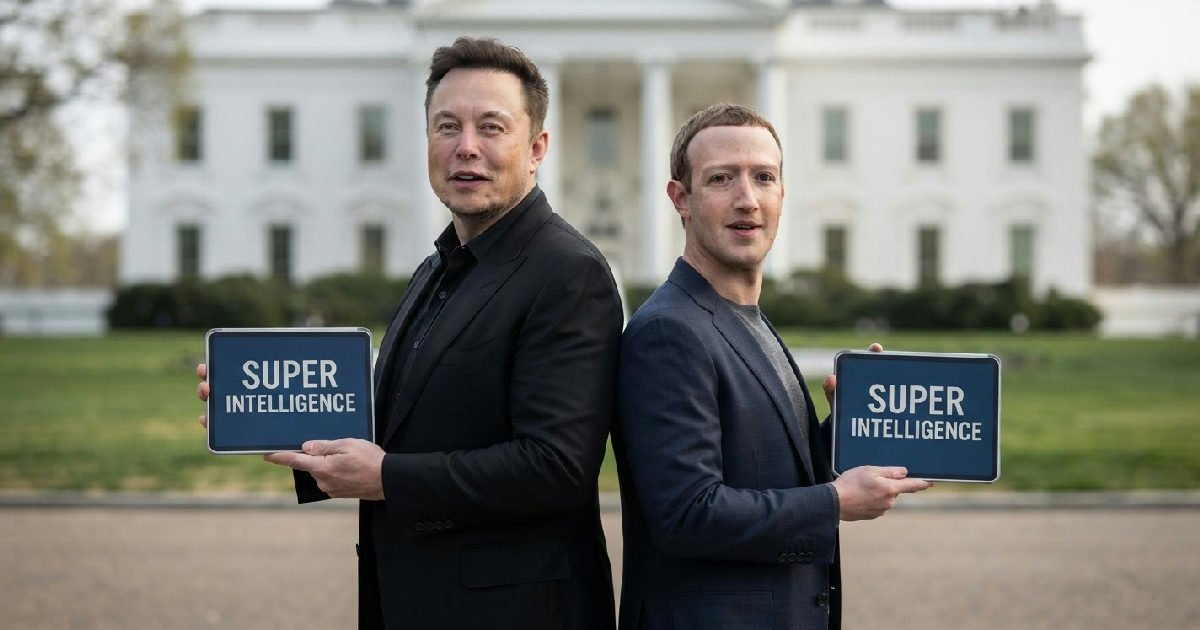
Elon Musk and Mark Zuckerberg use super intelligence term
A linguistic schism is spreading through Silicon Valley, with some of its most powerful leaders adopting the term “super intelligence” in place of artificial intelligence. The shift by Tesla CEO Elon Musk and Meta CEO Mark Zuckerberg follows a September 29 executive order from President Donald Trump directing federal agencies to make the same change in official documents.
During their companies’ most recent third-quarter earnings calls in late October, both Musk and Zuckerberg conspicuously used the new terminology. But other tech giants, including Alphabet and Amazon, have so far stuck with the industry-standard “AI,” creating a clear dividing line in how the world’s most transformative technology is being branded and perceived.
The White House directive on super intelligence terminology
President Trump’s executive order, signed on September 29, 2026, mandated that all executive branch departments and agencies replace “artificial intelligence” with “super intelligence.” The order applies to all official communications, websites, and policy documents. The administration’s rationale is that the term “artificial” sounds “fake” and fails to capture the advanced capabilities of modern systems.
Trump first signaled his dislike for the term during a speech at the UN General Assembly on September 22, stating that its use “makes intelligence fake.” He argues “super intelligence,” or “SI,” is a more accurate descriptor for a technology class that has far surpassed the concepts imagined when “AI” was first coined.
The push to rebrand the technology comes as the U.S. economy sees growth fueled by investment in these advanced systems.
The president has since intensified his stance, declaring on social media that anyone who uses the term AI is “THE ENEMY!”. While the executive order is not legally binding on private companies, it has clearly influenced some of the tech industry’s most prominent figures, particularly those who have maintained close ties with the administration.
A linguistic divide emerges in big tech
The third-quarter earnings season put this new lexicon on full display. On SpaceX’s call on October 20, Elon Musk spoke of an “inflection moment for SpaceX across launch connectivity and Super Intelligence.”
A day later, on Tesla’s October 21 call, he referenced humanoid robots, noting that some demonstrations by competitors were “not really using any kind of advanced AI or SI.” Musk has also reportedly moved to rename his company’s SpaceXAI division to SpaceXSI.
On the same day, Meta’s Mark Zuckerberg told investors of his company’s “goal of delivering personal superintelligence to everyone.” While Meta had previously established a “Meta Superintelligence Labs” unit in 2025, Zuckerberg’s renewed emphasis on the term aligns squarely with the White House’s recent push. The move is significant for a company positioning itself at the forefront of the next technological wave.
However, not everyone is following suit. Amazon CEO Andy Jassy used the acronym “AI” more than a dozen times during his introductory remarks on the company’s earnings call.
A day earlier, on October 28, Microsoft CEO Satya Nadella outlined the company’s focus on “designing AI to empower people,” signaling a clear preference for the established term in public-facing commentary. Alphabet CEO Sundar Pichai similarly opened his company’s call by highlighting how its “AI investments are driving increased usage.”
The early adopters and their motivations
Beyond Musk and Zuckerberg, a cohort of other tech leaders has embraced the “super intelligence” branding. Nvidia CEO Jensen Huang, a key Trump ally in the technology sector, praised the “White House Accord on Super Intelligence” on the social media platform X. He stated that the technology “offers an extraordinary opportunity to advance discovery, productivity, security, health, and prosperity.”
Palo Alto Networks CEO Nikesh Arora also signaled his support, posting on X on September 30 that “the meeting at the WH on SI was an epic moment.”
Both IBM CEO Arvind Krishna and Intel CEO Lip-Bu Tan have also incorporated the term into their corporate communications, with Tan blaming chip supply shortages on the “unprecedented demand for Super Intelligence.” This adoption by key players in the hardware and enterprise software sectors suggests the rebranding effort is gaining traction.
The Microsoft stock forecast and those of other tech giants often hinge on their perceived leadership in this technological arms race, making terminology a surprisingly high-stakes game.
Semantics, strategy, or both?
The split in terminology is more than just a debate over semantics; it’s a strategic choice reflecting a company’s positioning, political alignment, and marketing strategy. The term “super intelligence” carries connotations of power and capability that “artificial intelligence” may lack for a general audience. For companies like SpaceX, which are pushing the boundaries of autonomous systems, the branding may feel more appropriate.
Microsoft presents a particularly interesting case. While CEO Satya Nadella stuck to “AI” on the company’s earnings call, its most recent annual report, filed last week, included eight mentions of “super intelligence.”
In his letter to shareholders, Nadella wrote, “For Microsoft, the central question as we enter this Super Intelligence era is not just how big the opportunity becomes, but how we deliver the real-world outcomes that every country, community, and company demands.”
This dual approach suggests a hedging strategy. The company is aligning with the administration’s preferred language in formal documents while using the more widely understood term in public forums. It reflects the delicate balance major corporations must strike between technical accuracy, market perception, and political reality.
Financial implications of the rebrand
For some, the change is already being reflected on the balance sheet. During its October 20 earnings announcement, SpaceX reported that “Super Intelligence” revenue had become its largest contributor. The division posted revenue of $7.6 billion, a staggering 830% increase from the $813 million reported in the same quarter last year.
The company attributed this explosive growth to new cloud services agreements, the acquisition of the startup Cursor, and wider adoption of its agentic AI model, Grok. This financial disclosure reframes the name change from a simple linguistic choice to a core part of its business identity and growth narrative.
It demonstrates a tangible commitment to the “super intelligence” brand, moving it from White House rhetoric to a multi-billion-dollar revenue stream. The undeniable power of this technology, whether termed AI or SI, continues to drive innovation and investment across various sectors.
As this technology becomes more integrated into the global economy, the battle over what to call it is likely to intensify, reflecting deeper currents in politics and corporate strategy.
As the tech industry heads into the new year, all eyes will be on whether more companies adopt the “super intelligence” moniker. The decisions made by giants like Google and Amazon could determine whether Trump’s preferred term becomes the new standard or remains a marker of a specific political and corporate faction within Silicon Valley.