

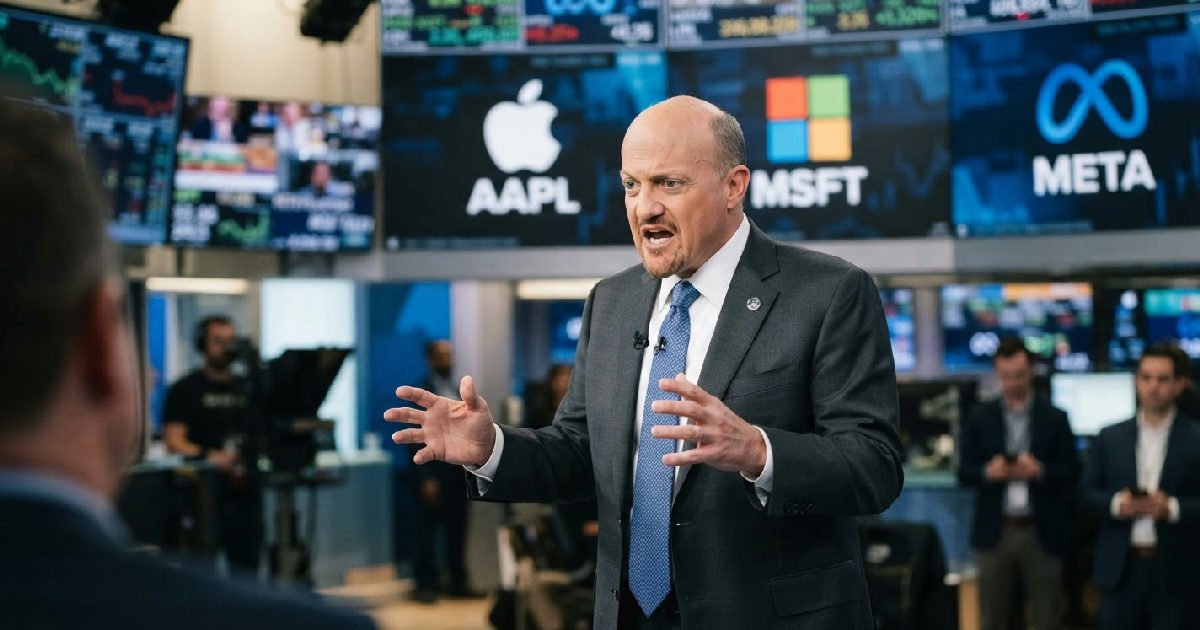
Jim Cramer says individual stock picking is no fool’s errand
On September 27, 2026, financial commentator Jim Cramer challenged the long-held skepticism surrounding individual stock picking, asserting it is far from a “fool’s errand.” He cited the sustained dominance and impressive returns of technology giants Apple, Microsoft, and Meta Platforms as compelling evidence.
Cramer, host of CNBC’s “Mad Money,” argued that a focused approach to selecting durable market leaders can yield significant profits for retail investors. His commentary directly counters the prevailing narrative that suggests most individuals are better served by passive index fund investing.
Cramer Champions Individual Stock Picking for Retail Investors
Jim Cramer made it clear that he finds the pervasive dismissal of retail investors deeply frustrating. He highlighted how many articles disparage those who choose to actively buy individual company shares, often using loaded terms like “buying” instead of “investing.”
Such language, Cramer believes, intentionally casts individual participation in a negative light, implying a lack of sophistication. He pointed to estimates showing a remarkable increase in individual involvement, with their share of total stock trading volume rising from 10% to 20% over recent decades.
Apple’s Unshakeable Market Dominance
Apple stands as Cramer’s primary example of how strategic stock selection can deliver extraordinary returns. He often notes that even Warren Buffett’s significant outperformance at Berkshire Hathaway is heavily tied to its concentrated Apple position, acquired in 2016.
Buffett reportedly solidified his belief in Apple after observing children engrossed in their iPhones at a Berkshire-owned Dairy Queen. This highlighted the device’s immense consumer appeal, solidifying its status as both a technological marvel and a pervasive consumer product.
Leadership Transition and Innovation
Apple recently underwent a significant leadership change, with Tim Cook transitioning to Executive Chairman on September 1, 2026. John Ternus, previously the head of Apple’s hardware division, stepped into the Chief Executive Officer role.
Cramer praised Cook’s long tenure, noting his patient strategy and his ability to secure Alphabet’s backing for Apple’s AI initiatives, including Gemini. Apple’s product pipeline remains strong, exemplified by the launch of new iPhone 18 models and the highly anticipated foldable iPhone Duo, available for preorder on October 16.
The company’s financial performance underscores its strength, boasting a 22.55% year-to-date total return. Apple achieved a 30.71% total return in 2024 and an impressive 49.01% in 2023. Over the last decade, AAPL stock has delivered a staggering 1,277.91% total return.
Microsoft’s Enterprise Prowess and AI Bet
Microsoft offers another powerful testament to the value of identifying enduring companies. Cramer highlighted its entrenched position as the undisputed leader in enterprise software, with Windows operating system and Office suite deeply integrated into global business and personal computing.
The company’s visionary expansion into cloud computing through Azure further cemented its market leadership. This strategic foresight allowed Microsoft to tap into new revenue streams and strengthen its technological ecosystem.
Key Acquisitions and AI Leadership
Microsoft has strategically bolstered its portfolio with major acquisitions, including the $26 billion purchase of LinkedIn, completed in December 2016. More recently, the tech giant finalized its $69 billion acquisition of Activision Blizzard in October 2023, expanding its footprint in the gaming sector.
Under CEO Satya Nadella, Microsoft has made significant strides in artificial intelligence, taking a substantial stake in OpenAI and developing its own AI, Copilot. Despite initial Wall Street skepticism, Copilot has defied expectations, attracting 30 million users and showcasing Microsoft’s commitment to AI innovation.
Meta Platforms’ Comeback Story
Meta Platforms, the parent company of Facebook, Instagram, and WhatsApp, serves as Cramer’s third pillar in his argument. He acknowledged the initial investor skepticism about Meta’s metaverse pivot and AI strategy.
However, Cramer emphasized CEO Mark Zuckerberg’s intense competitiveness and vision, which led to a strong resurgence. Meta’s robust advertising business, combined with emerging platforms like Threads (a rival to X, formerly Twitter) and the global communication power of WhatsApp, solidify its long-term potential.
Meta’s financial comeback is notable, with a 66.05% total return in 2024 and a remarkable 194.13% in 2023. The company’s year-to-date total return stands at 14.17%, contributing to a 10-year total return of 496.07%. This trajectory highlights the rewards for investors who stick with fundamentally strong companies.
Rethinking the “Fool’s Errand” Narrative
Cramer’s argument directly challenges the conventional wisdom that dismisses specific stock selection. While studies show that over half of individual stocks (58.6% of 28,114 stocks from 1926-2022) have reduced shareholder wealth, Cramer points to the outsized impact of a select few.
Indeed, much of the stock market’s historical return stems from a handful of high-performing companies, rather than broad, uniform gains. The S&P 500’s strong performance in recent decades has been disproportionately driven by a select group often dubbed the “Magnificent Seven,” a term coined by Bank of America analyst Michael Hartnett in 2023.
This group, including Apple, Microsoft, and Meta Platforms, alongside Amazon, Alphabet, Nvidia, and Tesla, has shown market-leading performance. However, some of these giants, like Microsoft and Meta, have recently faced concerns over massive AI capital expenditures, which impacted their shares.
Microsoft, for example, saw its stock drop 20% after guiding for nearly $200 billion in capital expenditures. Meta’s shares fell 10% after its 2026 capex range was raised to $125-145 billion. In contrast, Apple, notable for largely sitting out this capex boom, was the top-performing stock among the Magnificent Seven with a 24% return year-to-date as of July 28, 2026.
The Evolving Investment Landscape
Cramer contends that the ongoing debate about individual stock picking versus index funds often overlooks nuance. He suggests that a balanced approach, incorporating both meticulously chosen stocks and broader market indexes, might represent the optimal path for many investors.
For Cramer, the increasing participation of individual investors, now accounting for 20% of trading volume, reflects a growing confidence and a desire to engage directly with the market’s potential. He believes the trend towards more individual ownership will continue, possibly reaching 30%.