

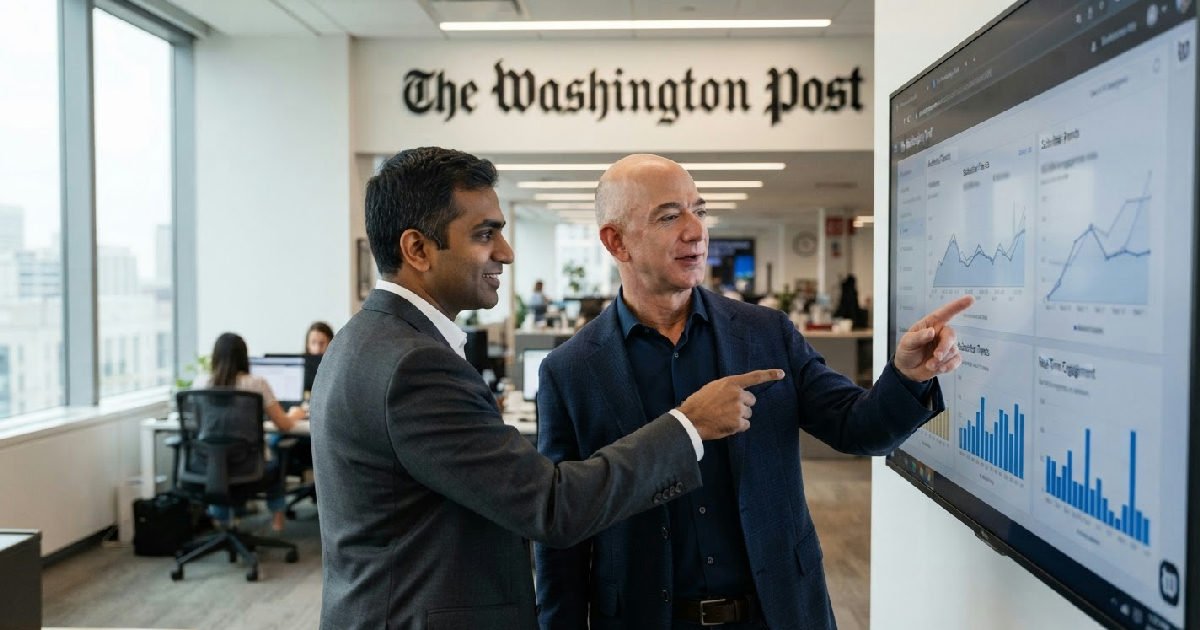
Jeff Bezos names data-first executive to spearhead Washington Post turnaround
Jeff Bezos is installing a new, data-focused executive to spearhead a critical turnaround at The Washington Post, a move that signals a significant strategic shift for the storied newspaper. The appointment comes amidst ongoing challenges for the influential publication, prompting a strategic transformation.
The decision represents a pivotal moment for the Post, owned by Jeff Bezos. It underscores a deliberate turn towards a technology and data-centric approach to guide the news business, moving away from solely traditional journalistic leadership to steer its commercial future more effectively.
A New Direction for the Washington Post turnaround
The new leader inherits an organization facing considerable headwinds within the competitive media landscape. The Washington Post’s trajectory reflects broader shifts in how news is consumed and monetized, necessitating a clear new strategy for growth and engagement. This strategic appointment aims to inject fresh perspectives into the operational framework of the newspaper.
Many news organizations across the industry have struggled to adapt to changing consumption habits and evolving digital platforms. This dynamic places consistent pressure on media owners to innovate and adapt their operational approaches, seeking pathways to sustainable revenue. The appointment of a new executive at the Post underscores this imperative for strategic evolution within the sector.
Bezos’s choice of a data-oriented chief suggests a belief that sustainable solutions involve robust product development, precise audience segmentation, and a strategic embrace of technology. This approach aims to cultivate a more resilient business model, moving beyond established newsroom structures to foster new growth areas.
Bezos Signals a Tech-Centric Future
The appointment is the clearest indication yet that Jeff Bezos intends for The Washington Post to embrace principles often seen in technology companies. This pivot prioritizes understanding user behavior, optimizing content for engagement, and developing new digital products that can attract and retain paying customers. It’s a strategic direction gaining traction across the media industry.
The new leadership at The Washington Post will face the challenging task of balancing the publication’s esteemed journalistic mission with the commercial imperatives of audience growth and revenue generation. It’s a fundamental tension within the modern media industry as technological advancements reshape content delivery and consumption, demanding innovative solutions and investor faith in technology.
The focus may shift towards building distinct offerings for different types of readers, from casual consumers who engage on social media to deeply engaged subscribers willing to pay for premium analysis. This could involve creating new verticals, interactive tools, and more personalized news experiences, all guided by a rigorous analysis of user data to maximize impact.
Emphasizing Data-Driven Strategies
The incoming executive’s mandate is clear: to guide The Washington Post through its next phase of development and foster new strategic pathways. This involves a concentrated effort to understand market dynamics and subscriber behavior more deeply, leveraging analytics to inform strategic decisions across all departments. The goal is to optimize both editorial reach and commercial performance.
Bezos is betting that a new executive, especially one with a strong background in data, can bring a fresh perspective and implement a clear, forward-looking strategy. The challenge will be to align this data-centric vision with the established traditions and journalistic values of a major news institution, ensuring editorial independence while pursuing commercial growth.
This strategic shift highlights the increasing importance of data science and audience analytics in shaping the future of reputable news organizations. It reflects a broader industry trend where publishers seek to deepen engagement and diversify revenue streams through informed decision-making.
The Hunt for a Sustainable News Model
At its core, this move is part of an industry-wide search for a viable business model for journalism in the 21st century. The old paradigms of advertising and print subscriptions have crumbled, and the digital subscription boom of the last decade appears to be plateauing for many publishers. The Post’s turnaround effort will be a closely watched test case for the entire sector.
Success for the Post will likely hinge on more than just data analytics; it will demand innovative approaches to content presentation, fostering reader communities, and articulating a compelling value proposition in a crowded information landscape. Demonstrating this value is crucial for sustained reader engagement and subscription growth, requiring a long-term vision.
The Post’s experiment could involve unbundling its content, offering micropayments for individual articles, or creating tiered subscription levels. Artificial intelligence will almost certainly play a major role, from powering content recommendations to automating routine tasks and freeing up journalists to focus on high-impact investigative work.
What Happens Next at The Washington Post
The new executive’s first priority will be to articulate a clear vision that resonates across the organization. This will likely involve extensive engagement with editorial and business leaders to outline the new strategy and clarify the role of data in future decisions. Key appointments across various departments could also follow, shaping the Post’s trajectory for years to come.
Observers will be watching for signals about how the Post intends to balance its dual identities: a pillar of American democracy holding power to account, and a digital business aiming for profitability.
The choices made in the coming months—about what stories to cover, which products to build, and how to measure success, including meeting certain strategic achievements—will have profound implications not just for the newspaper itself, but for the future of the news industry.
Ultimately, Jeff Bezos seeks a sustainable and successful future for The Washington Post. This appointment is a clear signal that the strategic direction emphasizes a results-driven mandate, guided by data insights. The broader journalism industry will closely observe whether this approach cultivates long-term viability for the historic publication, or presents new challenges.