

US to issue trillion short-term debt amid high costs
The United States government is expected to issue approximately $1 trillion in new short-term debt over the coming year, according to consensus forecasts from major Wall Street banks. This massive influx of Treasury bills is a direct response to surging long-term borrowing costs, which have reached their highest levels in nearly two decades.
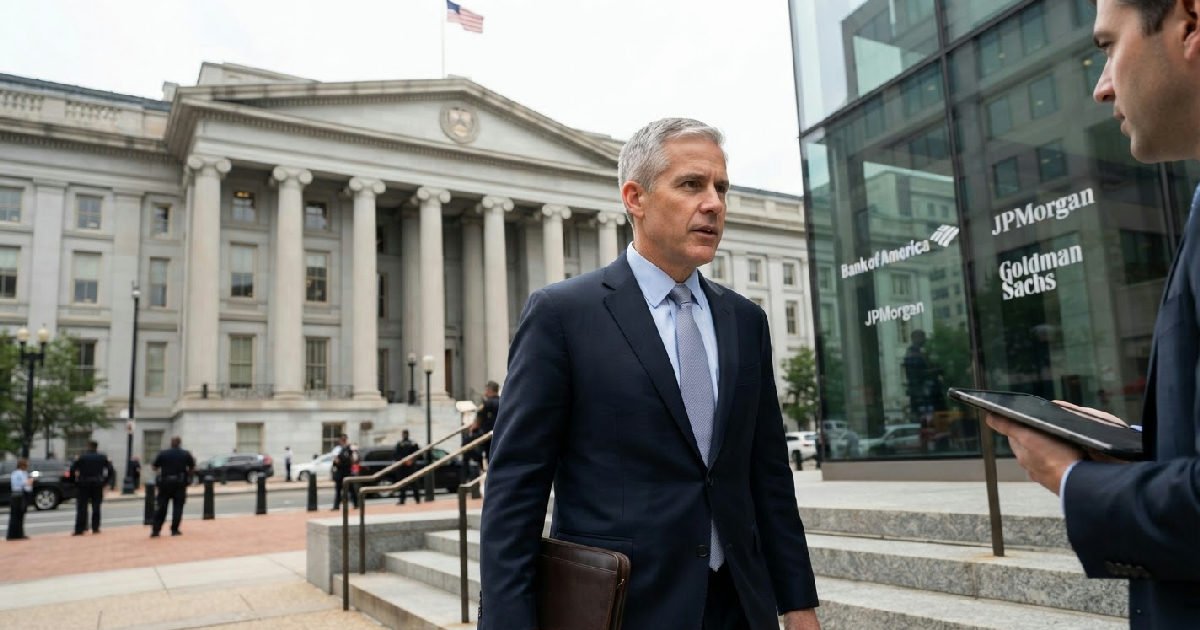
This forces the Treasury to rethink its funding strategy. Projections from Bank of America, JPMorgan, and Goldman Sachs all point toward a dramatic increase in reliance on short-term financing to meet the nation’s record borrowing needs. This strategic pivot comes as the U.S.
Treasury bills issue trillion short-term
grapples with persistent budget deficits and climbing interest payments on its national debt, creating a complex challenge for Treasury Secretary Scott Bessent.
The nation’s leading financial institutions are in broad agreement about the scale of the upcoming debt issuance, though their precise figures vary slightly. Bank of America (BofA) forecasts $1.07 trillion in new bill issuance for the fiscal year ending in September 2027.
This figure excludes money needed to pay off existing maturing debt. JPMorgan expects a slightly higher $1.09 trillion of net bill issuance during the 2027 calendar year, while Goldman Sachs projects $961 billion. These forecasts underline a clear trend: the U.S. Treasury will lean heavily on debt with maturities of one year or less to fund government operations.
This shift will significantly alter the composition of U.S. government debt. BofA’s estimate suggests the total stock of outstanding bills could reach approximately $8 trillion by September 2027. This would represent 24.3% of all marketable Treasury debt, approaching a recent peak seen during the height of the COVID-19 pandemic.
Goldman Sachs projects this percentage to be 24.3% in 2027 and 24.9% in 2028. The official target set by the Treasury Borrowing Advisory Committee (TBAC) for short-term debt is “around 20% over time,” aiming for a balance between interest rate costs and volatility.
The pressure of rising long-term borrowing costs
The turn towards short-term financing is not a choice made in a vacuum. It’s a direct consequence of a punishing environment in the long-term bond market. Long-term U.S. borrowing costs have climbed to their highest level since 2007.
The benchmark 10-year U.S. Treasury yield is now testing the 5% threshold for the first time in nearly twenty years. This spike in yields reflects a confluence of risks worrying investors, including stubborn inflation and concerns over rising default risk for major tech hyperscalers.
The sheer scale of growing U.S. government budget deficits also contributes to this uncertainty. This market caution is evident across various asset classes, indicative of broader shifts in investor sentiment. Debt issuance by the private sector has also increased to finance AI infrastructure.
The numbers paint a stark picture of the nation’s fiscal health. Interest payments on U.S. public debt have more than doubled over the past five years, now exceeding 3% of the gross domestic product (GDP)—a record for the country.
With budget deficits running at approximately 6% of GDP this decade and public debt hovering around 100% of GDP, the pressure to find cheaper ways to borrow is immense.
Treasury Secretary Bessent’s high-wire act
Navigating this environment is the central challenge for Treasury Secretary Scott Bessent. He’s tasked with funding the government without allowing long-term borrowing costs to spiral out of control. His strategy appears to be a two-pronged approach: manage long-term rates while using short-term debt to fill the funding gap.
Last month, Bessent surprised markets with a plan to expand the Treasury’s purchases of its own 10-to-30-year bonds. This buyback program is designed to inject liquidity into the market and put downward pressure on yields.
At the same time, the Treasury has made it clear that it will continue expanding short-term debt sales to raise the necessary cash. This policy has not been without controversy. Bessent had previously criticized his predecessor, Janet Yellen, for undertaking a similar strategy.
Before the 2024 U.S. election, he alleged that Yellen had effectively “taken control of monetary policy” and “eased financing conditions substantially” by heavily relying on T-bills. Now in the driver’s seat, he finds himself employing a comparable playbook in the face of difficult market realities.
Managing the government’s cash account
The immediate need for cash is clear from the Treasury’s own projections. In August 2026, the department raised its borrowing estimate for the third quarter to $739 billion, a $68 billion increase from its May forecast, citing lower-than-expected cash flows.
It also projected needing to borrow another $628 billion in the fourth quarter, bringing the total for the second half of the year to $1.367 trillion. These funds flow into the government’s main checking account, the Treasury General Account (TGA).
The TGA is managed by the Treasury and held at the Federal Reserve. The Treasury aims to end September with a cash balance of $950 billion and close out the year with $850 billion in the TGA. These are substantial figures, meant to provide a buffer against financial shocks.
This contrasts sharply with the situation during the 2023 debt-ceiling crisis, when the TGA balance plummeted to as low as $50 billion against a target of $600 billion. The current policy aims to maintain a much healthier cash reserve.
As of September 16, 2026, the Treasury’s cash balance stood at a robust $991.708 billion, up from $843.705 billion the previous week, reflecting the ongoing borrowing operations.
Outlook and market implications
While leaning on short-term debt offers a temporary reprieve from high long-term interest rates, it comes with its own set of risks. The primary concern is “rollover risk”—the need to constantly refinance large amounts of debt.
This makes the government’s financing costs highly sensitive to any short-term spikes in interest rates, potentially creating volatility. The Treasury Borrowing Advisory Committee (TBAC), a panel of external experts, has recommended a target for short-term debt to be “around 20% over time.”
The current path, however, would push that proportion to nearly 25%, a level that may cause unease. This highlights the difficult trade-off between managing immediate interest costs and ensuring long-term funding stability. This flood of government paper will also have ripple effects across the financial system, potentially absorbing liquidity that might have otherwise gone into other investments.
Total issuance of Treasury notes and bonds, for example, increased from $8.3 trillion in 2016 to $32.8 trillion over the 12 months ending August 2026, an average 14.7% annual increase. In 2016, T-bills made up 75% of total issuance; this increased to 85% in 2026. For now, Washington appears locked on a path of short-term borrowing to navigate its long-term fiscal challenges.