

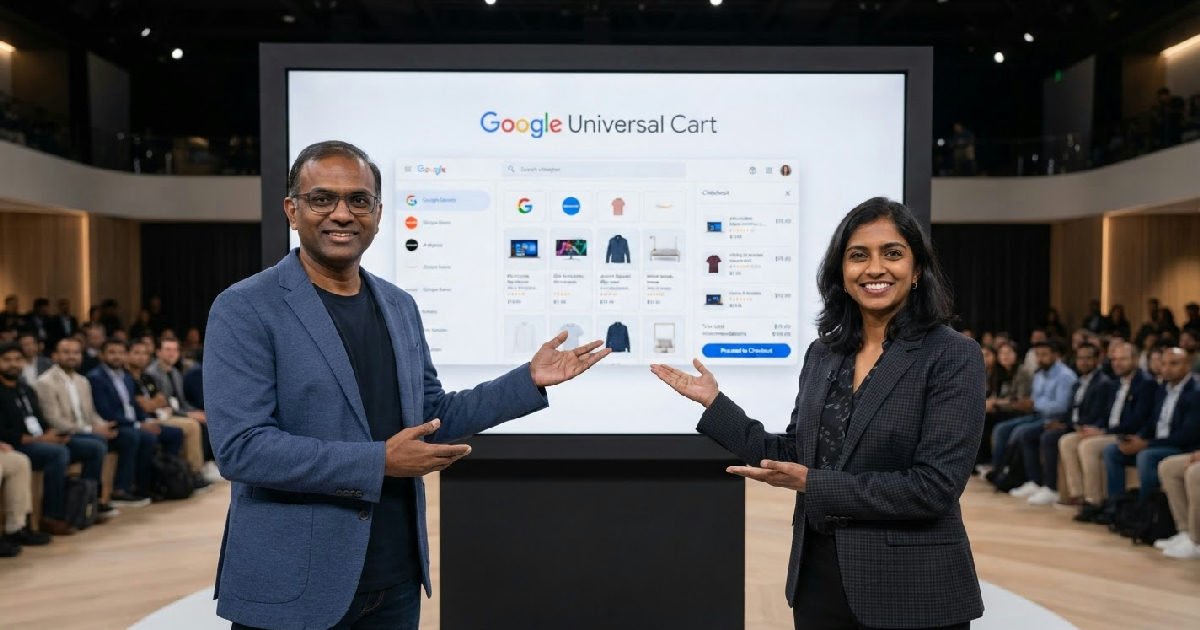
Google launches Universal Cart in US on October 15 2026
Google officially rolled out its Universal Cart in the United States on 2026-10-15, a significant move poised to transform the online shopping experience for millions. This AI-powered tool, integrated across Google Search and the Gemini app, centralizes purchases from diverse retailers into one convenient hub, aiming to simplify the path from product discovery to checkout.
Suresh Ganapathy, Senior Director of Product Management for Consumer Shopping at Google, emphasized the cart’s role in organizing shopping and streamlining transactions.
Google Universal Cart functionality
The launch, strategically timed just ahead of the critical 2026 holiday shopping season, builds on a preview at Google I/O in May 2026. This initiative by Google, with Vidhya Srinivasan, Google’s Vice President and General Manager of Ads and Commerce, having announced the preview, reflects a broader push into the e-commerce sector.
It positions the tech giant to capture a larger share of the rapidly evolving digital marketplace.
The Universal Cart acts as an intelligent shopping assistant, allowing users to save and track items from various online stores. This means shoppers can add a handbag from Steve Madden, a sweater from Quince, and lip gloss from Ulta Beauty to a single cart, regardless of where they initially found the product. The system then monitors prices and inventory, notifying users of drops or restocks.
This cross-retailer functionality significantly reduces the friction traditionally associated with multi-store shopping. Users no longer need to manage multiple tabs or take screenshots, streamlining their decision-making process. As Suresh Ganapathy noted, the cart puts shoppers in control, helping them organize items and stay on top of promotions.
Personalized savings are another key feature, with the Universal Cart identifying relevant promo codes and leveraging Google Wallet integration. It can even suggest payment methods that maximize rewards from saved credit cards. This aims to make the checkout process as effortless as possible, potentially boosting conversion rates for businesses.
Underlying Technology and Protocols
At its core, the Google Universal Cart is driven by the company’s advanced Gemini AI models, which are expected to refine the shopping experience over time. This artificial intelligence underpins its ability to track items, personalize recommendations, and streamline operations. The technology aims to anticipate consumer needs.
The system also relies heavily on the Universal Commerce Protocol (UCP), an open standard co-developed by Google with major retail leaders like Shopify. Released in January 2026, UCP provides a common language for AI agents to interact with merchant backends. This protocol enables seamless transactions through Google’s platforms or directly on merchant sites.
Furthermore, the Universal Cart integrates with Google’s expansive Shopping Graph, which currently indexes over 60 billion continually refreshed product listings. This vast database allows the cart to offer comprehensive product discovery and accurate, real-time information. It creates a robust foundation for the AI-powered shopping features.
Impact on Small Businesses
For small business owners, the Universal Cart presents a dual-edged sword of opportunity and challenge. The potential for increased customer retention and improved conversion rates is a significant draw. Shoppers are less likely to abandon items when they can easily return to them and check out with minimal hassle.
However, the new ecosystem could intensify competition, as more retailers vie for visibility within Google’s unified shopping environment. Small businesses might need to adapt their marketing and customer engagement strategies to stand out. This competitive pressure could be particularly acute for those already battling larger conglomerates.
Moreover, integrating with advanced platforms like the Universal Cart might require investments in digital infrastructure or partnerships for small businesses with limited technical resources. This could pose an implementation challenge, necessitating proactive adaptation of operational strategies. Ultimately, embracing such new product launches in technology can be vital for staying competitive.
Google’s E-commerce Evolution and Competitive Landscape
The Universal Cart marks the latest phase in Google’s long-standing efforts to strengthen its position in e-commerce, a journey that began with “Froogle” in 2002. Over the years, Google has iteratively refined its shopping offerings, from “Google Product Searches” to “Google Shopping” and “Google Express.” Each iteration aimed to provide a more integrated shopping experience.
This current move is widely seen as Google’s direct challenge to Amazon, which many consumers now use as their primary starting point for product discovery. The Universal Cart aims to shift Google from being merely a referral engine to a direct transaction facilitator. This strategic evolution is critical in the ongoing battle for digital commerce dominance.
The broader smart shopping cart market itself is projected for substantial growth, from $0.59 billion in 2026 to $1.65 billion by 2032. This trend highlights retailers’ increasing need to bridge physical and digital shopping experiences. Many companies, from Meta with its Muse AI agent to OpenAI, are also pushing into agentic commerce, intensifying the innovation race in consumer technology.
Regulatory Considerations and Global Rollout
While the Universal Cart has launched in the U.S., its global rollout faces varying considerations. Future markets on the roadmap include Canada, Australia, and the United Kingdom. However, the European Union is notably absent from the immediate expansion plans, likely due to Google’s history of regulatory scrutiny there.
The company has faced substantial fines under the Digital Markets Act, including an €890 million penalty, and ongoing legal challenges regarding self-preferencing in shopping results. These regulatory hurdles underscore the complex environment global tech firms navigate. Such legal battles can often overshadow advancements in game development or other technological sectors.
Ultimately, the success of the Universal Cart will hinge on widespread consumer adoption and retailer integration. Experts like Greg Zakowicz, an e-commerce and retail adviser, caution that while the tool offers improved visibility, retailers might feel a loss of control over customer journeys. Debra Aho Williamson, founder of Sonata Insights, also suggested the cart shifts retargeting data into Google’s advertising ecosystem.
Outlook for the Holiday Season and Beyond
With the Universal Cart now active, Google is betting on its ability to simplify holiday shopping for consumers. Suresh Ganapathy reiterated that the cart provides “the convenience and smarts they need to make the best shopping choices” as the holiday season approaches. This timing is crucial for maximizing its initial impact.
Looking ahead, the Universal Commerce Protocol is set to expand its checkout experience to Canada and Australia in the coming months, followed by the U.K. UCP will also integrate into YouTube in the U.S. and eventually support other verticals like hotel booking and local food delivery. Google is also introducing AI performance insights in Merchant Center, helping brands optimize product data for AI-driven discovery.
The company intends to bring its Agent Payments Protocol (AP2) to products, starting with Gemini Spark. AP2 enables secure agentic purchases within user-defined guardrails. This continuous development illustrates Google’s commitment to evolving the digital retail landscape, aiming to make shopping more intuitive and personalized for everyone involved.