

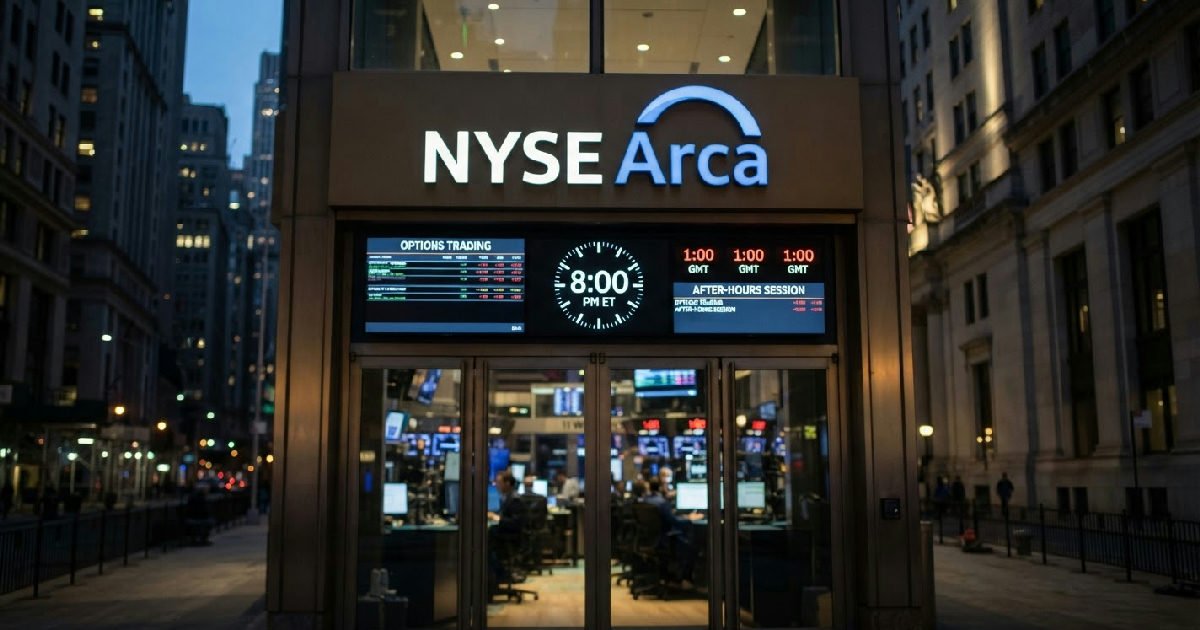
nyse arca extends options trading hours to 17
The New York Stock Exchange’s all-electronic exchange, NYSE Arca, has significantly expanded its extended options trading hours, a move that signals a broader industry shift toward around-the-clock market access. Effective since April 8, 2024, the exchange now supports a 17-hour continuous session, allowing investors to trade options from 3:00 AM to 8:00 PM Eastern Time on weekdays.
This major operational change is a direct response to persistent demand from both retail and institutional investors for more flexibility to manage their portfolios and react to global events. The extension dramatically lengthens the previous trading window, which ran from the standard market open at 9:30 AM to the 4:00 PM close.
The benefits of extended options trading hours
The decision positions NYSE Arca to better compete with rivals and aligns the options market more closely with other asset classes.
The push for extended options trading hours reflects a fundamental change in how investors interact with markets. With news cycles and economic data releases occurring globally at all hours, the traditional 6.5-hour trading day has become increasingly restrictive. The new schedule allows traders to react to market-moving news out of Europe and Asia during their respective trading days.
In a statement regarding the launch, Elizabeth King, who serves as President of NYSE Fixed Income and Head of ESG, highlighted the client-driven nature of the initiative. "The demand for extended hours trading has been a consistent theme from our customers," King said. She noted that the exchange was "excited to deliver a solution that provides greater flexibility and access to the options market."
This flexibility is crucial for risk management. An investor holding a large position can now use options to hedge against adverse overnight news before the main U.S. market opens, a capability previously limited or more complex to achieve. For example, a surprising economic report from Germany or a policy shift in Japan could be acted upon almost immediately.
"This is a significant step forward for the options industry, and we believe it will benefit all market participants by providing more opportunities to manage risk and express their views on the market," King added.
The move caters to a growing base of sophisticated traders who employ complex strategies that benefit from longer trading windows, including those leveraging developments in AI in crypto trading and other technologically advanced sectors.
The competitive landscape of US exchanges
NYSE Arca’s decision was not made in a vacuum. It represents a critical move in the ongoing battle for market share among the major U.S. exchange operators, who are all vying for the immense trading volumes that derivatives products generate.
The world of exchange-traded funds has also seen significant evolution, with recent reports showing Ethereum ETF outflows creating new market dynamics that traders want to access at all hours.
Cboe Global Markets (CBOE), a primary competitor, has been a trailblazer in this area. In May 2022, the Cboe extended the trading hours for its most popular and liquid index options contracts, the S&P 500 (SPX) and the Cboe Volatility Index (VIX), to offer nearly 24-hour trading five days a week.
This gave investors around-the-globe unprecedented access to hedge and speculate on the broad U.S. market.
That move set a new industry benchmark and placed significant pressure on other exchanges to follow suit or risk losing valuable order flow. Nasdaq has also steadily expanded its own after-hours trading sessions for options on various products. By expanding its hours, NYSE Arca is ensuring it remains a competitive venue for the high-volume ETFs and single-stock options that are its bread and butter.
The fight for volume is relentless. Exchanges earn revenue from transaction fees, so every trade executed on their platform contributes to the bottom line. By offering longer hours, exchanges can capture trades that might have otherwise been deferred, gone to a competitor, or been executed in overseas markets. This strategic expansion is essential for maintaining a leading position in the modern financial ecosystem.
Implications for liquidity and volatility
While extended hours offer clear benefits, they also introduce new considerations for investors. One of the primary concerns is liquidity—the ability to buy or sell an asset without causing a significant change in its price. During the pre-market (3:00 AM to 9:30 AM) and post-market (4:00 PM to 8:00 PM) sessions, trading volumes are typically much lower than during the regular session.
This thinner liquidity can lead to wider bid-ask spreads, which is the difference between the highest price a buyer is willing to pay and the lowest price a seller is willing to accept. A wider spread translates to a higher transaction cost for investors. It also means that large orders can have an outsized impact on the price, potentially leading to increased volatility.
Investors trading during these extended periods must be more cautious and may need to use limit orders—which specify a maximum price for a buy or a minimum price for a sell—to protect themselves from unfavorable price execution. The dynamics of these sessions are different, and they are generally considered the domain of more experienced and professional traders.
The unstoppable trend towards 24/7 trading
The expansion of options trading hours is part of a much larger trend that is reshaping financial markets, heavily influenced by asset classes that never sleep. Cryptocurrency markets were the pioneers of true 24/7/365 trading, setting a new standard for accessibility and changing the expectations of a new generation of retail investors. The idea of markets closing now seems antiquated to many.
This has had a ripple effect across traditional finance. The futures market has long offered nearly 24-hour trading for major commodities and indices, allowing global participants to manage their exposure around the clock. The move by NYSE Arca and its competitors shows that the options market is the latest to adapt to this ‘always-on’ environment.
This trend is visible in how investors manage their digital assets, with data showing that large Bitcoin holders slash exchange transfers as they adopt long-term strategies outside of active trading hours.
Supporting these extended hours requires substantial investment in technology and infrastructure. Exchanges must ensure their systems are robust enough to handle trading, surveillance, and risk management for prolonged periods without interruption. It also necessitates coordination among brokerages, clearinghouses, and market makers to ensure the entire ecosystem can support the longer trading day seamlessly.
Looking forward, the industry is likely to continue its march toward a 24-hour market. While extending single-stock equity trading to a 24/5 schedule presents more complex challenges, the derivatives markets are clearly leading the way.
For investors, this means more opportunity and greater control, but it also demands a higher level of sophistication and awareness of the unique risks involved in trading outside the main session.