

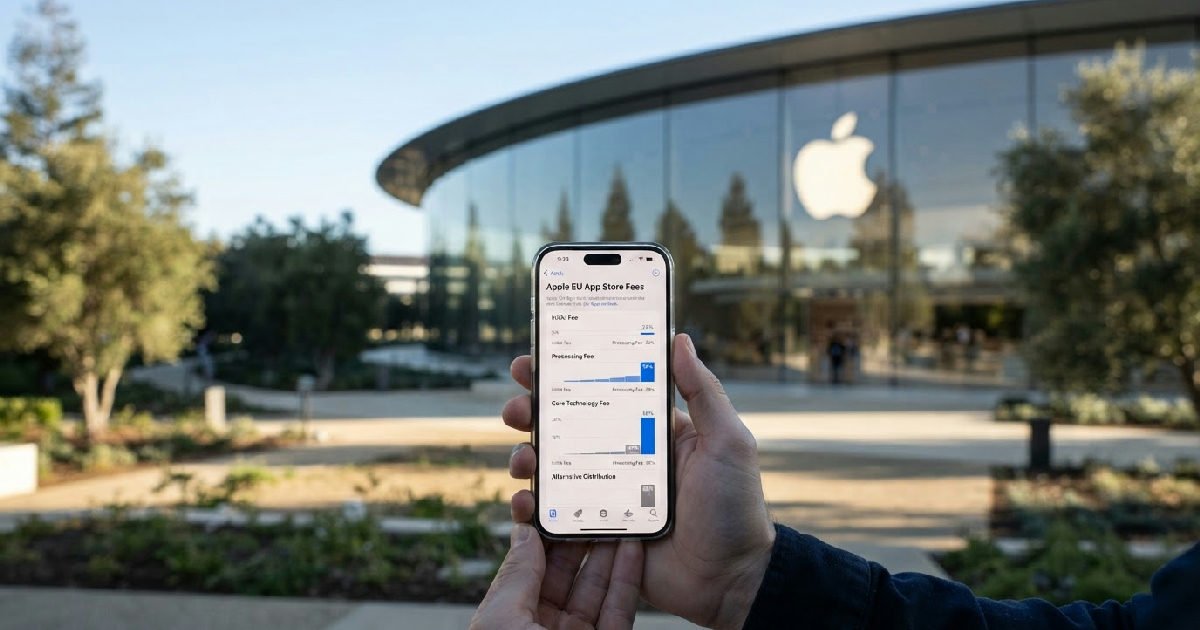
Apple overhauls EU App Store fees to comply with Digital Markets Act
Apple on Tuesday announced a major overhaul of its App Store fees in the European Union, a move designed to resolve a tense and protracted battle with regulators over the tech giant’s market power. The new commission structure, which takes effect on October 1, 2026, aims to bring Apple into compliance with the bloc’s landmark Digital Markets Act (DMA).
The changes follow years of criticism and legal challenges from developers and antitrust authorities who argued Apple’s existing rules were anticompetitive. The company stated the new terms were developed after “close collaboration” with the European Commission, which has welcomed the changes but will continue to monitor their implementation closely.
How the new Apple EU app store fees will work
The revised terms replace a complex and often-criticized system with a multi-tiered commission model based on how an app is distributed and how it processes payments. Historically, Apple charged a standard 15% or 30% commission on all digital goods and services sold through its App Store, a practice that drew fire from developers and regulators alike.
This overhaul scraps the unpopular per-install “Core Technology Fee” that was part of a previous proposal and introduces a new, more simplified “Core Technology Commission” (CTC). The changes are intended to provide more flexibility for developers operating within the 27-nation bloc, though they also introduce new strategic choices and complexities.
Commissions for apps on the official App Store
Under the new rules, developers using Apple’s official App Store will face different rates. Those who continue to use Apple’s own in-app purchase (IAP) system will now pay a 26% commission on digital transactions. This is a slight reduction from the previous 30% standard rate.
Developers who choose to integrate an alternative payment processor directly within their app will pay a 20% commission to Apple. For those who simply link out to their website for users to complete a purchase, the commission is set at 15%. These rates signify a major shift away from Apple’s traditionally rigid payment policies.
Importantly, significant discounts are available for smaller developers. Those in the Small Business Program, Mini Apps Partner Program, or Video Partner Program will see their commission rates cut to 10% for alternative payment use and link-outs. The IAP rate for these programs, and for subscriptions after one year, is 15%.
New ‘Core Technology Commission’ for external apps
Perhaps the most significant change is the introduction of a 5% Core Technology Commission for any digital transactions on apps distributed outside of Apple’s ecosystem. This applies to apps installed from alternative app marketplaces or downloaded directly from a developer’s website—a practice now permitted in the EU.
This 5% fee replaces the heavily criticized “Core Technology Fee” from a prior proposal, which would have charged developers a fee per installation. That model was seen by many, including EU regulators, as a measure designed to make alternative distribution financially unviable for most developers, especially those with free apps and large user bases.
The long road to compliance with the Digital Markets Act
This week’s announcement is the latest chapter in a long-running saga between Apple and European regulators. The conflict escalated with the passage of the Digital Markets Act in 2022, which came into full effect in 2024. The law designates major tech companies like Apple as “gatekeepers” and imposes strict rules to ensure fair competition.
The DMA requires these gatekeepers to open up their closed ecosystems, compelling Apple to allow third-party app stores and alternative payment systems on its iOS platform. However, the initial compliance plan Apple put forward was met with immediate and harsh criticism from developers and from the European Commission itself, which viewed the terms as prohibitive.
In March 2024, the European Commission opened a formal investigation into Apple’s compliance, focusing on whether its fee structure and terms were designed to circumvent the spirit of the DMA.
This followed a separate €500 million fine against Apple for its “anti-steering” rules, which illegally prevented developers from informing users about cheaper options outside the App Store. Apple has stated it plans to appeal that penalty.
The core of the dispute was that while Apple technically allowed alternatives, its proposed fees, particularly the per-install Core Technology Fee, created immense financial risk for developers considering leaving the App Store’s confines. Brussels argued this discouraged competition, and the new structure announced this week appears to be a direct response to that pressure.
What this means for developers and users in the EU
For developers, the new rules offer unprecedented choice in how they distribute and monetize their iOS apps. They can now mix-and-match payment options, offering both Apple’s IAP and an alternative processor within the same app, which was previously disallowed.
This could lead to significant cost savings for some, especially larger companies like Spotify or Epic Games that have been vocal critics. The changes also affect a wide array of mobile apps, including popular titles like those in the Madden NFL franchise, which depend on in-app transactions.
For instance, a major release like the mobile version of EA’s Madden NFL 27 could now explore different payment models in Europe.
However, the new system also introduces complexity. Developers must now choose their preferred payment options and are locked into that choice for 12 months, a rule Apple says is to “provide consistency and clarity for users.” This requires developers to make a long-term strategic bet on which model will be most profitable.
For users, the direct impact is less certain. In theory, lower commissions for developers could translate into lower prices for apps and digital subscriptions, but there’s no guarantee companies will pass on the savings. The most visible change will be the ability to download iPhone apps from sources other than the App Store, including directly from websites, a first for the iOS ecosystem.
Apple has also incorporated new safety measures, created in partnership with the EC. Apps in the Kids category cannot link out for payments, and any app using alternative payments must include a parental gate if the user is under 18.
Security remains a key part of Apple’s messaging, with the company confirming it will still use its Notarization process to scan all apps for malware, regardless of where they are downloaded from.
A global battleground for app store dominance
While the EU has been the most aggressive front in the war over app store fees, it is not the only one. Similar regulations requiring Apple to allow third-party app stores have been implemented in Japan and Brazil, suggesting a global trend toward opening up closed tech ecosystems.
These shifts reflect a broader international re-evaluation of how large technology firms should be regulated, similar to how financial institutions have adapted to new rules for services like institutional Bitcoin custody.
In the United States, the battle has been primarily fought in the courts rather than through legislation. Apple remains locked in the final stages of its long-running antitrust lawsuit with Epic Games. A U.S. court ruled in April 2025 that Apple “willfully violated” previous orders by maintaining anticompetitive barriers.
In response, Apple recently proposed a 15% commission on payments made through external links in the U.S.
The contrast between the EU’s sweeping regulatory approach and the U.S.’s case-by-case legal battles is stark. The DMA provides a comprehensive framework for the entire market, whereas the American system relies on individual lawsuits to chip away at company policies. Many global developers and regulators are watching the EU’s implementation as a potential model for the future.
The future outlook for Apple’s services revenue
The App Store is a cornerstone of Apple’s highly profitable Services division, a key growth driver for the company as iPhone sales have matured. Any change to its commission structure is therefore watched closely by investors, and the financial performance of some tech companies can be sensitive to legal and regulatory woes.
According to a recent Morgan Stanley note, Apple did not highlight the App Store as a top driver of services growth in its most recent quarter for the first time since 2023.
On a call with analysts in July, Apple CFO Kevan Parekh acknowledged that changes to the App Store business model in certain countries were a factor affecting performance, alongside a slowdown in mobile gaming.
While the new EU fee structure still ensures Apple receives a commission on nearly every digital transaction on its platform, the lower rates and increased competition could temper the explosive growth the Services division has enjoyed for the past decade.
The European Commission has made it clear that its work is not done, and it will be actively monitoring the market to ensure these new terms truly foster the competition intended by the Digital Markets Act.