

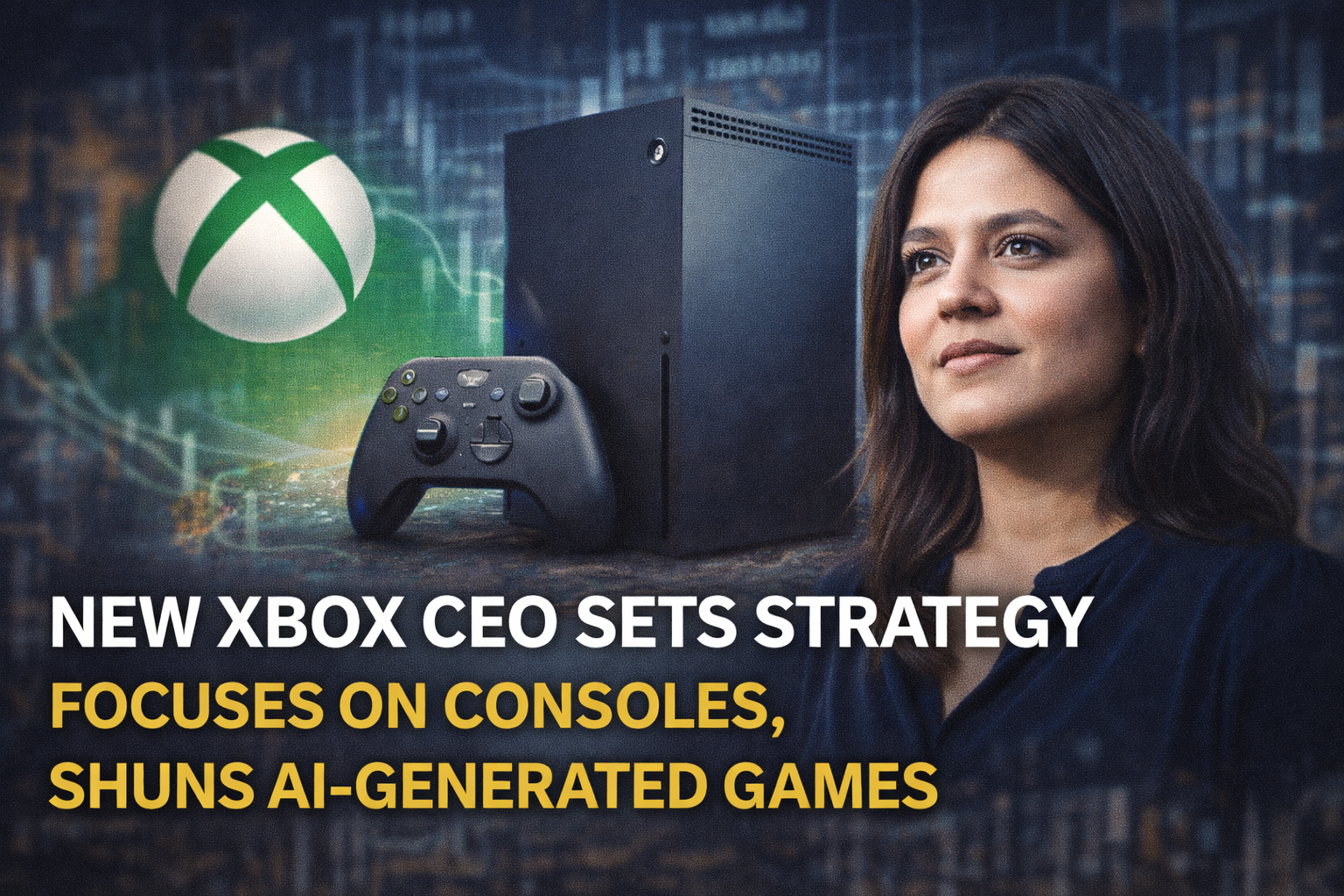
Xbox charts a new direction as leadership reframes the role of consoles
Microsoft’s gaming division is entering a decisive phase.
With new leadership now in place, the conversation around Xbox is shifting from platform reach to platform identity.
The message emerging from the company is not simply about expanding access to games across devices. It is about redefining what Xbox represents — and why dedicated hardware still matters in a multi-platform gaming world.
That distinction may shape the next era of the brand.
A renewed emphasis on physical gaming platforms
For several years, Microsoft positioned Xbox as a service that transcends hardware. Cloud streaming, PC integration, and cross-device access became central pillars of its strategy.
Now, the tone is evolving.
The company’s leadership has made clear that consoles remain foundational — not symbolic relics of the past, but essential anchors for the ecosystem. Hardware is being reframed as the place where player communities, developers, and platform innovation converge in their most concentrated form.
This repositioning signals that Xbox is not abandoning its broader digital expansion. Instead, it is attempting to rebalance the relationship between infrastructure and experience.
The platform is expanding — but not dissolving
Even as consoles regain strategic importance, Microsoft is not retreating from its wider distribution model. Gaming across PC, mobile, and cloud remains central to the company’s long-term vision.
The difference is philosophical rather than structural.
Rather than treating hardware as optional, leadership is positioning the console as the creative and cultural center of the ecosystem — a reference point that defines the Xbox experience regardless of where players access it.
In other words, Xbox aims to be everywhere, but still rooted somewhere.
Creative identity becomes a competitive priority
Beyond hardware, the company is signaling a shift toward creative positioning.
Leadership has emphasized the importance of experimental game design, expansion into new genres, and the development of original experiences rather than relying solely on established franchises. The stated goal is to create an environment where developers can pursue ambitious ideas without being constrained by short-term commercial optimization.
This approach reflects a broader industry reality: platform strength increasingly depends on distinctive content rather than distribution scale alone.
Human authorship takes center stage in the AI debate
Perhaps the most notable element of the new strategy is its stance on generative artificial intelligence.
While AI tools are becoming deeply embedded across the technology sector, Xbox leadership is drawing a clear line between technological assistance and creative replacement. The platform is positioning itself as a space where human authorship remains central to game development.
That framing places artistic intent — rather than automated output — at the core of how the company defines game creation.
In an industry rapidly experimenting with machine-generated assets and procedural content, this position sets a deliberate tone about what kind of creative culture Xbox intends to cultivate.
Rebuilding brand momentum in a shifting market
The strategic shift comes at a time when competition in the console market remains intense and platform differentiation increasingly difficult.
Reaffirming commitment to hardware, investing in original content, and defining boundaries around AI usage all serve a broader purpose: restoring clarity around what Xbox stands for.
Brand recovery in the gaming industry rarely happens through a single product launch. It emerges through consistent direction — across technology, creative philosophy, and player experience.
Microsoft’s current messaging suggests leadership understands that challenge.
A long-term transformation rather than a single announcement
The significance of the new direction lies less in any specific product and more in the framework guiding future decisions.
Console development, creative experimentation, and human-led design are being presented as structural priorities rather than temporary initiatives. Whether these commitments translate into tangible changes in the market will depend on execution over time.
For now, the signal is unmistakable: Xbox is redefining its identity not as a disappearing hardware brand, but as a platform attempting to reconnect technological reach with creative purpose.
What the industry will be watching next
Observers across the gaming sector will be looking for concrete evidence of how this strategy materializes — in hardware development, studio investment, and game design direction.
The success of this repositioning will ultimately be measured by whether players feel a renewed sense of distinctiveness when they engage with the platform.
If that happens, Xbox’s next phase may not be defined by where games can be played — but by why they are worth playing there.
Source: https://www.polygon.com/new-xbox-ceo-next-gen-consoles-generative-ai-asha-sharma/