

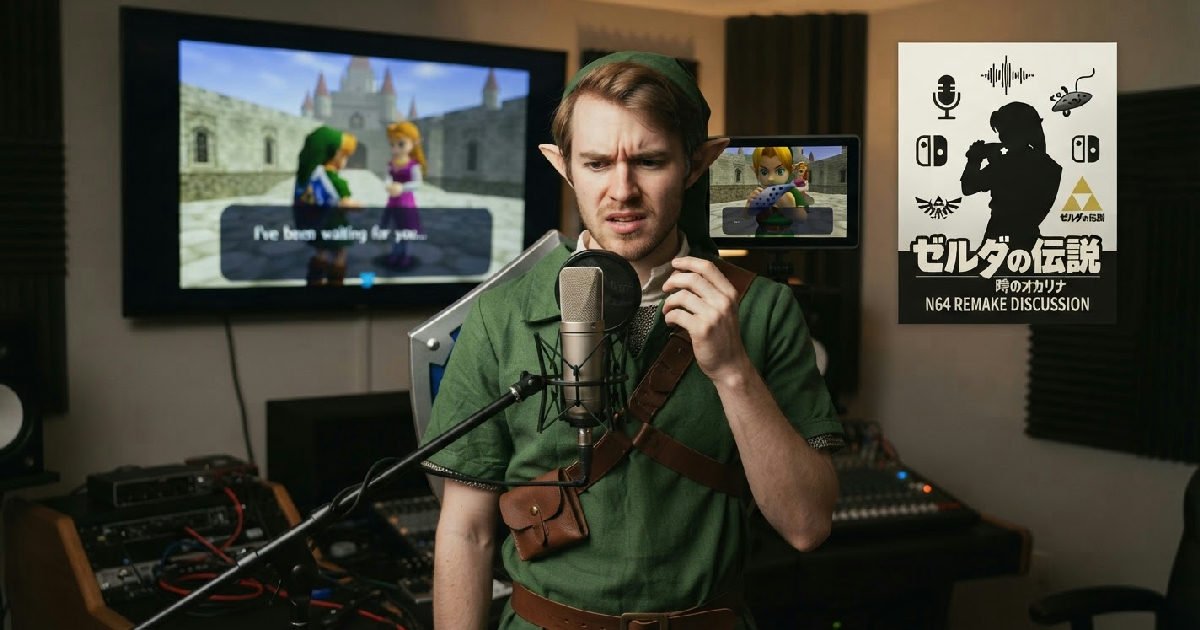
voice acting challenges for potential ocarina of time remake
The Voice Ocarina challenges revolve around whether The Legend of Zelda: Ocarina of Time should feature full voice acting in a potential remake. These Voice Ocarina challenges are at the forefront of fan debates.
As of October 2026, Nintendo has not officially announced or confirmed any plans for such a remake, yet the theoretical challenges it presents are already a focal point of debate.
Navigating the silent legacy and Voice Ocarina challenges of the N64
Numerous articles published since late July 2024 have explored the complexities Nintendo would face should it decide to develop a modern version of the iconic 1998 Nintendo 64 (N64) game. The potential introduction of voiced cutscenes represents a notable departure from the original, where characters communicated through text boxes, grunts, and brief exclamations.
This shift raises questions about transforming the game’s once-silent, narrative-driven world into a fully vocalized experience.
The original Ocarina of Time was developed under the technical constraints of its era, particularly concerning audio storage limitations on N64 cartridges. Unlike some contemporaries like Star Fox 64, extensive voice acting was largely absent. This design choice solidified the game’s reliance on written dialogue, atmospheric music, and subtle sound effects to convey emotion and propel its intricate narrative forward.
Many long-time players vividly recall how the profound silence during pivotal moments amplified the emotional weight of key scenes. For instance, the tender farewell between young Link and Saria, or the critical wisdom imparted by the Great Deku Tree, gained considerable gravitas through their quiet presentation.
This auditory void allowed players to internalize and interpret the dialogue, making the absence of spoken words an integral part of the game’s storytelling identity.
The challenge of new voices
Should Nintendo ever decide to infuse a fully voiced cast into a remake, it would necessitate the creation of entirely new vocal performances for numerous iconic characters. This undertaking risks clashing with the deeply ingrained, often personal, auditory perceptions fans have cultivated over decades.
Players have long imagined how central figures like Princess Zelda, Ganondorf, or even various supporting characters “sound,” based on their original text-based interactions.
Josh Cotts, Lead Features and Lists Editor at GameRant, captured much of this sentiment, noting, “I actually prefer voice acting to simply reading text boxes these days… But even if the voice acting is passable, I’m beginning to realize that I may actually miss the silence.”
This observation highlights a broader concern: would new voices genuinely enhance immersion, or might they inadvertently detach players from a cherished aspect of the original?
Fan expectations and immersion concerns
The tightrope Nintendo would need to walk with any voice acting implementation in a potential remake is undoubtedly precarious. The caliber of these new performances would be paramount. Subpar delivery could easily disrupt a player’s immersion, similar to how a poorly adapted film can disappoint fans of a beloved novel.
Even acceptable voice work might struggle to replicate the profound emotional impact that the original game’s strategic use of silence achieved.
For some, the unvoiced dialogue of the N64 classic fostered a more personal connection, creating an environment where players could project their own emotions onto the silent protagonists and supporting cast. A remake, if it were to include voiced cutscenes, would inevitably redefine these interactions, potentially sacrificing a unique storytelling strength.
The Ocarina of Time remake combat, if it ever materializes, would demand precision, and similar precision would be critical in voice casting.
Critics often point to specific instances, such as the Great Deku Tree’s solemn pronouncements or Saria’s heartfelt goodbye, as moments where an actor’s voice, no matter how skilled, might inadvertently lessen the gravity previously amplified by silence and ambient sound. The discussion isn’t just about the quality of acting, but the fundamental presence of voices where there once were none.
Nintendo’s evolving approach to voice in Zelda
Nintendo has historically adopted a selective approach to voice acting across its flagship The Legend of Zelda series. While early titles did feature minimal vocal clips—Nobuyuki Hiyama and Fujiko Takimoto provided grunts and exclamations for Adult Link and Young Link, respectively, and Jun Mizusawa voiced Princess Zelda and Sheik—full dialogue remained scarce for many years.
This tradition largely preserved Link’s iconic status as a silent protagonist, enabling players to more easily project themselves into his adventures.
The series saw a significant evolution with the 2017 release of The Legend of Zelda: Breath of the Wild, which introduced extensive voice acting for many characters, though Link himself continued to remain silent. This modern trend persisted with its sequel, The Legend of Zelda: Tears of the Kingdom.
This gradual shift indicates Nintendo’s ongoing modernization efforts, aligning with contemporary gaming expectations while carefully navigating the beloved series’ enduring core identity.
Precedents in other major remakes
The broader gaming industry offers a mixed record when it comes to incorporating voice acting into remakes of classic games that originally lacked it. For instance, the critically acclaimed Final Fantasy VII Remake successfully expanded upon its original’s limited voice work with a new cast, generally receiving positive fan reception. This success largely stemmed from having some voice acting as a foundation to build upon.
Conversely, other remakes, such as the *Silent Hill 2* remake, have faced criticism for voice performances that many fans felt did not capture the essence of the original, even when the original’s voices were themselves divisive.
This history underscores the inherent challenge: any new voice cast must not only be technically proficient but also resonate deeply and emotionally with an established, passionate fanbase. For a title as revered as Ocarina of Time, meeting such elevated expectations would be a critical factor in any potential remake’s success.
Challenges and outlook for a hypothetical remake
Initial discussions in late July 2024 sparked considerable debate regarding what a remake of The Legend of Zelda: Ocarina of Time might entail. These speculative conversations often envision significant enhancements beyond merely updated graphics. Such a project, if ever greenlit by Nintendo, could reasonably feature completely overhauled visuals, modernized camera and movement controls, expanded dialogue, and a symphonic orchestral score.
Reports from that time also floated intriguing concepts, such as the possibility of players interacting with Link’s in-game ocarina by humming or singing into a microphone. However, it remains vital to stress that as of October 2026, Nintendo has not officially announced or confirmed any plans for a remake of Ocarina of Time.
All discussions surrounding its features, potential release platforms, or any hypothetical launch dates are purely speculative.
Despite the hypothetical nature of these advancements, the debate over adding voice acting persists as a central concern. Ultimately, the success of such an audacious creative choice, if it were ever to come to fruition, would be judged by players once they experience it firsthand.
Many, like Josh Cotts, remain optimistic yet mindful of the subtle, powerful silence that defined the original. The looming question isn’t whether potential new voices would be “bad,” but whether their very presence would fundamentally alter the game’s revered emotional landscape.