

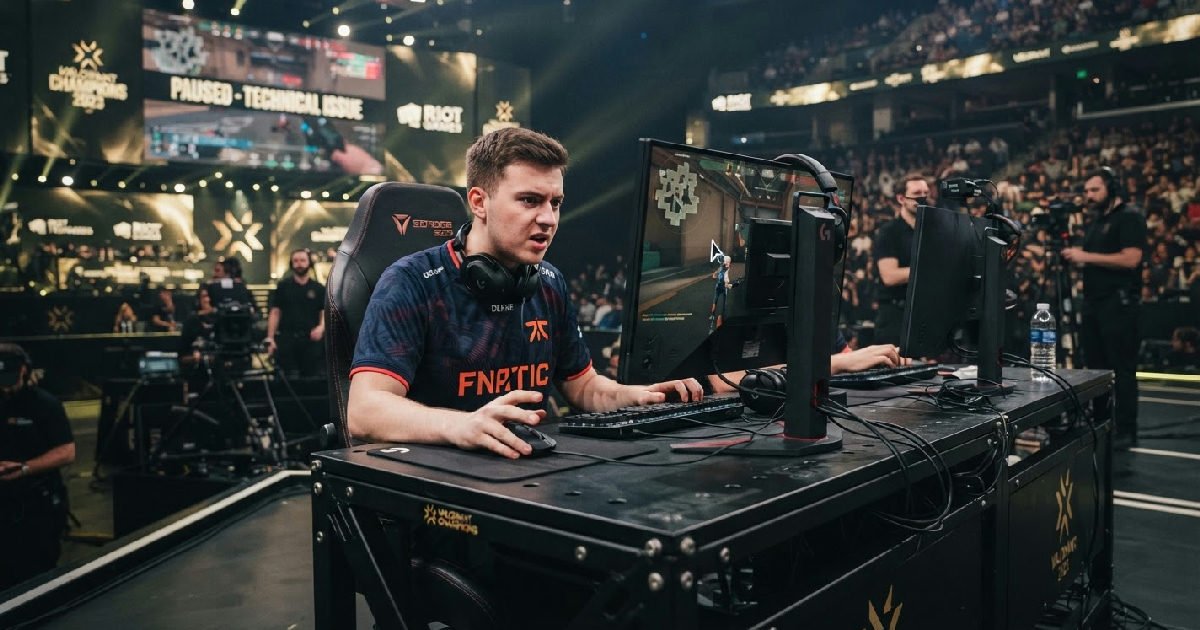
metal desks and mouse glitches caused chaos at valorant champions 2023
The pinnacle of professional VALORANT play, the VALORANT Champions 2023 tournament, was thrown into disarray by a seemingly innocuous piece of equipment: the desks. A series of disruptive technical issues, including mouse interference and PC stutters, plagued the prestigious event held in Los Angeles from August 6 to August 26, 2023, forcing repeated pauses and tainting the competitive integrity of several high-stakes matches.
The root cause, identified by organizer Riot Games, was conductivity from specific metal components inside the custom-fabricated desks used by the players. This metal interfered with the signals from the pro players’ high-end wireless mice, a critical tool where millisecond precision determines victory or defeat.
Mouse glitches caused chaos amid player outcry
The persistent problems led to lengthy broadcast delays and palpable frustration among both players and the global audience watching the $2.25 million tournament.
As complaints mounted, Riot Games publicly acknowledged that the tournament experience “did not meet their standards for players or fans.” In an immediate attempt to mitigate the chaos, officials urged all competitors to switch to wired mouse connections. While many players had already made the switch proactively, this directive was a frustrating step backward for pros who prefer the freedom of wireless peripherals.
Riot admitted this was not an ideal solution but stressed it was the best available option at the time to minimize further disruptions. The incident highlighted a significant oversight in event planning, where the physical stage setup directly compromised the digital competition.
The issues drew widespread criticism and raised questions about how such a fundamental problem could occur at a world championship level, leading to ongoing Riot scrutiny from the community.
In response to the backlash, Leo Faria, the Global Head of VALORANT Esports, confirmed that the organization was taking long-term corrective action. Faria announced that new, non-metallic desk tops were being installed to permanently resolve the interference. This move was crucial to restoring faith in the technical stability of their premier international events.
A controversial match highlights the chaos
The technical problems came to a dramatic head during a pivotal match between FUT Esports and 100 Thieves. In a critical 2v1 situation, FUT player Yusuf “xeus” Doğan Gözgen found himself unable to fire his weapon due to what was later confirmed as mouse interference.
The glitch effectively cost his team the round, and they went on to lose the match 2-0, a result that had significant implications for their tournament journey.
After the match, Riot Games conceded that the round should have been rolled back and replayed, but ultimately decided the final match result would stand. This decision sparked outrage from FUT Esports and the wider community. Gözgen’s teammates, KROSTALY and yetujey, spoke out about experiencing PC freezes and audio problems, with yetujey refusing to attend the post-match press conference in protest.
Widespread problems beyond a single match
The incident involving xeus was the most visible, but it was far from an isolated case. Multiple other professional players reported similar mouse-related issues throughout the tournament’s early stages. Competitors like Kim “Francis” Mu-bin and Nikita “trexx” Cherednichenko were among those who experienced performance-hampering glitches, suggesting the problem was systemic across the entire stage setup.
Initial speculation pointed towards Secretlab MAGNUS Pro desks as the culprit, but the company issued a statement clarifying they were not the desk partner for the VALORANT Champions Tour and had not supplied the problematic hardware. The desks were custom-fabricated for the event, a fact that puts the onus for the failure squarely on the tournament organizer’s vetting process for its stage equipment.
Tournament concludes despite technical hitches
Despite the persistent hardware issues that marred its opening weeks, the VALORANT Champions 2023 tournament did proceed. The later stages of the competition, held at the iconic Kia Forum in Inglewood, saw a return to form as Riot implemented its fixes.
The championship culminated in an exciting grand final where North American squad Evil Geniuses defeated Paper Rex to claim the title and the lion’s share of the prize pool.
The event was a massive commercial success for Riot and the participating teams. The prize pool stood at $2,250,000 USD, but the teams earned significantly more through a revenue-sharing model. By August 23rd, Riot announced that the in-game Champions 2023 Skin Collection had generated over $20 million in proceeds for the 16 qualified organizations, a testament to the game’s massive and engaged player base.
Evil Geniuses’ Max “Demon1” Mazanov was named the tournament’s MVP for his dominant performance. While the competition itself delivered high-level action, the legacy of the event will likely be intertwined with the technical failures that nearly derailed it.
The hardware issues served as a major talking point, even as the game itself continued to evolve with new content, a constant effort required by live service titles to stay relevant, unlike games that see their support end, such as when Nintendo ended Mario Kart Tour service after a long run.
Lessons learned for the future of esports hardware
The debacle at VALORANT Champions 2023 serves as a crucial lesson for the entire esports industry. As competitions grow in scale and financial stakes, the margin for error shrinks to zero. A tournament organizer’s responsibility extends beyond the game servers and into every piece of physical hardware that can impact player performance.
The incident underscores a critical need for thorough hardware vetting and testing in realistic stage environments.
For years, a wired connection was the undisputed standard in professional play for its reliability. The gradual industry shift towards wireless peripherals, prized for their convenience and freedom of movement, introduced a new variable and potential point of failure. This event was a stark reminder that wireless technology, while advanced, is susceptible to environmental interference that must be accounted for in stage design.
While Riot Games eventually rectified the situation by replacing the desks, the damage to the tournament’s reputation in the moment was already done.
Organizers of major events, which often include a mix of sports and gaming content similar to the crossover appeal of updates like the Fortnitemares 2026 horror event, must now be more vigilant than ever.
The integrity of a multi-million dollar competition cannot be compromised by something as fundamental as a table, and this incident will undoubtedly inform hardware choices for years to come.