

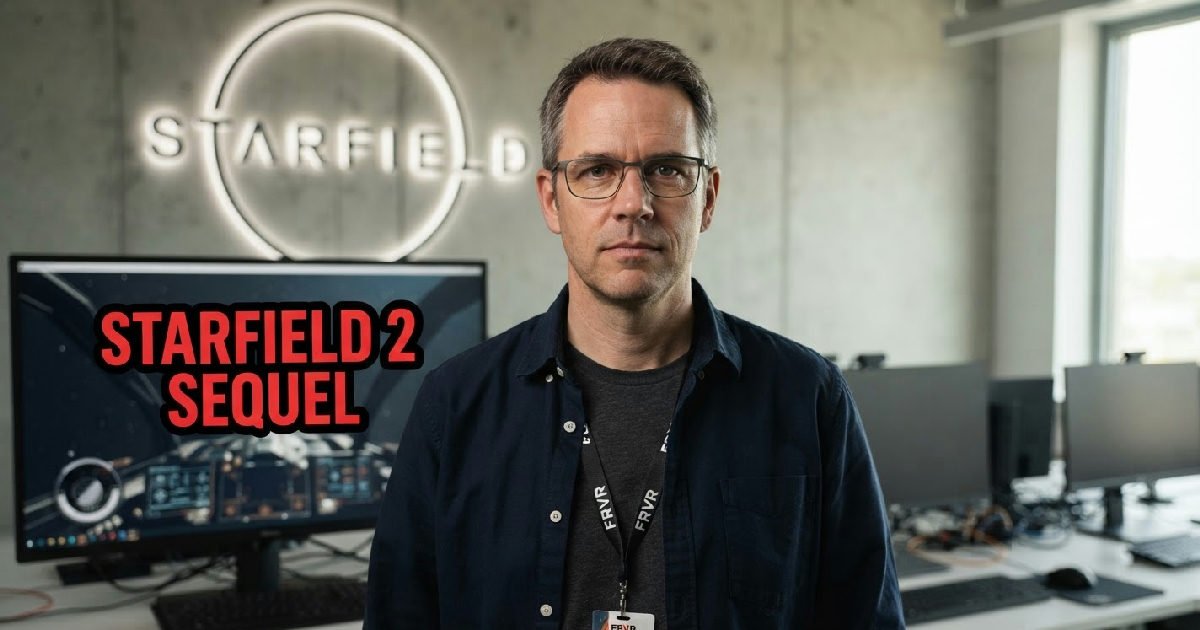
Starfield sequel unlikely says former Bethesda designer
Hopes for a direct *Starfield* sequel have dimmed considerably after a blunt assessment from a former Bethesda Game Studios developer. Kurt Kuhlmann, who previously served as Lead Systems Designer for the ambitious sci-fi RPG, stated on September 24, 2026, that a follow-up is highly improbable. He believes the original game was “not anywhere near successful enough” to warrant a continuation.
Kuhlmann’s critical remarks, initially made in an interview with FRVR, have indeed been widely reported as of September 24, 2026. This stark evaluation provides a reality check on the commercial performance of Bethesda’s new intellectual property. It comes at a time when the studio balances development on other highly anticipated titles, potentially impacting future investment decisions.
Starfield 2 sequel player engagement timeline
When Starfield launched on September 6, 2023, for PC and Xbox Series X/S, it arrived with significant fanfare. The game quickly garnered over 10 million players within its first month, an impressive initial figure for a brand-new franchise from Bethesda.
However, the pace of player growth slowed considerably in the years that followed. By November 2024, player numbers had climbed to 15 million, eventually reaching 17 million by July 2026. This increase, spread over nearly three years, suggests a more gradual player acquisition compared to Bethesda’s other established major IPs.
Steam concurrent player trends show fluctuations
Analysis of Steam charts further illustrates the game’s fluctuating engagement among PC players. *Starfield* achieved an all-time peak of 330,723 concurrent players on Steam shortly after launch, on September 10, 2023. This demonstrated strong initial interest from the PC gaming community.
By April 2026, the game saw a temporary resurgence, hitting 27,000 players on Steam. This marked its highest concurrent player count since September 2024, attributed to the release of the “Terran Armada” DLC and the “Free Lanes” update. Despite these boosts, current figures on September 26, 2026, show 2,489 live players, with a 24-hour peak of 3,824.
The challenging financial landscape for a sequel
The core of Kuhlmann’s argument for the unlikelihood of a *Starfield 2* lies in the original game’s financial performance. While player counts might appear robust on the surface, revenue estimates paint a far more complex and often contradictory picture.
As of April 2026, initial reports estimated *Starfield* had generated approximately $300 million in revenue across all platforms. This figure stands in stark contrast to the colossal success of previous Bethesda titles; *Skyrim*, for example, pulled in $650 million in its first month alone, highlighting a significant difference in commercial impact.
Conflicting revenue projections and breaking even
Financial projections for *Starfield* have varied wildly since its release, contributing to uncertainty. Some estimates from August 2025 suggested the game had achieved gross sales exceeding $2 billion. Other reports from the same period put revenue around $865 million, based on Bethesda’s internal projections and player data, including $600 million in year one and $215 million in year two.
However, analysts from Alinea Analytics suggest that the $300 million revenue figure, when weighed against a decade-long development cycle and a substantial budget, means the game has likely “barely broken even.” This assessment makes the prospect of a costly sequel financially unappealing, despite some more optimistic revenue claims.
Game Pass and its impact on sales performance
A significant factor in *Starfield*’s revenue equation is its day-one availability on Xbox Game Pass. This subscription model, central to Microsoft’s broader strategy for its gaming division, offers subscribers access to the game without an upfront purchase. This undoubtedly boosted player numbers but may have inadvertently cannibalized full-priced sales.
The debate continues among industry observers whether the exposure and player engagement gained through Game Pass ultimately offset potential lost sales revenue. For a game like *Starfield*, which aims for blockbuster status, balancing these factors is crucial for long-term franchise planning and sequel considerations. The effect of Game Pass on profitability remains a key point of discussion.
Kuhlmann’s perspective on design and future potential
Kurt Kuhlmann’s insights as a former Lead Systems Designer offer a unique, developer-centric view on *Starfield*’s future. He candidly expressed his surprise if a *Starfield 2* ever materialized, stating, “I would be very surprised [if there was a sequel].” This underlines his conviction regarding the game’s commercial standing.
Kuhlmann also pointed to specific areas for improvement, such as the outpost building mechanic, which he felt was not sufficiently integrated. He suggested a sequel could integrate such features “much closer to the game that Todd [Howard] had [in mind],” implying that the original fell short of its design ambitions in some respects.
Lessons for a potential sequel’s design
The former designer noted that a hypothetical *Starfield 2* could benefit significantly from lessons learned during the first game’s extensive development cycle. This perspective highlights the iterative nature of game design, where initial releases often inform subsequent improvements and refinements.
However, Kuhlmann’s assessment suggests that commercial realities may ultimately outweigh creative potential and design improvements. A sequel would demand significant investment, which might be hard to justify given the first game’s performance. Even with a clearer vision for improved mechanics, the financial commitment for a *Starfield 2* seems to be a major hurdle for Bethesda.
Bethesda’s evolving strategic focus and other projects
Bethesda Game Studios currently juggles multiple high-profile projects, which could further impact the viability of a *Starfield 2* sequel. The studio has publicly confirmed that *The Elder Scrolls VI* is a major priority and that *Fallout 5* is also in active development, similar to how other major studios are planning for upcoming releases like Gears of War E-Day.
This strategic allocation of resources means that any new *Starfield* game beyond its current support would likely be years away, if ever it materializes. Xbox, Bethesda’s parent company, is also reportedly prioritizing its major franchises, focusing on established series with proven commercial success and larger install bases.
Continuing support for the original Starfield
Despite the skepticism around a direct sequel, Bethesda has reiterated its commitment to the existing *Starfield* game. The studio plans to “continue expanding the Settled Systems with new stories, targeted gameplay improvements, and additional updates.” This includes preparing for the launch of new “Starborn content” next year.
This ongoing support aims to enhance the player experience and expand the game’s universe, providing fresh content for the existing player base. However, it signals a strategy of deepening engagement with the current title rather than immediate plans for a new installment in the space-faring RPG series.
The focus remains on refining the original and its expansions, ensuring a sustained player base for the foreseeable future.