

Nintendo revised Splatoon Raiders concept after developers
Nintendo significantly revised the core concept for its upcoming game, Splatoon Raiders, after developers concluded the initial premise felt uncomfortably “colonialist.” This candid revelation emerged from a Nintendo-led developer interview, shedding light on the ethical considerations that reshaped the game ahead of its July 23, 2026, release for the Nintendo Switch 2.
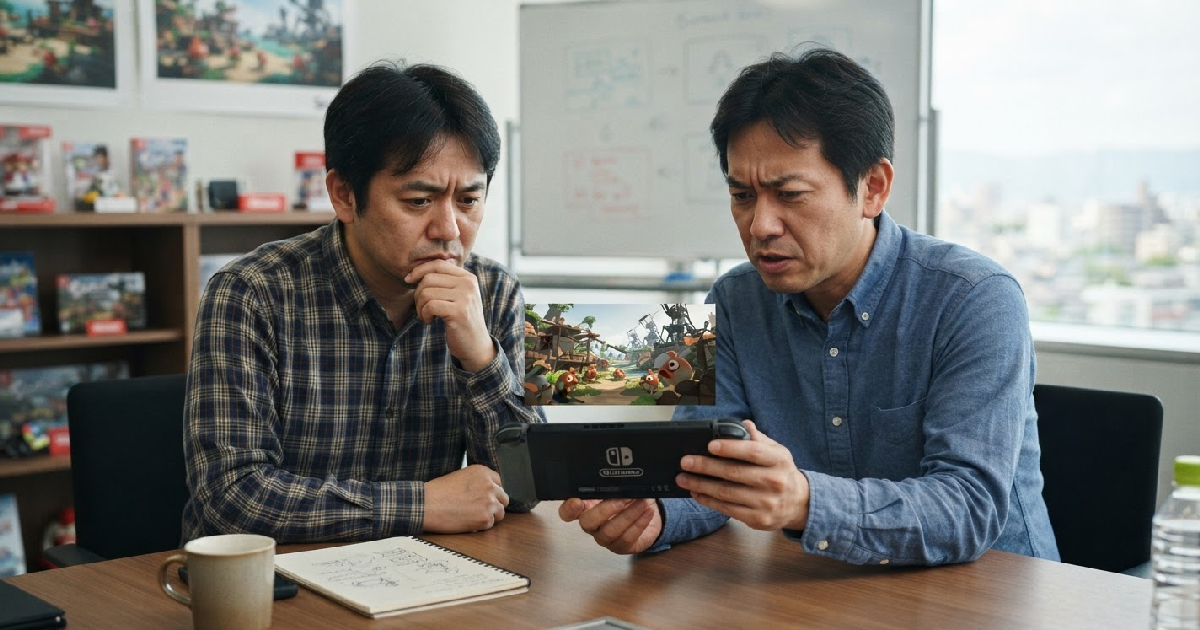
Art Director Koji Sonoyama and Sound Director Shu Tamura were among the key figures discussing the team’s emotional struggle. They openly acknowledged feeling like “bad guys” for a concept that involved players invading the Salmonids’ seemingly peaceful island habitat and forcibly taking their treasures.
Early Concept Stirred Developer Unease
The initial vision for Splatoon Raiders placed players on remote, idyllic islands, a clear departure from the urban environments of previous Splatoon games. This setting aimed to leverage the Nintendo Switch 2’s enhanced capabilities for depicting lush, natural landscapes, even allowing for features like inking over grass.
But this playful environment quickly proved problematic. Koji Sonoyama articulated the team’s growing discomfort, stating, “Somehow, with this setting, it started to feel like we were unfairly picking on the Salmonids, who were simply going about their lives happily on the island, and it became a bit difficult to accept emotionally.”
He added that it felt like “attacking the Salmonids and taking their cherished treasures by force, and then basking in our spoils.”
‘Poor Salmonids!’ Player Feedback
The developers’ internal reservations weren’t isolated. When early prototypes of Splatoon Raiders were tested, players consistently voiced their unease. Koji Sonoyama recalled that “without any prior discussion, everyone who played the prototype kept saying, ‘Poor Salmonids!'” This collective sentiment underscored the need for a fundamental shift in the game’s narrative direction.
Sound Director Shu Tamura echoed these concerns. He noted how even the background music, initially crafted with an “adventurous and friendly vibe,” inadvertently amplified the feeling of attacking “cute, innocent creatures.” This dissonance led the team to question the very motive for progressing through the game’s original story.
Transforming the Game’s Setting and Themes
Faced with widespread feedback and their own ethical qualms, the development team embarked on a significant redesign. They aimed to move away from any perceived “colonialist” undertones, even though much of the game’s foundational design was already in place.
The challenge was to pivot without completely overhauling elements like the Salmonid lineup or overall terrain characteristics. This required a creative rethinking of the visual direction and narrative framing, working within existing development constraints.
From Invasion to ‘Outlandish’ Environment
The key conceptual shift involved making players feel like they had “wound up in an outlandish environment,” rather than actively invading one. This meant transforming the “happy resort” islands into something far more “dystopian and chaotic.” The goal was to make players feel like they were just trying to survive themselves.
Early attempts at this pivot, focusing on white sands and beautiful oceans, didn’t quite hit the mark. They still lacked the desired “outlandish” feel, prompting the team to undertake a more thorough reworking of the environment. This included adjusting lighting and depicting landscapes shaped by dramatic geological shifts.
Reshaping the Salmonids’ Appearance and Lore
To further reinforce this sense of being in an alien, unpredictable place, the design of the Salmonids themselves underwent significant changes. They were made to appear more “out of the ordinary,” departing from their previous depictions in the series.
Lore was also introduced to justify their aggressive behavior, attributing it to a unique “salt” found on the Spirhalite Islands. This salt reportedly makes the Salmonids increasingly aggressive as it encrusts them, changing the player’s perception from invader to survivor.
Understanding the Deeper Salmonid Lore
The team’s sensitivity to the Salmonids’ portrayal isn’t new within the broader Splatoon universe. The Salmonids are, in fact, considered sentient and intelligent beings, possessing their own distinct culture and societal norms. This established lore made the early “colonialist” concept particularly troubling for the game’s game development.
Their culture, for instance, views death as a natural cycle and even an honorable way to “become one with the world.” They use everyday cooking utensils as weapons, a detail some interpret as a symbolic gesture tied to their acceptance of returning to the world in a “tasty” form after death.
A Clash of Civilizations, Not Simple Evil
The conflict between the Inklings, the player characters, and the Salmonids has historically been portrayed not as a simplistic battle of good versus evil. Instead, it’s a clash between two fundamentally different civilizations, whose distinct worldviews and incompatible societal structures prevent easy reconciliation.
This nuanced perspective is crucial, especially considering historical accounts within the lore where Salmonids have destroyed entire cities before modern ink weaponry pushed them back. Furthermore, unauthorized contact between Inklings and Salmonids is strictly forbidden by law, adding another layer of complexity to their relationship.
Broader Implications for Game Design Ethics
Nintendo’s decision to rework Splatoon Raiders reflects a broader, growing awareness within the video game industry regarding narrative responsibility. As games evolve into complex interactive experiences, developers are increasingly scrutinizing how their stories and mechanics might inadvertently perpetuate problematic tropes or insensitive themes.
The avoidance of themes that evoke colonialism, even if unintentional, signals a maturing approach to game design. It highlights a proactive effort to ensure game narratives are thoughtful and resonate positively with a diverse global audience, rather than causing emotional discomfort or unintended interpretations.
What the Changes Mean for Players
For players, the redesign of Splatoon Raiders means a game with a more considered narrative experience. Instead of potentially feeling complicit in an act of invasion, they’re likely to experience a survival-oriented adventure in a truly alien environment.
This shift aims to make the gameplay experience more immersive and less morally ambiguous. The focus on Salmonids behaving in “strange and unsettling ways” due to environmental factors provides a fresh dynamic, changing the conflict from clear-cut invasion to a more nuanced encounter.
Anticipating the Launch of Splatoon Raiders
With Splatoon Raiders scheduled for release this Thursday, July 23, 2026, the gaming community will soon be able to experience these significant design changes firsthand. Reviews are already surfacing, offering early glimpses into how this thematic pivot has impacted the overall gameplay and narrative.
The game will be available exclusively for the Nintendo Switch 2. For those looking to secure a copy, a physical edition is currently available for pre-order at Walmart for $49.94. This represents a $10 discount from its original price of $59.99, an offer valid until the release date.