

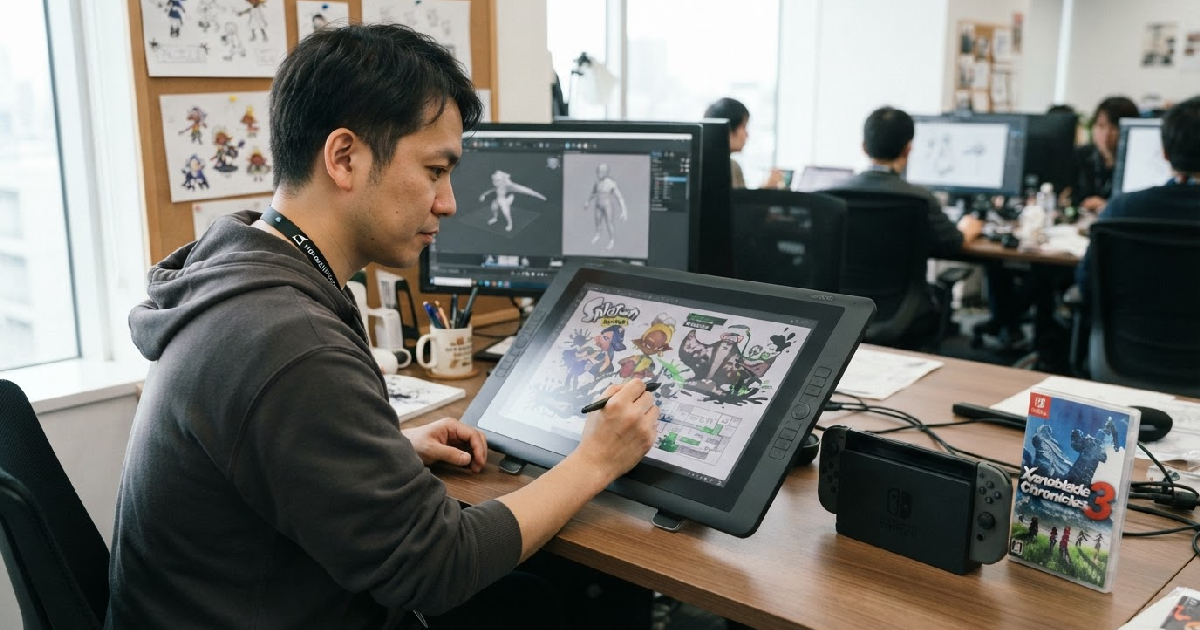
Monolith Soft confirms artwork assistance for Spl
Monolith Soft, the acclaimed studio behind the Xenoblade Chronicles series, has officially confirmed its involvement in the development of Splatoon Raiders. The new action role-playing third-person shooter, a spin-off from Nintendo’s popular Splatoon franchise, launched today, July 23, 2026, on the Nintendo Switch 2.
The Tokyo-based developer provided specific assistance with “some aspects of the new game’s artwork,” continuing a long-standing pattern of Monolith Soft lending its expertise to other major Nintendo first-party titles. This collaboration underscores Nintendo’s strategy of leveraging its internal studios’ diverse talents across its flagship properties.
Monolith Soft’s ongoing contributions to Nintendo’s portfolio
This isn’t the first time Monolith Soft has contributed to the vibrant Splatoon universe. The studio has previously assisted with various Nintendo first-party games, including previous Splatoon installments. Their continued involvement with Splatoon Raiders highlights a deep integration within Nintendo’s development pipeline.
Many fans recognize Monolith Soft primarily for its expansive Xenoblade Chronicles RPGs. However, their role as a support studio for Nintendo’s broader portfolio is equally significant, demonstrating the company’s strategic use of internal resources.
Artistic support for Splatoon Raiders’ new direction
Splatoon Raiders marks a departure from the mainline series, shifting focus to a primarily single-player, story-driven experience. Monolith Soft’s contributions to the game’s artwork could play a crucial role in shaping the visual identity of this new direction. The spin-off is set on the remote Spirhalite Islands, where players explore for valuables.
Director Yoshihiko Ito and Producer Seita Inoue aimed to create an accessible entry point for new players. They focused on non-competitive elements, building on the popular PvE (Player versus Environment) mode Salmon Run from previous Splatoon games. This artistic input helps define the atmosphere of discovery and challenge within the new treasure hunt-focused adventure.
Splatoon Raiders: a fresh take on the franchise
Unlike its competitive predecessors, Splatoon Raiders invites players to step into the role of an Inkling or Octoling mechanic. They’ll venture through the Spirhalite Islands, often accompanied by familiar faces like Shiver, Frye, and Big Man from the music group Deep Cut. These companions were first seen in Splatoon 3, adding a layer of continuity for series veterans.
The core gameplay loop involves seeking out treasures while fending off attacks from hostile Salmonids, adding an action role-playing layer to the established third-person shooter mechanics. A cooperative mode, supporting up to four players both locally and online, offers additional ways to experience the game’s unique environment and challenges.
Crafting a non-competitive experience
The decision to develop Splatoon Raiders as a standalone spin-off, rather than a direct Splatoon 4, signals a strategic move by Nintendo EPD. Director Yoshihiko Ito emphasized creating a different approach to gameplay. This allows the franchise to expand its narrative and genre horizons without alienating its dedicated competitive fanbase.
The game’s announcement on the Nintendo Today! app on June 10, 2025, sparked considerable excitement. Subsequent trailers, including a release date reveal on April 21, 2026, and a gameplay trailer during a Nintendo Direct on June 9, 2026, built anticipation for this new direction.
Strategic collaboration within Nintendo
Monolith Soft’s history with Nintendo dates back to its acquisition by the company in 2007. Since then, the studio has grown into a vital asset, contributing not only its own critically acclaimed Xenoblade Chronicles titles but also extensive support for other major Nintendo franchises. Their technical and artistic prowess helps elevate various first-party projects.
This kind of internal collaboration is a hallmark of Nintendo’s development philosophy, ensuring a consistent level of quality and artistic vision across its diverse game lineup. Monolith Soft’s ability to concurrently develop large-scale RPGs and provide targeted assistance for other teams demonstrates their remarkable operational efficiency and talent pool.
Marketing and launch tie-ins
The launch of Splatoon Raiders on the Nintendo Switch 2 also aligns with promotional tie-ins. These include special Joy-Con 2 controllers themed after Deep Cut, released alongside the game. A Splatoon 3 Splatfest event, held from July 1, also served to bridge the gap and maintain interest across the wider Splatoon universe.
These initiatives reinforce the interconnectedness of Nintendo’s releases. They also highlight how the company uses its entire ecosystem to build excitement around new titles and maintain engagement with existing fanbases.
The future of Nintendo’s development synergy
With Splatoon Raiders now released, the Splatoon franchise has successfully branched out into a new sub-genre. This treasure hunt adventure could open doors for further spin-offs and experimental gameplay styles. It demonstrates that the world of Inklings and Octolings has more stories to tell beyond competitive ink warfare.
Monolith Soft, meanwhile, continues its impressive output, managing both its celebrated Xenoblade Chronicles series and its crucial support role for Nintendo. The studio’s ability to consistently deliver high-quality work in both capacities speaks volumes about its organizational strength and creative talent. Expect to see their influence across the Nintendo ecosystem for years to come.
This model benefits both the main development teams and the support studios. The main teams gain access to specialized skills and additional manpower, streamlining their development cycles. For support studios like Monolith Soft, it provides diverse project experience and fosters a deeper understanding of Nintendo’s core franchises, which can in turn inform their own projects.
The artistic elements Monolith Soft contributed to Splatoon Raiders aren’t just cosmetic; they help establish the game’s unique atmosphere and world-building. This particular spin-off relies heavily on environmental exploration and character interaction, areas where a studio with a strong RPG background like Monolith Soft can truly shine. Their touch ensures the visual narrative is as compelling as the gameplay.
Nintendo’s consistent reliance on Monolith Soft for support roles also indicates a high level of trust and satisfaction with their work. This long-term partnership strengthens the entire Nintendo EPD structure, making it a more robust and adaptable development powerhouse. Players benefit from more polished and visually cohesive titles across the board.
The successful launch of Splatoon Raiders on the Nintendo Switch 2 suggests that audiences are receptive to new interpretations of beloved franchises. It’s a testament to Nintendo’s willingness to experiment and the collaborative spirit of its internal studios. This approach keeps their intellectual properties fresh and engaging for a broad audience.
Ultimately, Monolith Soft’s confirmed involvement in Splatoon Raiders is more than just a footnote in game development. It represents a mature and effective collaborative model within a major publisher. This synergy allows for the creation of ambitious and diverse titles that might not be possible under a more rigid, insular development structure.