

Microsoft confirms Project Helix is a console, not a PC
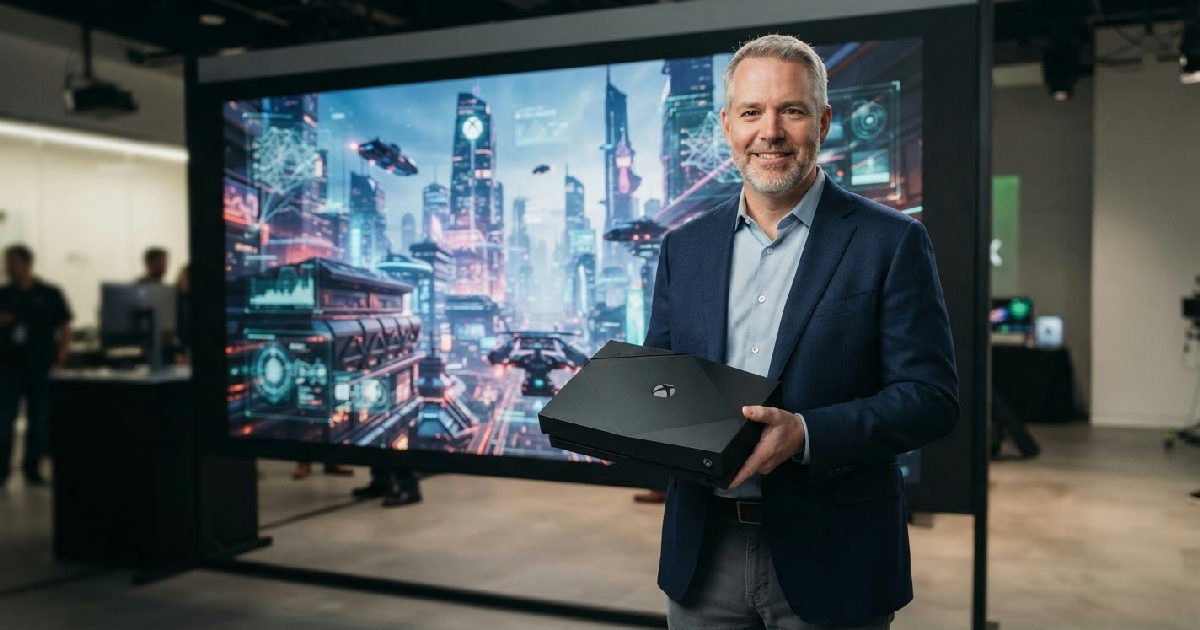
Project Helix is Microsoft’s next-generation gaming hardware, a console capable of playing PC games, not a PC in disguise.
This declaration, made public on November 15, 2026, through a Microsoft-produced Xbox magazine, marks a strategic pivot for the tech giant. Xbox Vice President of Next Generation, Jason Ronald, emphasized that the new console will prioritize technological advancements like neural rendering over raw computational power, aiming to redefine the gaming experience.
Defining Project Helix as the ultimate gaming machine
The announcement underscores Microsoft’s long-standing commitment to bridging the gap between its console and PC ecosystems while solidifying the Xbox brand’s distinct identity. Ronald’s insights confirm that the Project Helix console is designed to remove historical barriers to play, focusing on accessibility, game preservation, and new forms of visual fidelity driven by artificial intelligence.
Jason Ronald articulated a clear design philosophy for Project Helix, positioning it as “the ultimate gaming machine” that offers seamless access to a player’s entire library. This means supporting four generations of Xbox games and ensuring progression carries over instantly, regardless of the device. The aim is to dismantle arbitrary divisions between console and PC games, creating a more unified gaming experience for users.
Ronald emphasized that while hardcore gamers will still find deep customization options, the core intent is to deliver an intuitive and instant gaming experience.
This approach echoes sentiments from 2016, when then-Head of Xbox Phil Spencer stated Microsoft wasn’t interested in producing an “Xbox 1.5” or “Xbox 2.0” and was focused on delivering the best console experience. Microsoft wants to ensure that the Xbox gaming experience remains paramount.
The distinction between a “console that can play PC games” and a “PC that can play console games” is subtle but significant. It signals that while PC game compatibility is a feature, Project Helix will retain the streamlined, user-friendly nature of a dedicated console.
Players won’t need to navigate complex PC-centric settings unless they choose to, offering the best of both worlds without compromising the console experience.
Neural rendering: a new era of visual fidelity
A significant shift for Project Helix is its de-emphasis on chasing ultra-high resolutions and frame rates, such as 8K and 240Hz, as primary selling points. Instead, Microsoft is betting on innovative technologies like neural rendering, a form of generative AI, to deliver next-level visual fidelity more efficiently.
Ronald projects that the next three to five years will see more innovation in gaming than the last decade, largely due to these advancements.
Neural rendering uses neural networks to generate visual scenes, effectively creating frames without demanding as much raw computational horsepower or additional memory. This approach tackles the challenges posed by global component shortages and the escalating costs of computer hardware. By leveraging AI, the Project Helix console aims to offer breathtaking visuals and deeper immersion, fostering entirely new game experiences that were previously unfeasible.
Xbox CEO Asha Sharma has also championed the role of generative AI in the future of gaming. She believes that AI can unlock creative potential, allowing individuals to achieve what once required vast teams.
Sharma previously served as Microsoft’s Corporate Vice President and head of product for its AI platform, before taking the CEO role in February 2026, showcasing a strong commitment to AI integration across Microsoft products.
AI’s impact on game development
Generative AI holds immense promise for game development, extending beyond rendering. It can significantly reduce production time and costs by automating asset creation, generating realistic terrains, 3D models, textures, and even dynamic narratives. Tools powered by AI could allow smaller studios to create expansive and immersive worlds, addressing the industry concern that “too many ideas never become games” due to resource limitations.
This integration of AI into the core rendering pipeline, similar to NVIDIA’s DLSS technology, is set to become a baseline expectation for future gaming hardware. It suggests a future where gaming innovation isn’t solely tied to exponential increases in processing power, but rather to smarter, more efficient ways of generating and presenting content.
This shift could democratize game development and allow for more experimental and innovative titles.
Beyond performance: preservation and portability
Game preservation stands as a core tenet of Xbox’s Project Helix vision. Jason Ronald highlighted a deep responsibility to the industry, acknowledging that game preservation was often an afterthought in earlier decades of game development. Xbox is actively collaborating with game developers to ensure that current titles remain playable for decades to come, extending their lifespan far beyond initial release.
This commitment means players can expect their game libraries and progress to endure across generations of hardware. It’s a significant effort to safeguard gaming history and provide long-term value to consumers. The goal is to prevent beloved titles from becoming inaccessible due to outdated technology, a problem that has plagued the industry for years.
Play Anywhere and seamless progression
Another fundamental aspect of Microsoft’s strategy is the “Play Anywhere” mantra. This initiative allows players to seamlessly move their gaming experience between multiple devices, maintaining their progress across platforms. This is crucial for the broader Helix plan, which reportedly includes both a console and a handheld device.
The concept has already been “dry-run” with devices like the Xbox ROG Ally X handheld. Ronald stresses the importance of not just library access, but also progression portability. He expects that in the future, the ability to instantly resume an 80-hour RPG from any device will be a baseline expectation for all players, reflecting an increasingly mobile and interconnected gaming landscape.
Economic realities and future outlook
The development of Project Helix unfolds against a backdrop of significant economic challenges in the technology sector. Ronald acknowledged the “challenging time” for hardware development, citing the global component shortages and soaring prices of computer hardware. These factors make it difficult to balance cutting-edge innovation with affordability for consumers.
Xbox CEO Asha Sharma has been vocal about the financial pressures facing the company, noting that console storage component prices more than doubled between late 2025 and mid-2026. This has contributed to increased costs for gaming hardware, with current-gen consoles like the Xbox Series X seeing price hikes.
Sharma has also indicated that traditional hardware subsidy models may no longer be sustainable, suggesting a potential shift in Project Helix’s business model.
Uncertainty around price and release
Ronald remained tight-lipped on the specific pricing and release date for Project Helix. Reports have speculated the console could be priced up to $1800, a significant investment for many gamers. While previous leaks suggested a 2028 timeframe for the console, and a handheld version perhaps by late 2027, Microsoft has generally dismissed older leaked documents as outdated.
The ongoing economic pressures and the ambitious technological goals, particularly around neural rendering, mean that Project Helix is navigating a complex path to market. Microsoft is focused on inventing entirely new technology while simultaneously striving to keep it accessible and affordable, a difficult balance in the current hardware climate.
The future of the Project Helix console, while exciting, remains subject to the realities of market conditions and technological breakthroughs. Harnessing the power of generative AI and prioritizing player-centric features like preservation and cross-device play, the Project Helix console aims to deliver an evolved gaming experience.
It signals a future where innovation is measured not just by raw computational might, but by intelligent design and seamless accessibility for every player. The company’s steadfast commitment to its console identity, even while integrating PC gaming elements, sets a clear direction for the next generation of Xbox.