

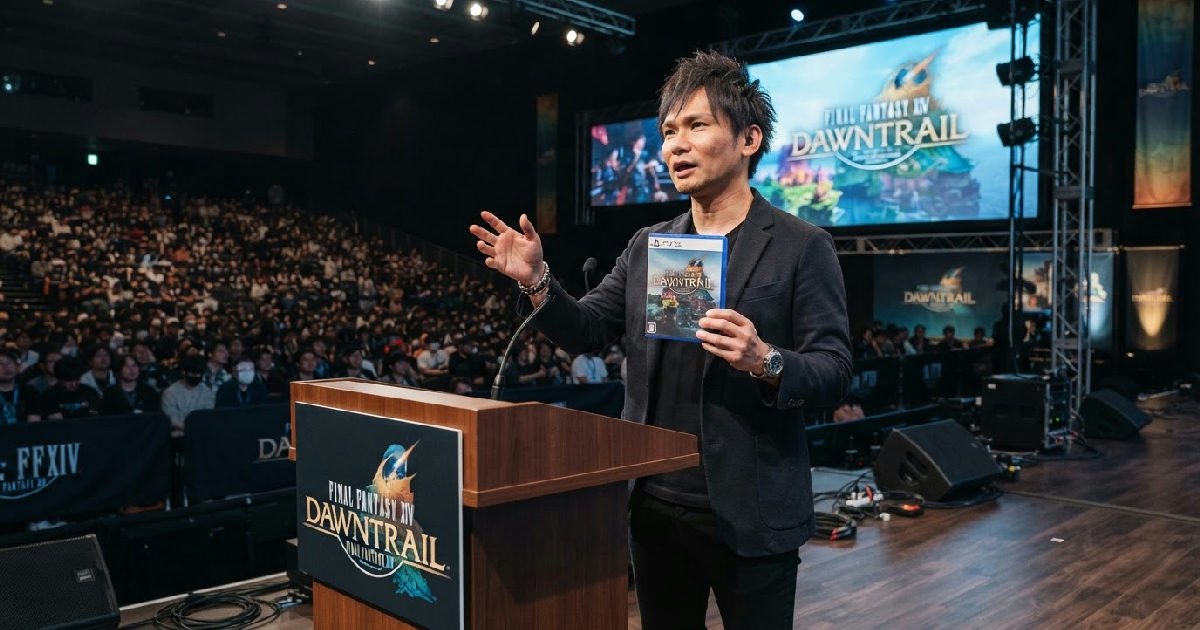
Final Fantasy XIV director vows faster story after Dawntrail
Final Fantasy XIV Director and Producer Naoki Yoshida has acknowledged player feedback regarding the slow pacing of the Dawntrail main story. He confirmed that the next major expansion, currently referred to as “Evercold,” will feature a faster narrative tempo by shifting significant worldbuilding elements into optional side quests.
This change in direction comes after the July 2, 2024, release of Dawntrail, the fifth expansion for Final Fantasy XIV, which received a mixed reception for its main scenario quest (MSQ). Taking personal responsibility, Yoshida stated the development team is adapting its storytelling philosophy for future content based directly on this community feedback.
Story after Dawntrail criticism acknowledged
Following the official release of Dawntrail, which saw early access begin on June 28, 2024, many players voiced concerns. They noted that the main story’s initial half felt sluggish, impacting their overall experience.
The narrative was intended as a “new adventure” in the unexplored land of Tural, designed to introduce new cultures and characters in detail. However, this deliberate pace didn’t resonate with everyone, leading to a divide in player opinions.
Yoshida addressed this directly during interviews at Gamescom 2024. “The fact that this did not align with player’s motivation of ‘keep moving forward’ shows shortcomings on my part as the director,” he admitted. This candid reflection highlights the ongoing challenge of meeting diverse player expectations within a live-service game.
The development team’s original goal was to create an immersive journey. Yoshida explained, “We were coming into contact with new cultures, we went through a process of making sure to create and showcase these aspects in a very attentive way.” This meticulous worldbuilding was perceived by some as “wonky pacing” and “shoddy filler” that detracted from the central plot.
Even central characters, like Wuk Lamat, received mixed reviews. Some players found her role and development contributed to the story’s slow burn. This demonstrated the complexities of narrative design when balancing lore, character introduction, and player progression.
The ‘Evercold’ solution: a faster main story
The development team’s solution for the next expansion, codenamed “Evercold,” is straightforward yet significant. “For Evercold, segments that focus on [worldbuilding] elements are moved to side quests,” Yoshida stated in his comments. This strategic move aims to improve the narrative flow.
This approach allows players to “enjoy them at their own pace” while the main scenario maintains a more urgent and focused tempo. It provides flexibility, catering to those who prioritize rapid story progression and those who prefer deep dives into the game’s lore.
This represents a notable shift in narrative design for the critically acclaimed MMORPG. It empowers players to choose their level of engagement with the lore. Those eager to see the main plot unfold can press forward, while players who savor the rich details of the world can delve into optional content without feeling that the core story is being held back.
Looking back, Yoshida reflected on the Dawntrail experience. “We could have perhaps spread some of those elements – which were incorporated in the main scenario – we could have diverted them to side quests,” he said. This hindsight is directly informing the structure of “Evercold,” which is expected to be the game’s next major chapter.
The move also addresses a common friction point in modern MMORPGs: the conflict between narrative depth and player momentum. By separating the two, Square Enix could be setting a new standard for how these massive games tell their stories. This innovative approach reflects broader trends in the gaming industry, where discussions about new console rumors often capture player attention.
The difficult act of following a grand finale
One major factor influencing the reception of Dawntrail‘s story pacing was its position in the overall saga. It followed Endwalker, an expansion that concluded a decade-long narrative arc involving the deities Hydaelyn and Zodiark.
That finale was praised for its emotional weight and epic scale, setting an incredibly high bar for whatever came next. Players had grown accustomed to a certain narrative intensity, which made the change in Dawntrail feel more pronounced.
The team anticipated this challenge. Yoshida noted that Dawntrail was always intended to feel like the start of something new and less immediately cataclysmic. “If the question is whether I was shocked in a big way [by the mixed reception to Dawntrail’s story], the answer is no, not really,” he commented, acknowledging the difficult transition period.
After a story that spanned the entire universe and dealt with the potential end of all life, a more grounded “summer vacation” adventure was bound to feel different. The slower pace was a feature, not a bug, designed to reset the stakes and let players breathe. Yet for a player base accustomed to constant, escalating conflict, this change of pace felt jarring.
This context is crucial for understanding the feedback. The issue may not have been just the pace itself, but the pace relative to the sky-high expectations set by Endwalker. It highlights the narrative tightrope walk developers face when managing a long-running story with a dedicated and passionate fanbase.
What this means for future FFXIV storytelling
The planned changes for “Evercold” signal more than just a course correction; they reflect an evolving philosophy in game development. The willingness of Yoshida and his team to listen to the community and openly discuss their creative process is a key reason for the game’s sustained success.
This collaborative approach builds trust and assures players that their feedback matters. It fosters a healthy developer-player relationship, which is vital for the longevity of any online title.
This new model—a streamlined MSQ with deep-dive lore available on the side—could become the new blueprint for Final Fantasy XIV expansions. It balances the needs of different player types, potentially leading to a more satisfying experience for everyone. It respects the player’s time while still offering the depth the series is known for.
This adaptability is key for developers looking to keep their established titles fresh, highlighting a dynamic market where new robot masters are constantly introduced to expand classic lore.
Moreover, it raises interesting questions about the nature of “Evercold.” With less pressure to use the main story for world-introduction, the central plot can be denser and more action-packed from the outset. The name itself, though likely a codename, suggests a tonal shift away from the sunny shores of Tural, which has the community buzzing with theories.
Ultimately, this entire episode is a case study in healthy live-service game development. Rather than doubling down on a creative choice that didn’t fully land, the team analyzed the feedback, took accountability, and presented a clear, logical plan for the future. It’s a move that has been largely praised by the community.
Community outlook and the road ahead
The response from the Final Fantasy XIV community has been overwhelmingly positive. Players have praised Yoshida’s candor and the team’s willingness to adapt. While some enjoyed Dawntrail‘s leisurely pace, the consensus is that a faster MSQ with optional lore is a promising compromise that benefits the entire player base.
Discussions on forums and social media show a renewed sense of optimism for the game’s narrative future. The “Evercold” announcement has turned a point of criticism into a source of excitement. Players are now eagerly speculating on what the next chapter will hold, confident that the developers are steering the ship in the right direction.
Before “Evercold,” however, lies the remainder of the Dawntrail patch cycle. These updates will continue the story and may themselves implement feedback, perhaps experimenting with pacing in smaller-scale quests. The journey through Tural is far from over, and its ongoing story will serve as a bridge to the next big adventure.
For now, the state of Final Fantasy XIV remains strong, evidenced by its active player base and continuous content. The developer-player relationship is a cornerstone of its success, and this recent dialogue about the Dawntrail story pacing has only served to reinforce that bond.
Players know their voices are heard, and the development team has a clear vision for creating even better stories in the years to come.