

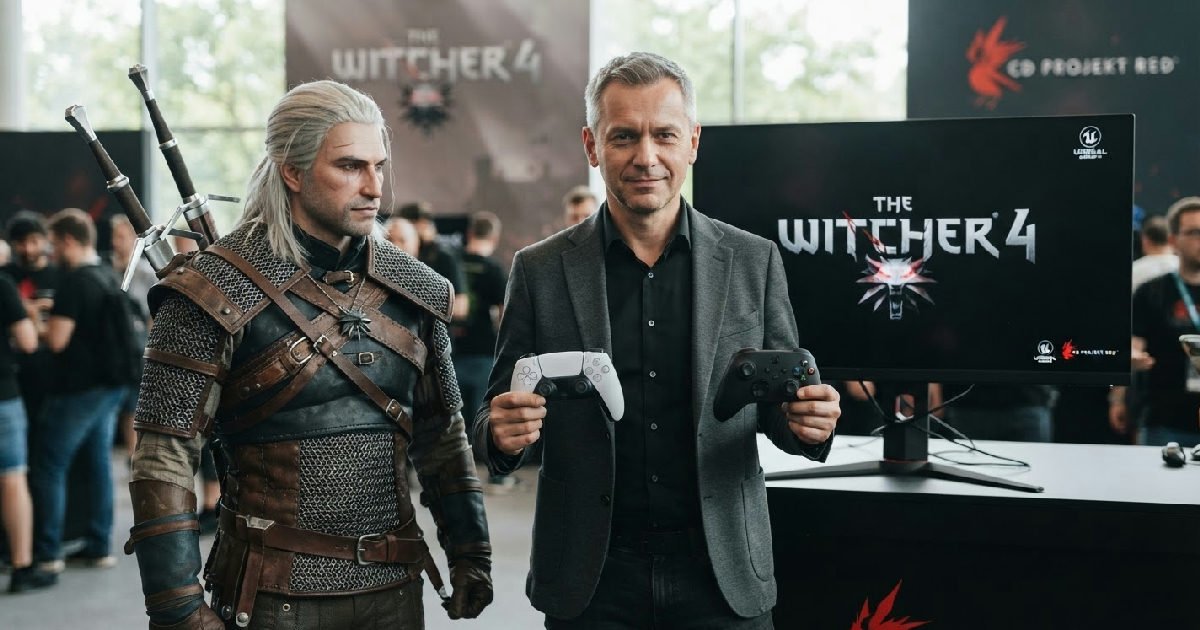
CD Projekt Red confirms The Witcher 4 running on all platforms
CD Projekt Red’s highly anticipated title, The Witcher 4, is already functional across all its target platforms during development, a pivotal achievement confirmed today by co-CEO Michał Nowakowski. This proactive approach stems directly from the company’s candid acknowledgement of the problematic launch of Cyberpunk 2077, which suffered severe performance issues particularly on last-generation consoles.
The Witcher 4 running on all target platforms from this early stage is a significant positive indicator.
Nowakowski, speaking to Game Developer on August 27, 2026, highlighted a significant shift in the studio’s development philosophy, moving to a “console-first” strategy. This ensures the game, codenamed “Project Polaris,” can be launched and is fully playable on PC, PlayStation 5, and Xbox Series X/S well ahead of its projected 2028 release window.
Prioritizing The Witcher 4 running on all platforms from the Start
The decision to build The Witcher 4 with cross-platform compatibility as an early priority marks a dramatic reversal for CD Projekt Red. Previously, the studio often pursued a PC-first development path, with the belief that scaling down to consoles wouldn’t pose significant challenges. This proved to be a “false belief,” as Nowakowski openly stated.
Today, that mindset has completely changed. Nowakowski made it clear that the studio no longer takes chances, with a strict policy to halt development and fix issues on any single platform as soon as they arise. This guarantees that The Witcher 4 is stable and playable across all planned systems throughout its production cycle.
“You come to the studio, you launch Witcher 4 right now. You can launch it on PC. You can launch it on PS5. You can launch it on Xbox Series X, and it’s going to run,” Nowakowski confidently told Game Developer. He underscored that “Since then, we don’t take chances. We want to be sure that it actually works.”
This “console-first” methodology, as explained by CDPR Vice President Jakub Knapik, simplifies the visual and technical scaling process. It’s inherently “easier to scale up than down” once a solid foundation is established on the most resource-constrained platforms, preventing the last-minute optimization crunch that plagued previous projects.
Overhauling Internal Development Practices and Documentation
Beyond platform strategy, CD Projekt Red has instituted a sweeping overhaul of its internal development and documentation processes to prevent a repeat of past missteps. Milestone processes have been drastically tightened; previously, minor technical omissions were sometimes deferred, leading to an accumulation of unresolved problems. Now, all requirements, including thorough documentation, must be met to pass a development gate.
“For example, technically, we should hit, let’s say, 10 checkmarks. Back in the past, if we missed one or two, we were like, ‘we’re gonna catch up with that later on,’ ” Nowakowski recounted. He acknowledged that while some issues were eventually addressed, many were not, resulting in significant technical debt later in the cycle.
Improved documentation practices are now central to the new workflow. Lead technical writer Jarosław Ruciński and senior technical writer Adrian Fulneczek elaborated on these changes at a recent Digital Dragons panel. They noted how poor documentation for earlier Witcher games and an overwhelming 8,000 pages of disorganized content for Cyberpunk 2077 created knowledge silos and difficulties for external partners.
Fulneczek stated the new outlook clearly: “The future looks really promising for us. We learned our lesson.” He added that comprehensive documentation is now a mandatory part of passing development gates, a critical change from previous practices. Knowledge sharing across teams has also been streamlined, ensuring technical insights are no longer compartmentalized.
Leveraging Unreal Engine 5 for the New Saga
A key technical shift supporting these new processes is the adoption of Unreal Engine 5 for The Witcher 4. This move away from CD Projekt Red’s proprietary REDengine is expected to streamline development, offering a robust and well-supported platform. This engine migration supports the studio’s broader commitment to the franchise.
For instance, CD Projekt Red’s Gamescom 2026 focus will be on The Witcher 3: Wild Hunt‘s “Songs of the Past” DLC. This shows ongoing investment, poised to welcome new generations of players into the fantastical world.
This will allow its more than 500 developers to focus intensely on creating game content rather than engine maintenance, streamlining the creative process for their biggest, boldest, and most ambitious game to date.
The Witcher 4: An Ambitious New Trilogy
The Witcher 4, expected to launch in 2028, is more than just a standalone sequel; it kicks off an entirely new trilogy within the beloved fantasy universe. CD Projekt Red has articulated a broader corporate strategy to release this entire trilogy within a six-year period from the fourth entry’s launch, signaling an aggressive roadmap for the franchise.
Michał Nowakowski also shared a video message ahead of Gamescom 2026, offering tantalizing details about the game. He announced that more than 500 incredibly talented developers are working to create something truly special, confirming the massive scale of “Project Polaris.”
The co-CEO described The Witcher 4 as featuring “a huge and immersive open world, intense and action-packed gameplay, and a deep, impactful story that we hope will stay with you for a long time.” He concluded by calling it the studio’s “biggest, boldest, and most ambitious game to date,” setting high expectations for fans.
Despite the excitement, fans shouldn’t expect a reveal at Gamescom 2026. CD Projekt Red’s focus for the event will be on The Witcher 3: Wild Hunt‘s “Songs of the Past” DLC, offering content to tide over players while the new saga continues its extensive development.
Lessons Learned from Cyberpunk 2077’s Tumultuous Launch
The foundational changes at CD Projekt Red are undeniably a direct consequence of the “disastrous launch” of Cyberpunk 2077 in November 2020. That game’s initial release was marred by severe bugs and performance issues, especially on PlayStation 4 and Xbox One, leading to its temporary removal from the PlayStation Store and significant reputational damage for the developer.
The studio learned a painful but crucial lesson: optimization cannot be an afterthought. Instead, it must be an integral part of the development process from its earliest stages. This philosophy is now deeply embedded in the creation of The Witcher 4, aiming to deliver a polished experience from day one.
The ambitious scope of such large-scale game development, coupled with intense market scrutiny, means studios face considerable pressure. Ensuring smooth launches has become paramount, particularly as economic market headwinds can impact investment and consumer confidence. For CD Projekt Red, the strategy for The Witcher 4 represents a determined effort to rebuild trust and set new standards for its releases.
With The Witcher 4 now confirmed to be running stably across all its target platforms, CD Projekt Red is signalling a clear intent to prioritize technical stability and player experience. The studio’s commitment to a console-first approach, rigorous milestone checks, and improved documentation aims to prevent a recurrence of past issues, setting a promising course for the next chapter of the beloved Witcher saga.